
Related videos:
Amid the energy collapse that is crippling the country, the Cuban regime is desperately trying to keep alive one of its main sources of income: tobacco production.
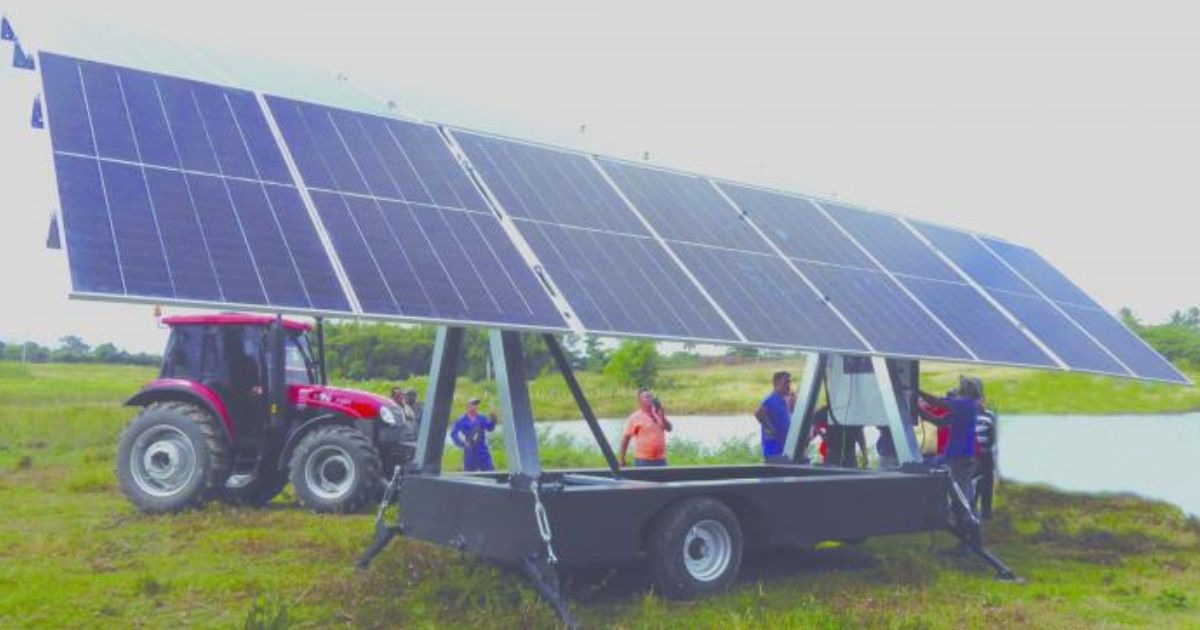
In Pinar del Río, the epicenter of tobacco cultivation, authorities are implementing irrigation systems powered by solar energy to ensure the harvest, as reported by the state newspaper Granma.
Osvaldo Santana Vera, coordinator of the Tabacuba Business Group in the province, explained that there are over a thousand irrigation positions that depend on electricity, covering approximately 4,840 hectares of farms.
The deficit of the National Electric System has forced the government to turn to renewable sources and mobile generators to prevent the sugar harvest from coming to a halt.
The program, presented as part of the state effort to "protect tobacco," aims to gradually replace conventional energy with solar power. For the 2026-2027 campaign, the goal is to cover the entire irrigation area with photovoltaic systems.
For now, ten modern mobile units will be installed that, according to the technicians, can deliver up to 22 liters of water per second and move automatically following the position of the sun.
The technology was supplied by a Spanish company, reported specialist Carlos Miana.
At the same time, fifteen high-power generators were added to supply 58 irrigation positions, which will allow coverage of an additional 800 hectares.
More than 300 fixed solar irrigation systems have also been received, with the promise that another thousand units will arrive in January.
The measures aim to keep Cuban tobacco production afloat, which has been severely impacted by blackouts, fuel shortages, and damage caused by hurricanes.
Pinar del Río accounts for the majority of the crops and exports of the so-called "green gold" of the Island, on which both state revenues and thousands of farming families depend.
The regime's commitment to renewable energy is not limited to the agricultural sector. As part of a broader strategy, projects have been promoted that aim to reduce dependence on imported diesel and modernize the energy infrastructure.
On this path, the construction of cities focused on electric transportation is planned, in an effort to integrate sustainable systems into the country's urban mobility.
Meanwhile, the first electric charging station in the country was installed, intended for the recharging of electric vehicles, a sign that the government is trying to move towards clean energy solutions, despite the precariousness of the national electrical system.
Filed under: