
Related videos:
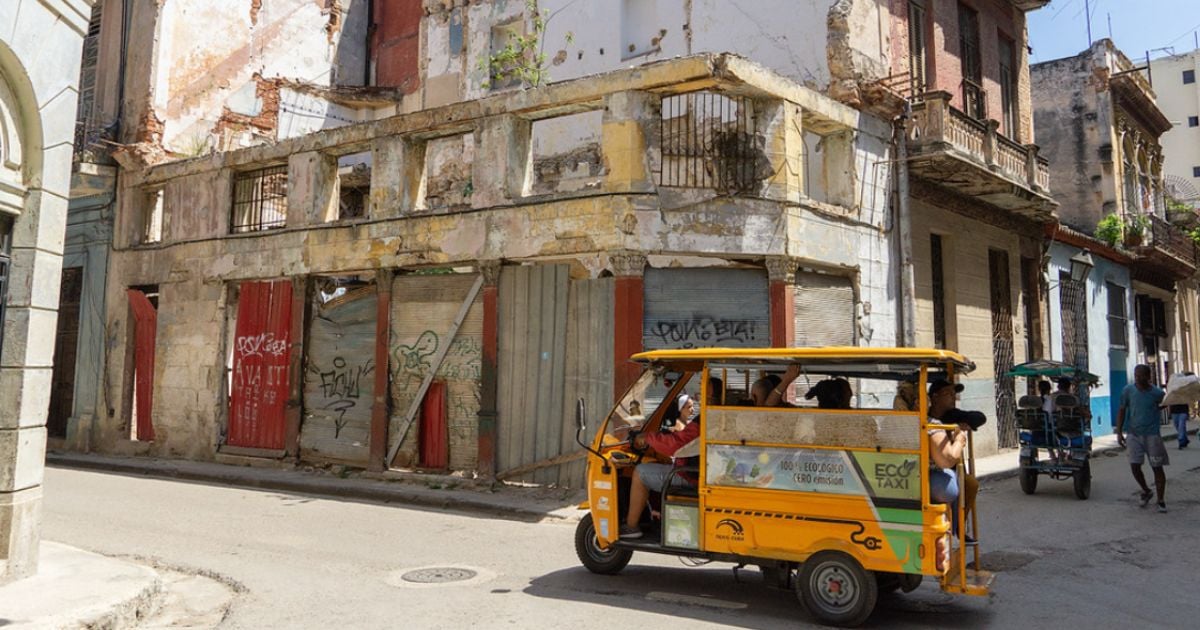
The Cuban government aims to move towards electric mobility and the development of "sustainable cities" with the support of South Korea, despite the country facing a deep energy crisis and an outdated electrical system that fails to meet the basic needs of the population.
The Minister of Transportation, Eduardo Rodríguez Dávila, announced on Facebook that on October 27, a seminar titled Strengthening Capacities for Electric Mobility in Urban Transport in Cuba began in South Korea. This initiative is organized by the Korean International Cooperation Agency (KOICA) and the International School of Urban Sciences at Seoul University.
The program brings together eight Cuban specialists from the ministries of Transport, Industry, Higher Education, and Science, Technology, and Environment.
The training includes visits to South Korean institutions such as the Korea Electric Power Research Institute (KEPRI) and Seoul University, where strategies for technical integration, urban planning, and public education for the social acceptance of electric mobility are studied.
Rodríguez emphasized that Cuban experts are learning how to integrate batteries, chargers, and smart grids, as well as the role of applied research in the transformation of urban transport.
"It is the guarantee that Cuban electric mobility will be planned with a systems engineering perspective, not just transportation," emphasized the head of the sector, a statement that is almost raw material for memes.
However, in a country where massive blackouts are a part of daily life and electricity generation relies almost entirely on aging and poorly maintained thermal plants, the project sounds more like an ideal than an immediate possibility.
Although technical learning can serve as a reference for the future, the lack of investment, low levels of national production, and the precarious state of the electrical grid hinder any serious plan for electrifying public transportation on the island.
In this regard, currently more than 150 Cubans are studying at Russian universities with the aim of "modernizing" the railway system on the island.
According to the Minister of Transport, the program is part of an intergovernmental agreement between Cuba and Russia aimed at training engineers specialized in railway transport, rolling stock maintenance, railway infrastructure, telecommunications, and automation.
Filed under: