
Related videos:
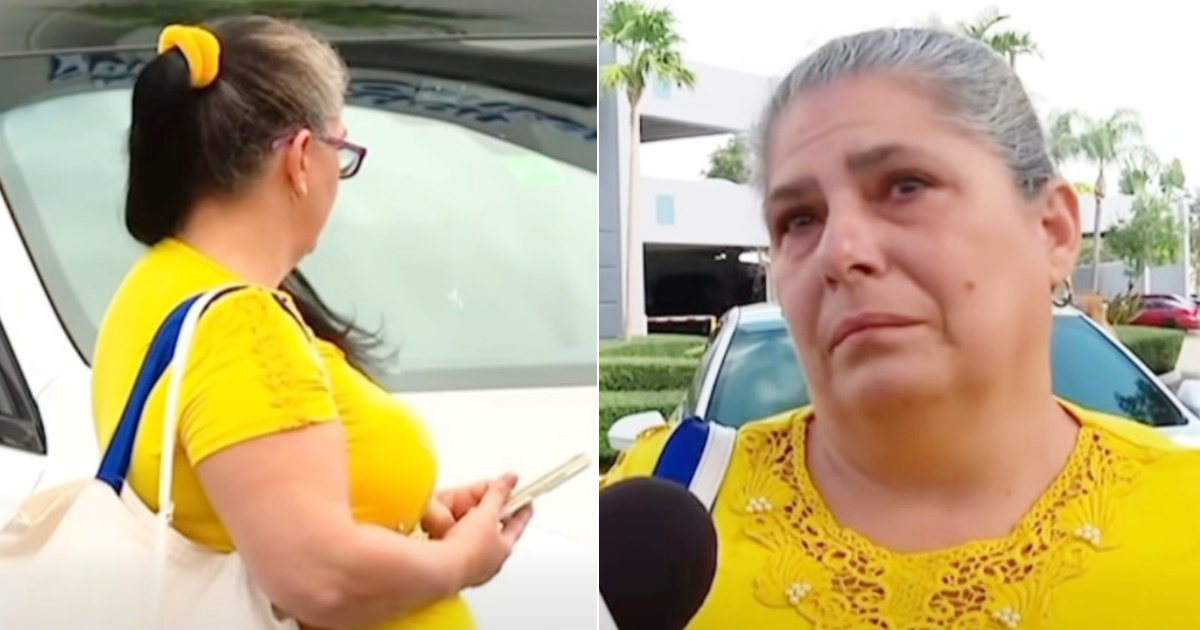
In an increasingly uncertain landscape for migrants in the United States, a Cuban woman shared her experience during a recent appointment to apply for permanent residency.
His heartfelt testimony comes right after the Trump administration's announcement to suspend all citizenship and residency processes for immigrants from 19 countries, including Cuba and Venezuela.
“God willing and allowing, I get my residency, because truly I am all alone in this country, all alone, all alone,” the woman expressed through tears, in an interview with journalist Javier Díaz for Univision.
Her case represents a glimmer of hope amid the immigration blockade that has caused confusion, frustration, and fear among thousands of applicants who now see their processes stalled.
According to what she shared, she was able to attend her fingerprint appointment this week without any issues: “I thought something was going to happen to me, but no, it went well”, she stated, visibly relieved.
A surprising announcement that halted thousands of procedures
On December 2nd, the U.S. Citizenship and Immigration Services (USCIS) issued a memorandum that halts the processing of citizenship and residency applications for citizens of 19 countries classified by the administration as "high risk."
The measure particularly affects countries with high levels of instability or poverty, such as Cuba, Iran, Sudan, Somalia, Eritrea, Haiti, and Venezuela.
The decision, confirmed by USCIS spokesperson Matthew Tragesser, has been justified on the grounds of prioritizing "national security."
"Citizenship is a privilege, not a right," stated Tragesser, who added that the goal is to ensure that "the individuals who become citizens are the best of the best."
The suspension is part of a wave of tightening immigration policies driven by former President Donald Trump, who has now returned to the White House after his recent reelection.
The immediate trigger for the new halt would have been a shooting in Washington in which two members of the National Guard were injured.
The suspect, Rahmanullah Lakanwal, an Afghan citizen who had received asylum in April, was detained, and his case prompted a new internal review of the admission and naturalization mechanisms.
Direct impact: Canceled interviews and suspended ceremonies
The consequences of the memorandum are already being felt in multiple USCIS offices. Scheduled interviews have been canceled without prior notice, and citizenship oath ceremonies have been suspended in cities like Houston and Nashville.
“Everything has come to a standstill. It's like a bottleneck and it's only going to get worse,” warned Ana María Schwartz, an immigration attorney in Texas, to the New York Times.
USCIS has defended the pause as part of a thorough review process to ensure that "nothing is off the table until every foreign national has been assessed and examined to the fullest extent possible," the agency stated on its social media.
But the memorandum does not only involve suspensions.
It also includes the reevaluation of already granted residency cards, the review of asylum decisions issued under previous administrations, and a possible revocation of benefits granted to migrants from "banned" countries.
The New York Times estimates that the new rules could affect more than 1.5 million people with pending asylum applications and over 50,000 beneficiaries of granted asylum during Joe Biden's administration.
Together, these changes represent one of the most significant restrictive reforms of the U.S. immigration system in recent decades.
"Not all immigrants are criminals."
In that context of uncertainty, the voice of the Cuban woman gains special significance. "Not all immigrants are murderers or criminals, or anything like that," she stated firmly.
His testimony breaks with the official narrative that links migration to security threats and gives a human face to the drama experienced by thousands of people trapped in a system on hold.
Her hope—and that of many others—remains steadfast, though tinged with anxiety. For her, managing to complete her procedure this week was a stroke of luck, an exception that could come to an end in a matter of days.
"God willing, they'll grant it to me," she repeated. For someone who arrived alone in the United States, residency is not just a legal status: it is an opportunity for stability, belonging, and dignity.
Filed under: