
Related videos:
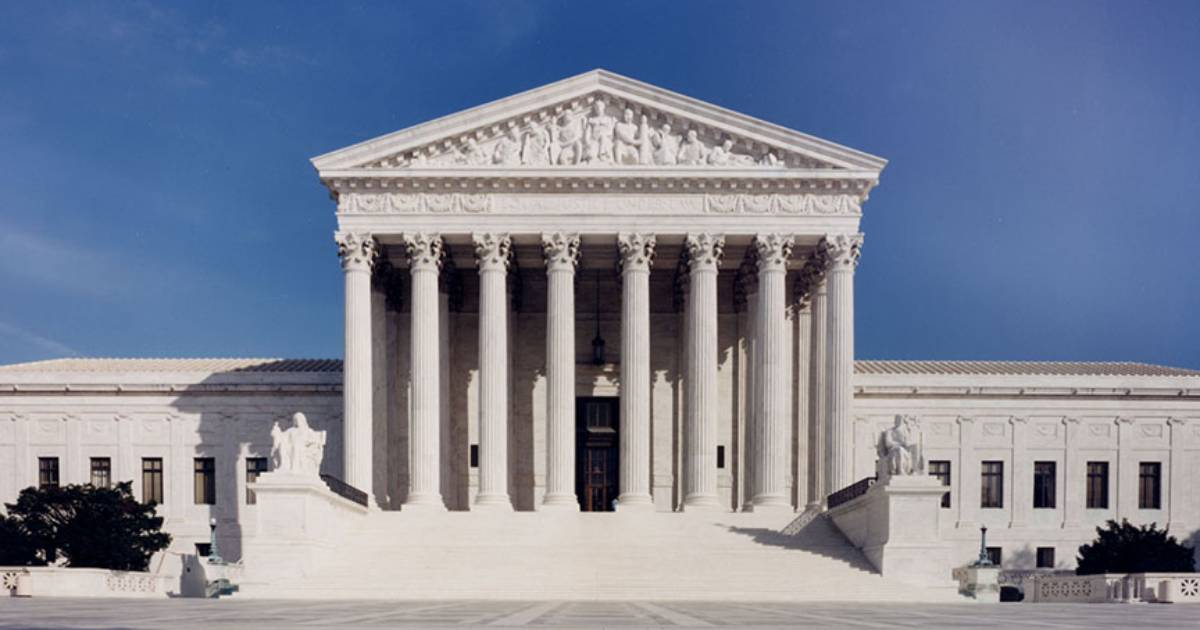
The United States Supreme Court is preparing to review birthright citizenship. The court's announcement comes amid an unprecedented legal battle initiated by Donald Trump, who insists on reinterpreting the 14th Amendment and restricting the right that, since 1868, has guaranteed citizenship to every child born on U.S. soil, regardless of their parents' immigration status.
The Supreme Court's decision to take the case on its merits raised alarms among constitutional lawyers. In statements to Telemundo Noticias, lawyer Rafael Peñalver warned that "the mere fact that the Supreme Court has agreed to review this case indicates, in my opinion, the direction it is heading, and that direction is to limit birthright citizenship," he stated.
According to the explanation, the executive order signed by Trump requires that at least one parent be a citizen or legal resident for a child to obtain U.S. citizenship.
That reinterpretation clashes directly with the text of the 14th Amendment, which states that
“all persons born or naturalized in the United States, and subject to its jurisdiction, are citizens”.
For over 150 years, U.S. jurisprudence has supported this interpretation, including the landmark case Wong Kim Ark (1898), where the Supreme Court itself confirmed that the immigration status of the parents does not affect a child's right to citizenship if born in the country.
But now the Supreme Court has re-centered the issue in the national debate, in a political context where Trump has made the elimination of birthright citizenship one of his most persistent promises.
From the campaign to power: Trump has never hidden his intention
Since 2024, Trump described birthright citizenship as a “ridiculous right” and accused immigrants of “taking advantage” of the United States. He has repeatedly claimed that so-called “anchor babies” are a problem for national security and intends to eliminate that right by decree, although experts agree that the Constitution cannot be rewritten from the White House.
As president for a second time, he signed an executive order that prohibits recognizing children born to undocumented parents or those without permanent immigration status as citizens. Federal courts immediately blocked its implementation, deeming it “openly unconstitutional.”
The government appealed, arguing that the judges do not have the authority to issue orders that halt the nationwide implementation of the decree. Trump even urged the Supreme Court to allow him to proceed at least in the states that did not challenge his order.
The court partially opened a door in June, by allowing the administration to begin preparing for implementation in certain states. However, it refrained from commenting on the constitutionality of the plan.
The human impact: fear and uncertainty in mixed-status families
For lawyers and civil rights advocates, the Supreme Court's review is not just a legal debate, but an immediate risk for thousands of mixed-status families.
In the report by Telemundo Noticias, an interviewed resident summarized it with concern: “No one should have their birthright taken away; it’s like taking away the rights they already have.”
Trump's order would deeply affect families where one or both parents lack legal status, even if the children born in the U.S. have grown up with rights, protections, and opportunities that could now disappear.
Without citizenship, those minors would be unable to obtain passports, Social Security, or documents that verify their legal status, leaving them in a limbo that would affect their health, education, and future employment.
Lawyers warn that such a change could lead to family deportations, denial of basic benefits, and conditions of extreme vulnerability for those who have always considered themselves Americans.
A decision that could come in June
Although the Supreme Court has not yet set a date to hear oral arguments, the schedule suggests that the final decision may be known in June of next year. As usual, it will be in the final stretch of the judicial period when the country learns whether the most powerful court in the United States upholds the principle of ius soli, or if it supports the reinterpretation that Trump has sought for years.
Jurists urge us to consider not only the legal arguments but also the ideological composition of the court. Meanwhile, uncertainty is increasing.
Filed under: