
Related videos:
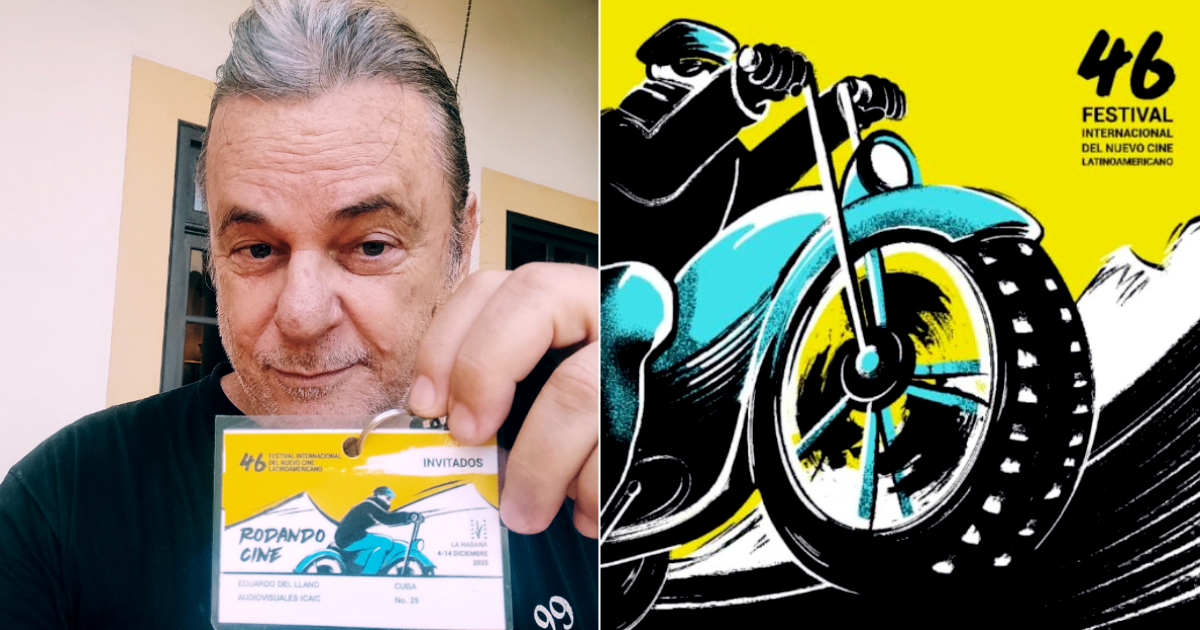
The Cuban filmmaker Eduardo del Llano, the perennial enfant terrible of official audiovisuals, has once again ignited social media with a public outburst: this time because the International Festival of New Latin American Cinema in Havana “completely ignored him.”
“ This year the Festival completely ignored me,” Del Llano wrote on his official Facebook page. “No credentials, no invitation, not a word. They can shove the Festival up their c…”, he added, with his usual tone that mixes bitterness and cynicism.
According to the director himself, neither the ICAIC nor the Festival Office bothered to include him among the invitees, despite his career and his status as a regular in the Havana film scene. “Up until last year, they would issue credentials to filmmakers with a certain level of experience, even if they didn't have a work in competition,” he lamented.
Two hours after the outburst, the miracle happened: a call from the Festival itself notified him that his credential was ready. “Something they should have done a week earlier,” he noted. He then added, in a more conciliatory tone, that he would use it “to watch films, because that’s what interests me.”
The scene inevitably brings to mind the recent outburst of the troubadour Raúl Torres, who cried on Facebook because the Museum of Cuban Music had overlooked him in its permanent exhibition.
The difference is that while Torres's "redemption" led him to perform at a “deaf” regime event, Del Llano—quicker, craftier, and more media-savvy—secured his credentials in record time, without having to showcase his productions before an audience of the blind.
Both, however, share the same underlying affliction: the plight of the forgotten Fidelista artist. The first demands recognition for his anthem to Fidel; the second, for his series of revolutionary satires that once challenged the system but now entertain it without risk.
Del Llano, who recently defended the Cuban police's right to be "more repressive," is now claiming his right to be invited to the festival that he himself helped to legitimize. It's a Cuban paradox as tragicomic as his own cinema: self-referential and tinged with the flavor of domestic punishment.
In his second post, the filmmaker thanked his supporters and gave a nod to his detractors: “Thanks to the c@mep!ngas who took the opportunity to insult me; thanks to them, I surpassed the 2000 blocked barrier. Let's go for more!”
And although now you can watch your favorite movies on 23 and 12, the scene makes it clear that in official Cuba, neither loyalty nor irony guarantees a reserved seat.
Filed under: