
Related videos:
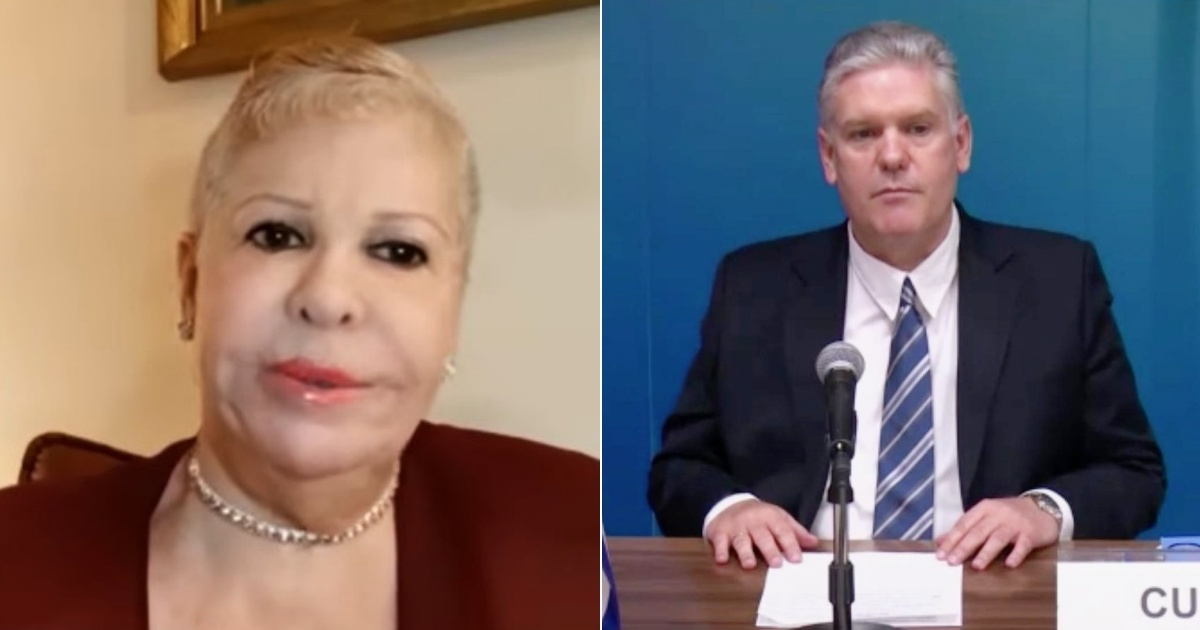
María Victoria Gil, sister of the ousted Cuban Minister of Economy Alejandro Gil Fernández, broke her silence after the news of the life sentence reported by the People's Supreme Court, stating that her brother was "the perfect scapegoat" of Miguel Díaz-Canel's regime.
In exclusive statements to journalist Mario J. Pentón, broadcast by Martí Noticias, Gil reacted with sadness and severity to the news: “I learned about the sad news from you, Mario. It is very hard for me and my family, but life is like that and we must face it with courage,” he said from Spain, where he resides.
The sister of the former minister asserted that the judicial process was a political maneuver and that the espionage allegations are the result of "a significant manipulation by the regime."
"The information is so sparse that anyone could be accused of being a spy. My brother has been a victim of a completely corrupt system, without rights or procedural guarantees," he stated.
Despite acknowledging Alejandro Gil's responsibility in acts of corruption, María Victoria was blunt: “My brother is a corrupt person, just like all of them, but much smaller. He was the visible face of the economic disaster, they put him in all the bad news, at the Mesa Redonda, bearing the blame for the country's collapse.”
Gil Fernández, who was the Minister of Economy and Planning and one of the most prominent figures in Díaz-Canel's cabinet, was sentenced to life imprisonment for espionage-related crimes and an additional 20 years for corruption, bribery, influence peddling, and tax evasion.
According to the official statement, the penalties also include the confiscation of assets and a lifetime disqualification from holding public office.
Her sister described the ruling as a "political sentence" and stated that the family will exhaust all legal avenues both inside and outside of Cuba.
"This will not end here. There are appeals left, and then we will go to the International Court of Justice. My son, who is a European lawyer, will take the case. We are not going to leave things this way," he emphasized.
During the interview, María Victoria Gil also questioned the lack of transparency in the trial. “There is no public evidence, names, dates, or supposed espionage aliases are known. Everything is controlled by State Security. In Cuba, it is not the Prosecutor's Office that directs espionage processes, but the political police,” she denounced.
The lawyer, who worked for years in Cuban media, openly criticized the system that condemned her brother. "It is a government that is corrupt to the core. There is no justice, no legality, no rights. Cubans are imprisoned both inside and outside the island. I hope that when Maduro falls, the Cuban dictatorship falls as well," she said emotionally.
At the end of the conversation, the former minister's sister acknowledged that she was going through a moment of deep shock. “I am devastated. I thought it was all a play, that my brother was under protection in a house belonging to the MININT. I never imagined he was actually in the Guanajay prison. I can't believe he will spend the rest of his life there,” she concluded.
María Victoria Gil's interview provides a previously unheard testimony from the ex-minister's family environment and confirms what until now was merely a public perception: that Alejandro Gil's case, more than a legal process, has turned into a political trial serving as an exemplary case within a regime trying to project authority amid economic collapse.
Filed under: