
Related videos:
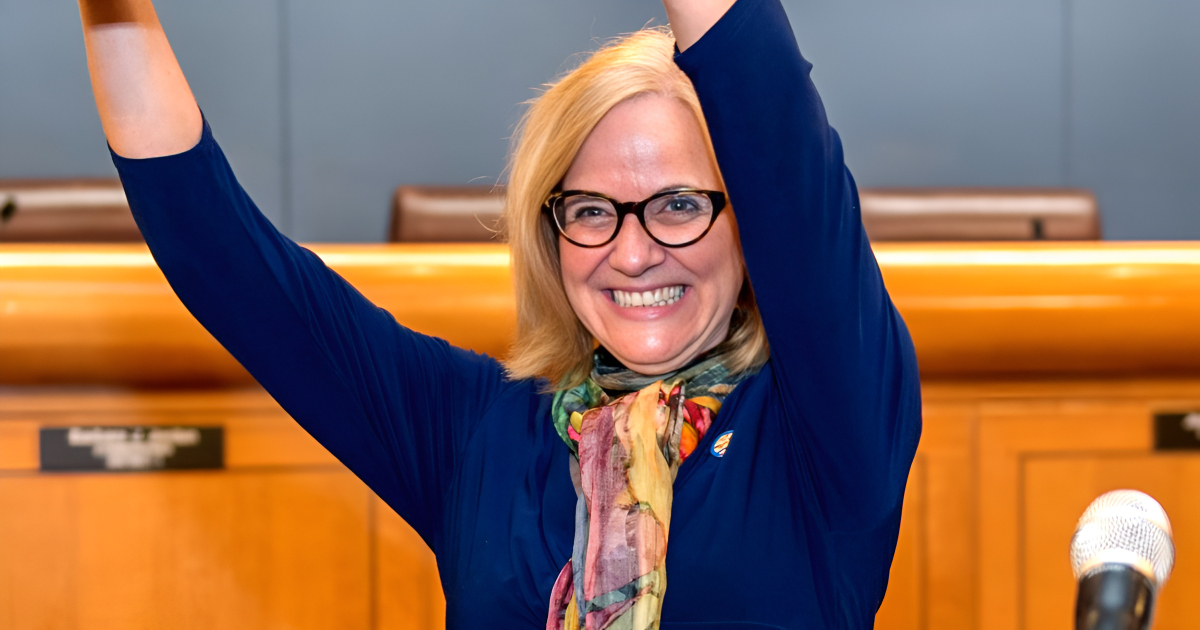
The Democrat Eileen Higgins has made history by becoming the first woman and the first Democratic mayor of Miami in nearly 30 years, according to results confirmed by The Associated Press.
His victory against the Republican Emilio González, backed by President Donald Trump, marks a significant political shift in South Florida, a region regarded as a conservative stronghold in recent years.
With 99% of the votes counted, Higgins surpassed González by a margin of 19 percentage points, putting an end to a Republican dominance that had lasted since the late 1990s.
The former commissioner of Miami-Dade County, 61 years old, will officially assume a non-partisan position, which has historically reflected the political pulse of the most populous county in the state.
A symbolic victory for the Democrats
"With her victory tonight, Eileen Higgins will be the next mayor of Miami, the first woman in the city's history and the first Democrat elected to the position in nearly three decades," celebrated the Democratic Party on its official X account (formerly Twitter).
The result, interpreted as a boost for the Democrats on the eve of the 2026 midterm elections, has generated optimism within the party following recent victories in New Jersey and Virginia, as well as improvements in several traditionally Republican districts.
“The outcome of tonight is another warning sign for Republicans: voters are fed up with a disconnected agenda that increases the cost of living for families,” stated Ken Martin, chairman of the Democratic National Committee.
A new face for a diverse city
During the campaign, Higgins positioned herself as an advocate for affordable housing and a "more humane" immigration policy.
In a city with a majority Hispanic population, he denounced the tightening of immigration measures promoted by the Trump administration and criticized the conditions at the Krome detention center for immigrants, which he described as "inhumane."
"We are facing a dehumanizing and cruel rhetoric, especially towards immigrant communities," Higgins stated after his victory speech. "The residents of Miami were ready to close that chapter."
González, former municipal administrator and ally of Trump, acknowledged his defeat and congratulated his opponent, although he warned that "Miami needs to grow in balance, not with towers disguised as affordable housing."
From "La Gringa" to Mayor
Higgins, who speaks Spanish fluently, has represented a district that includes Little Havana for seven years, where the conservative Cuban community predominates.
In her early years of political career, she appeared under the nickname "La Gringa" as a way to connect with Hispanic voters.
"I’m white, what am I going to do? Denying it wouldn’t make sense," she said with a laugh in an interview with AP, emphasizing her willingness to build bridges between communities.
Immediate challenges and political context
The new mayor will take office amid a legal debate concerning the future Trump presidential library, which is set to be built on the grounds of Miami Dade College.
The institution has been sued for allegedly violating Florida's Open Government law, and a judge has temporarily blocked the land transfer.
Although the position of mayor of Miami has limited formal power, its visibility makes it a significant political platform. The current outgoing mayor, Francis Suárez, attempted to use it as a springboard for a presidential candidacy in 2023, which he abandoned after a few months.
Higgins will share the spotlight with Daniella Levine Cava, the mayor of Miami-Dade County, also a Democrat, who governs a much larger area that includes the city of Miami and oversees key issues such as transportation, housing, and emergency response.
Although both positions are officially nonpartisan, their coincidence in power represents an unprecedented moment of female and Democratic leadership in South Florida, something unimaginable just a decade ago.
For analysts, Higgins' victory could be a sign of political reconfiguration in Miami-Dade, a county that voted predominantly for Trump in 2024, making him the first Republican to win there since 1988.
A message to the Hispanic electorate
Higgins' victory also reignites the debate over the Hispanic vote in Florida. Republican Congresswoman María Elvira Salazar recently acknowledged that Latinos "are not guaranteed to any party," warning that "Hispanics are married to Trump, but they are just dating the Republican Party."
Higgins has promised to govern "for all Miami residents," prioritizing transparency, housing, and social justice. "This is a moment to come together, listen, and rebuild trust in our city," he said before hundreds of supporters who celebrated his victory in downtown Miami.
Their election not only marks the beginning of a new political era, but also symbolizes a generational and leadership shift in one of the country's most emblematic cities.
“The change is here. It is sweeping across the nation, and now it is also spreading through Florida,” summarized David Jolly, the Democratic candidate for the governorship of the state.
With her arrival at the City Hall, Eileen Higgins inaugurates a new political cycle in Miami, at a time when Democrats are seeking to regain ground in a state that, until now, seemed unshakeably red.
Filed under: