
Related videos:
Miami is heading towards a historic runoff to determine who will take the reins of its municipal government, following elections marked by high voter turnout, multiple candidates, and clear ideological polarization.
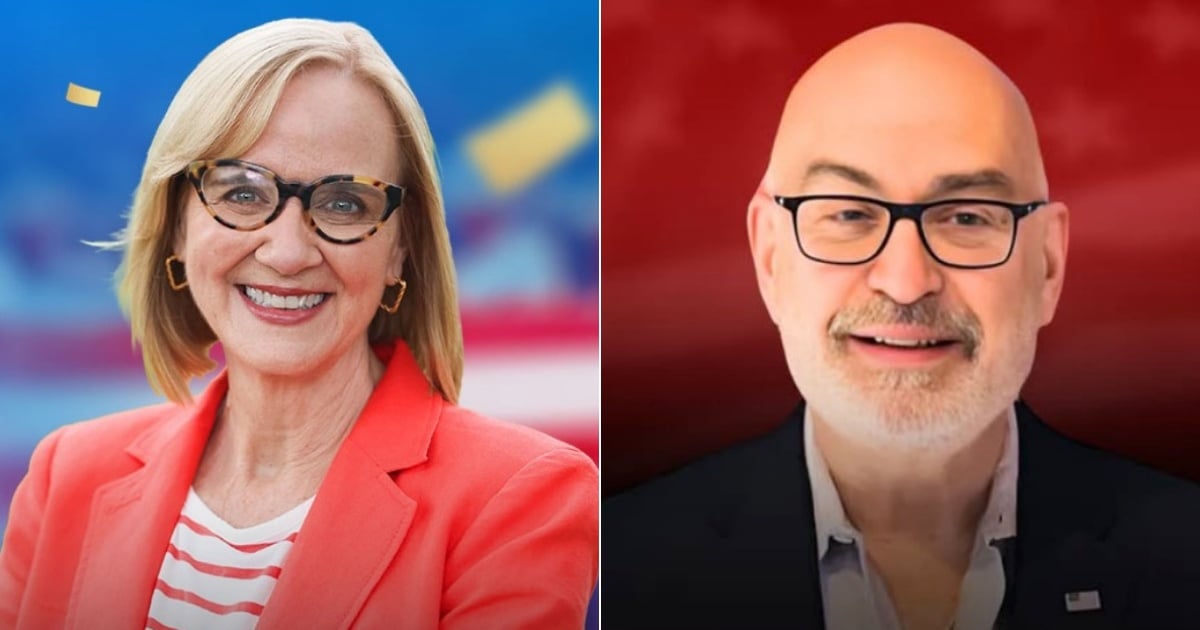
The contest has narrowed down to two key names: the Democrat Eileen Higgins and the Republican Emilio T. González, who will compete for the Mayor's office in the runoff election scheduled for December 9.
First round results: From chaos to clarity
In a nonpartisan election, but with strong ideological overtones, Commissioner Eileen Higgins secured a clear lead with 36% of the votes (13,325 ballots), followed by former municipal administrator Emilio T. González, with 19% (7,214 votes).
With 96% of the votes counted, neither candidate reached the 50% necessary for a direct victory, which automatically triggered a runoff between the two candidates with the highest votes.
The other contenders, despite their experience and recognition, were unable to garner the necessary support to move forward:
Ken Russell: 18% (6,514 votes).
Joe Carollo: 11% (4,253 votes).
Alex Díaz de la Portilla: 5% (1,905 votes).
Xavier Suárez: 5% (1,830 votes).
Other candidates: less than 3%.
In total, 13 candidates applied, including heavyweights such as Xavier L. Suárez, former mayor and father of the current outgoing official, and Joe Carollo, also a former mayor who served two non-consecutive terms.
Eileen Higgins: a progressive vision for the new Miami
Higgins, the District 5 commissioner and registered Democrat, has built her platform on the pillars of urban progressivism. During her campaign, she emphasized topics such as:
Affordable housing.
-Climate resilience.
Transparency in public management.
His message has resonated with an electorate eager for a change in the way the city is managed. In his statement following the results, Higgins expressed:
"Tonight, the people of Miami made history. Together, we turned the page on years of chaos and corruption and opened the door to a new era for our city, one defined by ethical and responsible leadership that delivers real results for the people."
She is no stranger to national politics: she ran for the U.S. Congress in 2022, although without success. This new contest provides her with a renewed opportunity to solidify her political influence.
Emilio González: military discipline and fiscal order
On the other side of the political spectrum is Emilio T. González, who is republican-leaning and has an extensive background in public administration and the military
Former City Manager of Miami between 2018 and 2020.
- Retired official from the U.S. Army with 26 years of service.
Former Under Secretary of the Department of Homeland Security during the presidency of George W. Bush.
González has the political backing of Governor Ron DeSantis and promotes an agenda focused on: strengthening security; attracting investments; and conservative fiscal policy
During his electoral follow-up event at the nightclub Hoy Como Ayer, González thanked his supporters and expressed confidence heading into the second round.
A change of era: Francis Suárez bids farewell
The runoff will not only determine the new mayor but will also signal the end of the era of Francis Suárez, who has been mayor since 2017, a moderate Republican close to President Donald Trump.
Suárez is not eligible for reelection as he has already completed two terms.
This change represents a transformation in the political landscape of Miami, as the city could take an ideological turn depending on the final outcome.
Electoral context: a divided electorate
According to data from the Miami-Dade County Elections Department:
There are more than 61,000 registered Democrats.
-In front of nearly 53,000 Republicans.
- And more than 55,000 voters without party affiliation.
This indicates that the electorate is not strongly polarized, which opens a window of opportunity for both candidates to capture votes from the political center in the second round.
With the second round scheduled for December 9, 2025, both Higgins and González will need to intensify their efforts to mobilize their bases and persuade undecided voters. The key will be:
-The ability to expand its coalitions beyond its core supporters.
-The alliances with candidates eliminated in the first round.
-The focus of their campaigns on issues of local interest such as security, housing, and economic development.
The final outcome will not only define the leadership of one of the most influential cities in the southern United States, but also the political and ideological direction that Miami will take in the next decade.
Filed under: