
Related videos:
From Oslo, where she arrived after months of secrecy and political persecution, María Corina Machado issued a warning that is directly linked to Cuba's recent history.
In an interview given to Noticias RCN from Colombia, the Venezuelan opposition leader acknowledged that her country made a costly mistake by underestimating the weight and influence of the Cuban regime in the region.
"We underestimated the threat posed by the Cuban regime and what the loss of freedom would mean," he stated, reflecting on the 27 years of Chavismo that have led Venezuela to one of the deepest crises in its history.
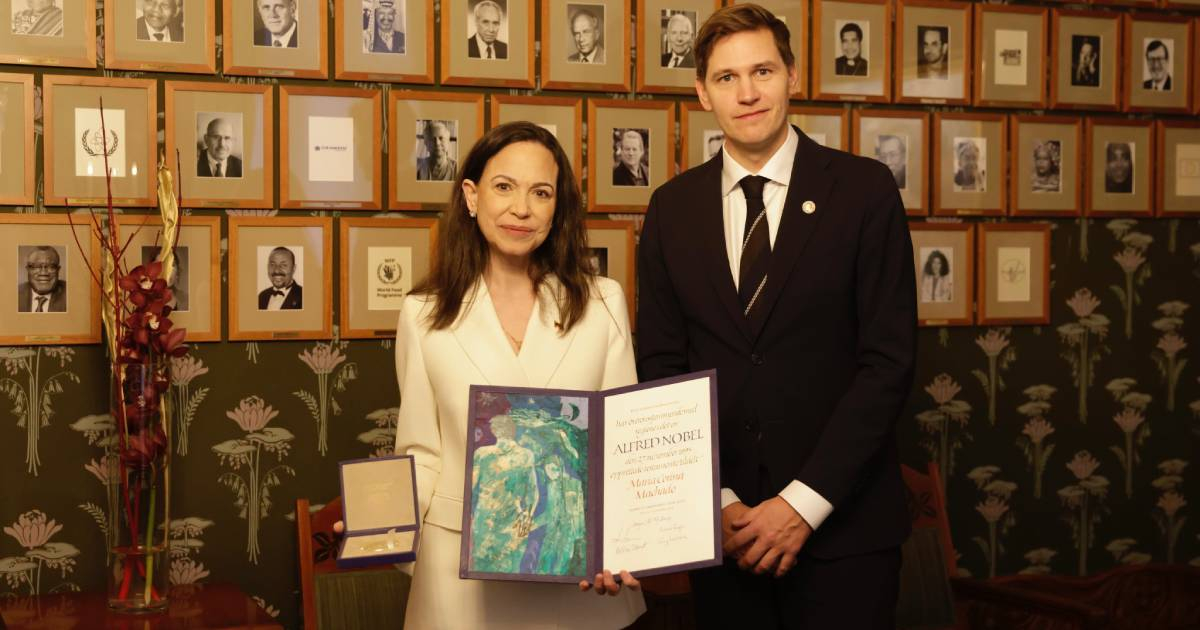
The statements were made from the Norwegian capital, where Machado traveled to receive the Nobel Peace Prize 2025, during a time of significant international visibility and also of great symbolic weight.
From there, he drew a direct parallel between Venezuela, Cuba, and Nicaragua—countries that he acknowledged had always been a cautionary tale for Venezuelans, yet whose experiences were overlooked. "We used to say that Cuba is Cuba and Venezuela is not Cuba. And look at where we are now," he said in the interview with RCN Televisión.
The message holds a special resonance for Cubans both on and off the Island, who have heard promises of change for decades while daily life continues to be marked by a lack of freedoms, censorship, and forced exile.
Machado not only spoke from a place of self-criticism, but also from empathy. Earlier, in Oslo, during an exchange with journalists, she dedicated explicit words to the Cuban people and directly linked both struggles. She asserted that the Venezuelan cause is not isolated and that the freedom of her country is inevitably tied to that of Cuba.
"The fight for Venezuela's freedom is the fight for Cuba's freedom," stated the opposition leader in a message aimed at both Cubans resisting on the Island and those who have had to rebuild their lives abroad.
He promised that once Venezuela is free, he would also take up the cause of the peoples who today live under authoritarian regimes, a statement that resonated as hope for many and as a political challenge for others.
Machado was welcomed in the Norwegian capital with hugs, applause, and slogans of support by followers who awaited her as a symbol of democratic resistance.
Her arrival was made possible after a complex operation to leave Venezuela, carried out in secrecy due to the risk of arrest, and it ended more than a year of living underground.
In the interview with Noticias RCN, she recalled how the regime tried to silence her by prohibiting her from leaving the country and even restricting her internal movements. Far from breaking her, she asserted that those restrictions led her to know Venezuela "from the inside," exploring every corner and strengthening her bond with ordinary people.
From the international stage that the Nobel Peace Prize affords him today, Machado insisted that freedom of expression and the protection of institutions are not abstract slogans, but lines of defense that, when abandoned, lead to the same fate.
Filed under: