The President of the United States, Donald Trump, sent a strong message once again. From the White House, during the presentation of the Mexican Border Defense Medal, the leader made it clear that there will be no exceptions, and anyone who crosses the border illegally will be arrested and expelled from the country immediately.
Trump stated that the Armed Forces have already conducted around 13,000 patrols at the southern border and presented this deployment as just "the beginning" of a broader strategy.
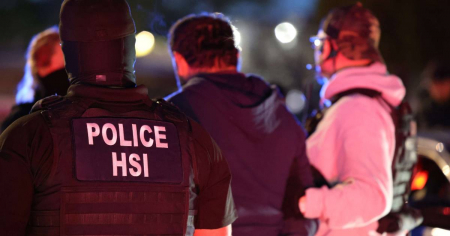
In his speech, he celebrated the end of the catch and release policy and stated that anyone who steps on U.S. soil without permission will be intercepted, arrested, and deported, or sent to prison if deemed dangerous. “We do not want to take any risks,” he declared.
The tone of the message was not only political but also overtly deterrent. Trump stated that, as a result of these measures, illegal crossings have dropped to the lowest levels ever recorded in the nation's history and assured that in the last seven months "zero illegal immigrants" have been admitted to the United States.
A statement that, beyond the numbers, directly targets the fear of those who are currently awaiting an opportunity at the border or within the country with a precarious immigration status.
These statements align with the "closed border" narrative that the Trump administration has reinforced in recent weeks.
The head of the Border Patrol, Mike Banks, has showcased on social media the deployment of the so-called "smart wall", a combination of physical barriers, sensors, cameras, drones, and security fencing that, according to the government, completely seals the southern border. The official images and messages aim to convey total control and zero tolerance.
For the Cuban community, the message does not go unnoticed. Thousands of families live with the uncertainty of expedited deportation, while many others weigh whether it is worth risking everything in an increasingly hostile context. The promise of immediate deportations and the tightening of controls reinforce the feeling that the margin for migration has been reduced to a minimum.
Trump insisted that he inherited "the worst border in history," allowing the entry of millions of people, and presented his current policy as a necessary correction. However, behind the rhetoric of security and records, concerns are growing about the human impact of these measures.
Filed under: