
Related videos:
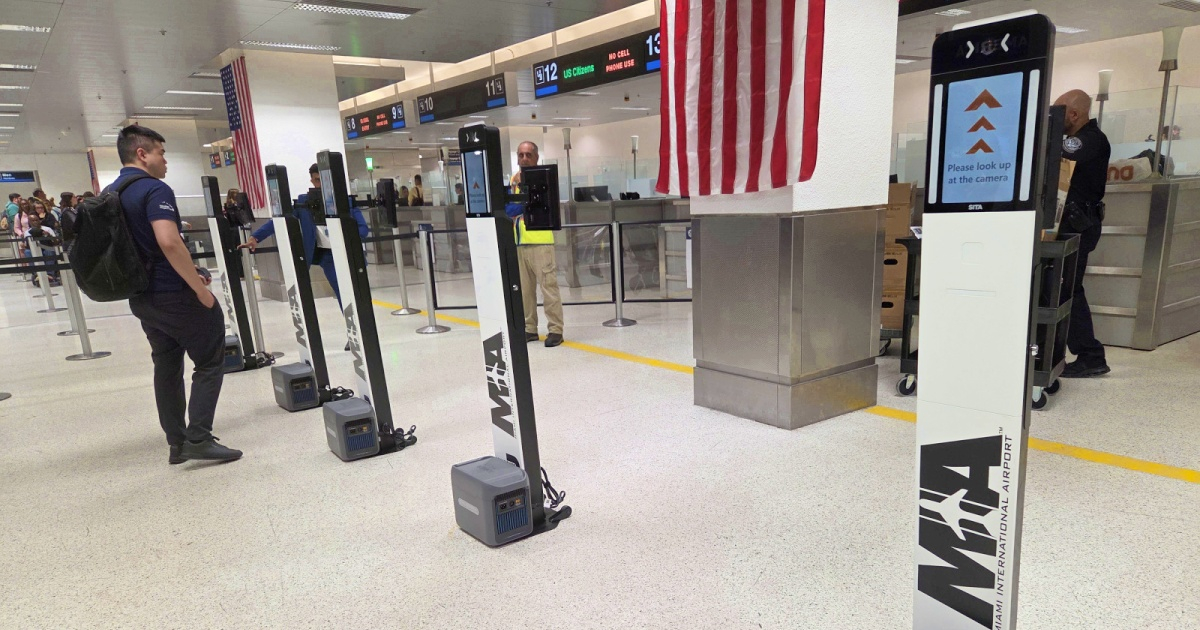
Since this week, the Miami International Airport (MIA) has joined the national trend of modernizing airport processes with the implementation of a new biometric identification system that promises to transform the security experience for thousands of passengers.
This advance comes right on time for the peak Christmas travel season and in preparation for the influx of travelers expected for the FIFA World Cup in 2026.
What is the new biometric system?
The system in question has been installed in the exclusive lines of TSA PreCheck and consists of biometric gates (eGates) developed by the company CLEAR, which specializes in secure identification solutions.
The implemented technology allows for the verification of travelers' identities in five seconds or less, eliminating the need to present a physical ID.
According to observations by reporters from Telemundo 51, the procedure is efficient and straightforward.
The passenger scans their boarding pass, positions themselves in front of the biometric gate, and confirms their identity using facial recognition.
Only after completing this verification does the system allow access to the TSA inspection area.
Who can use it?
This service is not available to all travelers at the moment, only to those who meet two simultaneous requirements:
- Be enrolled in TSA PreCheck, the government program that streamlines security processes for low-risk passengers.
-Become members of CLEAR Plus, a private annual membership service that provides expedited access to lines at airports and stadiums through biometric identification.
The regular security lines for passengers without these records continue to operate in the traditional manner, with physical documentation checks and longer wait times.
A project at no cost to the taxpayer
One of the characteristics of the implementation of this technology is that it has not resulted in any cost to taxpayers.
The company CLEAR took on the investment as part of a public-private partnership with the Transportation Security Administration (TSA), which has allowed for advancements in the digitization of processes without impacting federal budgets.
As of now, 20 major airports in the country are already equipped with this system, as part of a strategy to expand the use of biometric identification at high-traffic points.
What are the authorities seeking with this technology?
The Transportation Security Administration is betting on these systems to reduce bottlenecks in inspection areas, provide a smoother experience for passengers, and enhance security.
Biometrics, they argue, is less susceptible to fraud than physical documents and allows for more accurate verification.
A spokesperson for the TSA noted that this type of technology "will continue to expand at key airports across the country," in an effort to combine efficiency and control during times when the volume of travelers is steadily increasing.
Privacy or convenience?
Although the technology has been well received by many frequent travelers who value speed, it has also sparked debates about privacy and the use of biometric data.
Civil rights advocacy organizations have expressed concern over the lack of clear regulation regarding the collection, storage, and potential sharing of this data by private companies.
CLEAR has stated that its system meets the highest standards of security and privacy, and that facial scans are compared only with the information voluntarily provided by the user when joining the program.
A step toward the future of air travel
With this new implementation, Miami International Airport is at the forefront of airport security processes in the United States.
The combination of biometrics, automation, and public-private collaboration marks a trend that is likely to extend in the coming years, not only at international airports but also at regional terminals and border entry points.
For those traveling this Christmas who are already part of TSA PreCheck and CLEAR Plus, the experience promises to be smoother and more modern.
For others, it will be a window into what could be the future of air travel, where the face will be the new passport.
Filed under: