
Related videos:
A Cuban world champion in wrestling who escaped the sports system of the Island and arrived in the United States as a refugee is now fighting outside the ring for the right to compete.
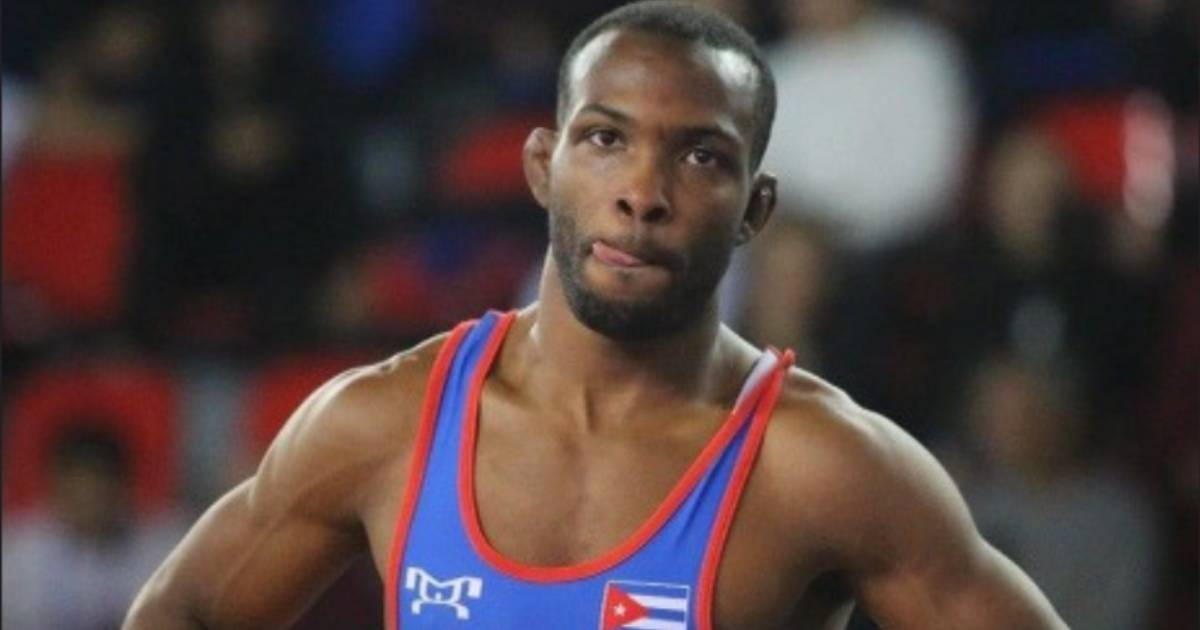
Reineri Andreu Ortega, one of the most accomplished wrestlers Cuba has produced in the last decade, has filed a lawsuit against the National Collegiate Athletic Association (NCAA) after being excluded from collegiate wrestling in Iowa due to a rule that, according to his claim, penalizes him for his academic background in Cuba.
The story was revealed by the American newspaper , which detailed how Ortega, a student at Iowa State University (ISU), was blocked by the so-called "five-year eligibility clock rule," a provision that limits the time an athlete can compete in the U.S. college system.
Ortega, a two-time U-23 world champion, Pan American two-time champion, and Central American gold medalist in the 57 kilograms category, arrived in the U.S. in December 2022 after leaving the Cuban national team.
Like many high-performance athletes trained on the Island, he left behind a career controlled by the State, with no professional contracts or real possibility of benefiting from his talent.
According to Des Moines Register, the NCAA believes that Ortega's eligibility clock started when he studied at Manuel Fajardo University in Cuba, even though that institution is not part of the U.S. university system and its main activity was representing the Cuban national team, rather than competing in college leagues. Under this interpretation, the NCAA argues that Ortega has already exhausted his time and cannot officially compete for Iowa State.
The lawsuit, filed in a federal court in southern Iowa, claims that the enforcement of the rule is arbitrary and violates antitrust laws by preventing her from accessing economic opportunities that are currently available to other college athletes.
Since a Supreme Court ruling in 2021, athletes can earn income from the use of their name, image, and likeness, a market that, according to the legal text cited by the media, has become a multibillion-dollar industry.
For Ortega, the exclusion is not just in sports. At 27 years old, standing at 1.61 meters tall and competing in a category with few professional opportunities outside of the university realm, being left out of the NCAA means losing perhaps the only real avenue to capitalize on years of sacrifice and medals. His lawyers argue that without that opportunity, his career in the United States is practically cut short.
The case also highlights a contradiction within the system. The complaint itself points out that American athletes who spend years in professional leagues can later enter university and compete without similar restrictions. An example mentioned is former baseball player Chris Weinke, who after six years as a professional won the Heisman Trophy in college football at the age of 28.
Ortega, born in Sancti Spíritus in 1998 and trained at Cerro Pelado in Havana, has a career that includes Pan American titles, world gold medals, and a lifetime dedicated to wrestling since his adolescence. After arriving in Iowa, he joined the Cyclone Regional Training Center and earned a spot on the ISU team, although he was unable to compete officially.
The lawsuit seeks an urgent court order to suspend the application of the rule while the case is being resolved, as well as a permanent decision that allows athletes in similar situations to avoid penalties for studies conducted outside the "monopoly" of the NCAA.
So far, the NCAA has not publicly responded to the lawsuit, according to Des Moines Register.
Meanwhile, the case of Reineri Andreu Ortega brings back to the forefront a reality that many Cubans recognize: that even far from the Island, escaping the grip of a system does not always mean being free to compete on equal terms.
Filed under: