
Related videos:
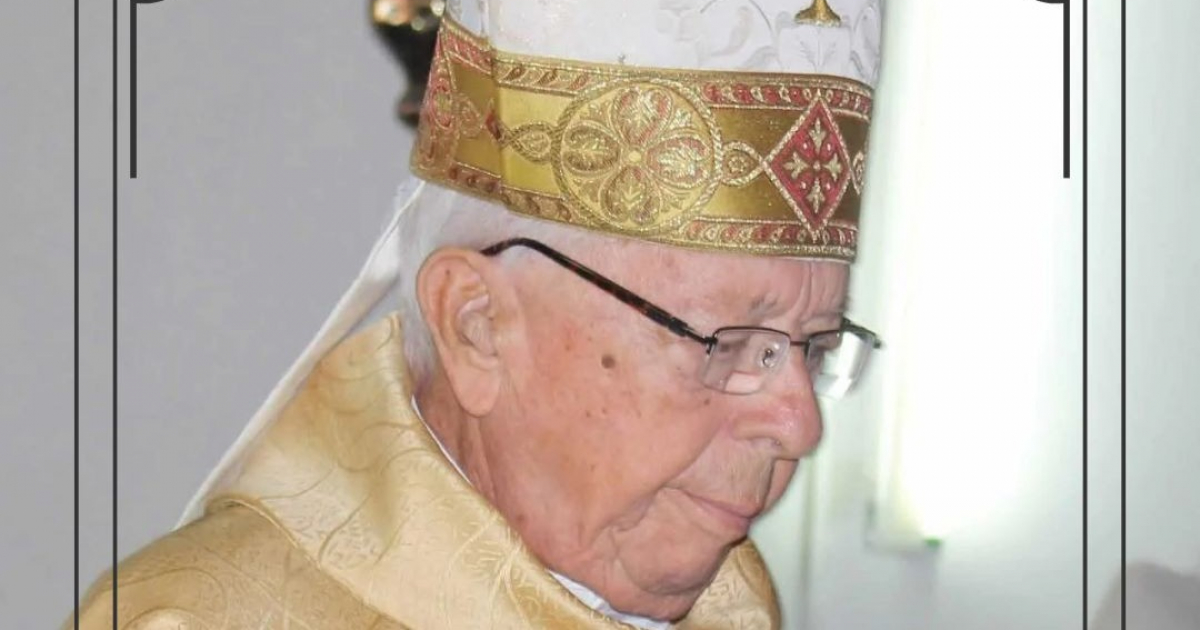
Monsignor Héctor Luis Lucas Peña Gómez, emeritus bishop of the Diocese of Holguín, passed away this Thursday, December 18, at 3:45 AM, at the age of 96.
The information was confirmed by the Diocese of Holguín through its official channels, which noted that the passing occurred on the liturgical memorial of Saint Mary of Hope.
With his passing, the Catholic Church in Cuba bids farewell to the oldest bishop and the most senior active member of the Cuban episcopate, regarded as a living testimony of faithfulness, simplicity, and pastoral commitment.
According to the Diocese's announcement, this Thursday at 3:00 PM, the Funeral Mass was scheduled to be celebrated at the Cathedral of Holguín, presided over by the bishop of the diocese, Monsignor Emilio Aranguren Echeverría, before the transfer to the local cemetery for a Christian burial.
The Communications Office of the Diocese requested prayers for the eternal rest of the prelate, with the message: "Grant, O Lord, eternal rest! And let perpetual light shine upon him!"
A life dedicated to serving
Born on October 18, 1929, in the town of Velasco, in the municipality of Gibara - then part of the old province of Oriente - Monsignor Peña Gómez grew up in a family of seven siblings.
He was baptized in Velasco before the image of the Virgin of Charity of El Cobre, within the parish territory of San Andrés. At just 13 years old, he entered the San Basilio Magno Seminary, where he completed his basic studies as well as the stages of Humanities and Philosophy.
Subsequently, by the decision of the Archbishop of Santiago de Cuba, Enrique Pérez Serantes, he completed his studies in Theology in Santo Domingo, Dominican Republic.
On June 26, 1955, he was ordained a priest, alongside Pedro Claro Meurice Estíu and Francisco Parrón, and was assigned as a cooperating vicar of the San Isidoro parish, now the Cathedral of Holguín.
In the following years, he served numerous communities in eastern Cuba, including Jiguaní, Baire, Santa Rita, Babiney, Manatí, Jobabo, and San Germán, combining his pastoral work with the establishment of youth groups for Catholic Action.
After the profound changes that occurred in the Cuban Church at the beginning of the 1960s, he took on greater parish responsibilities in Holguín and its surroundings, in a context marked by a shortage of clergy and the closure of religious institutions.
On January 12, 1970, he was appointed titular bishop of Novaliciana and auxiliary to the Apostolic Administrator of Santiago de Cuba. He received episcopal ordination on March 19 of the same year in the church of San Isidoro, with Monsignor Cesare Zacchi as the principal consecrator.
His episcopal motto, taken from the Letter to the Romans, was: "How unsearchable are your ways!"
The Cuban layman José Julio Masferrer shared with Martí Noticias details about the personal life of Mons. Peña, whom he described as "a man of great faith, with a strong character, and stage fright."
"He used to stutter when speaking in public, until one day, September 8, he was given the main mass at the Sanctuary, and that day, a miracle happened: he delivered a homily that left everyone in awe. The bishops and priests present told him, 'you took your hat off'... Since then, the homilies changed completely," he stated.
First Bishop of Holguín
In 1979, following the establishment of the Diocese of Holguín by Pope John Paul II, its first bishop was appointed, and the church of San Isidoro was elevated to the rank of Cathedral.
For over 26 years at the helm of the diocese, Monsignor Peña Gómez promoted a vigorous pastoral and organizational mission.
He established 12 new parishes, promoted the presence of male and female religious communities in rural areas and neighborhoods lacking pastoral care, ordained 11 priests and four permanent deacons, and restored the Cathedral - consecrated in 1997.
He also created various educational and social initiatives, such as the Diocesan Center for Lay Formation and Promotion, the diocesan newsletter Cocuyo, the Diocesan Youth Center, and the House of Divine Mercy for the care of those in need.
As a member of the Cuban Episcopal Conference, he chaired several pastoral commissions, participated in continental meetings of CELAM, and was one of the driving forces behind the Cuban Ecclesial Reflection, which led to the historic Cuban National Ecclesial Meeting (ENEC).
He was also a witness and participant in key moments of the Church on the Island, including the papal visits of John Paul II, Benedict XVI, and Francis.
In 2004, he submitted his resignation to Pope Benedict XVI, in accordance with Canon Law, which was accepted in November 2005, paving the way for his succession by Monsignor Emilio Aranguren.
Priests, laypersons, and the faithful have remembered Monsignor Peña Gómez as a close, humble shepherd willing to seek counsel, capable of sustaining and projecting a diocesan Church in complex times.
His legacy, characterized by faith, service, and perseverance, remains a reference for new generations of pastors and believers in Cuba.
Filed under: