
Related videos:
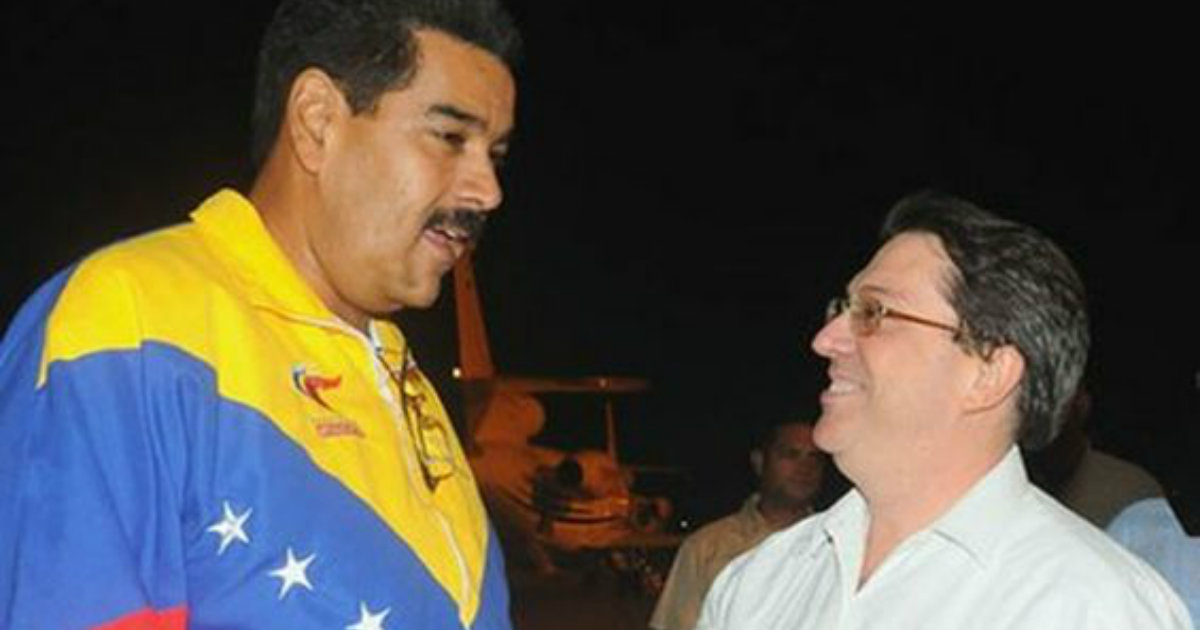
The Cuban Foreign Minister Bruno Rodríguez Parrilla defended the regime of Nicolás Maduro this Saturday, following the designation of the Venezuelan government as a foreign terrorist organization by the United States, a measure that is part of Washington's new offensive against Chavismo.
Through his account on X (formerly Twitter), Rodríguez described the designation by the State Department as a “arbitrary, fraudulent, unilateral, and politically motivated act,” and accused the U.S. administration of “manipulating terrorism as a political weapon.”
"What moral authority does the United States government have for these designations when it protects and funds terrorist organizations on its territory, refuses to cooperate with neighboring countries like Cuba on terrorism issues, and openly discusses covert actions and sabotage by the CIA against Venezuelan infrastructure?" wrote the Cuban regime's Minister of Foreign Affairs.
Rodríguez stated that the U.S. decision aims to "internationally isolate the Bolivarian and Chavista Revolution," as well as "increase pressure and escalate an aggression with unpredictable consequences for the peace and stability of Latin America and the Caribbean."
The chancellor reiterated Cuba's "full solidarity" with the people and government of Venezuela, while describing the measure as "infamous barbarity."
The reaction from the Cuban minister comes a day after President Donald Trump announced new sanctions against relatives and associates of Nicolás Maduro and Cilia Flores, whom Washington accuses of being part of a “narcotics-corruption structure that sustains the illegitimate regime of Caracas.”
The U.S. Department of the Treasury this week included several members of the Flores-Malpica clan, as well as entrepreneurs and associates linked to corruption and money laundering operations within Petróleos de Venezuela (PDVSA), on its sanctions list.
According to Treasury Secretary Scott Bessent, the designation of Maduro's regime as a terrorist organization "sends a clear message to the criminal actors who threaten the stability of the hemisphere" and is part of President Trump's national security strategy.
"Maduro and his accomplices threaten the peace and stability of our hemisphere. The United States will not allow their narco-state to continue exporting drugs, corruption, and repression," Bessent stated in an official statement.
This Saturday, the crisis between Washington and Caracas reached a peak of tension after the U.S. seized a second oil tanker off the coast of Venezuela in international waters, in an operation led by the Coast Guard.
The action takes place days after President Donald Trump announced a "total and complete blockade" against "all sanctioned oil tankers entering and leaving Venezuela."
Cuba and Venezuela have maintained a close political and economic alliance for over two decades.
The regime in Havana relies on subsidized oil supplies from Venezuela, while Caracas depends on Cuban military and intelligence support to maintain its repressive apparatus and internal control network.
Washington has reiterated that both dictatorships "act in coordination" in activities such as espionage, illicit trafficking, and regional misinformation, which justifies—according to the Trump administration—the expansion of sanctions and military reinforcement in the Caribbean.
An article in the New York Times revealed last week that Secretary of State Marco Rubio's strategy for bringing about change in Havana involves eradicating chavismo.
Filed under: