
Related videos:
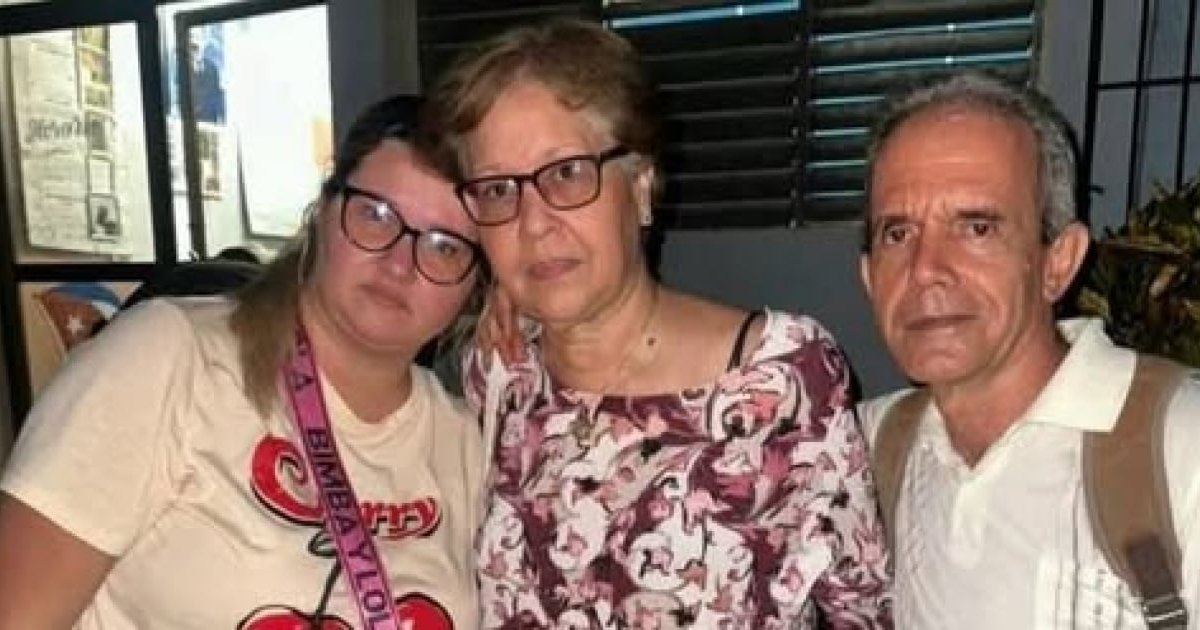
The detention of the Cuban intellectual Alina Bárbara López Hernández, along with the writer Jorge Fernández Era and the doctor Lilian Borroto López, once again highlighted the pattern of repression, arbitrariness, and systematic harassment that the Cuban State exerts against those who attempt to exercise basic rights such as peaceful protest.
The events took place in Matanzas, the same location where López has been peacefully demonstrating on the 18th of each month since March 2023.
In a lengthy and detailed account published on Facebook, Alina Bárbara López explained that her arrest was not an isolated incident, but a calculated decision by those in power, driven by fear and the weakness of a system that is aware of its unpopularity.
The activist directly linked her detention to the virtual session of the National Assembly of People's Power, during which the deputies from Matanzas were gathered in the provincial government building, near the Parque de la Libertad, where she intended to protest with a sign demanding the release of political prisoners.
According to López, for months the authorities had chosen to allow her to protest as a strategy to reduce pressure, but that day they reverted to their repressive modus operandi at the mere sight of a citizen demanding rights in front of power representatives.
"It was not a violent act, but the deputies could not bear the sight of a person holding a sign," she reported.
An arrest without a warrant and a detention of nearly 11 hours
Alina recounted that she was intercepted without a detention order, as in past instances, by officers who admitted they did not know the reasons for the arrest and claimed to be following higher orders.
After being taken to the PNR Unit of Playa around 9:00 am, she was held until about 8:00 pm in a dilapidated office located above the holding cells, with worn-out furniture, lacking minimum hygiene conditions, and with a bathroom described as unsanitary.
For hours, no one came to explain the reasons for her deprivation of liberty. Only a doctor from State Security appeared to take her blood pressure, despite the fact that she had not requested it.
The 60-year-old teacher, who is hypertensive, agreed to document her physical condition.
The atmosphere inside the station, he described, was one of unusual nervousness: constant movement of patrols, officers gathered together, and evident tension.
The explanation came when he decided to break the silence and began shouting slogans in favor of political prisoners. Then he heard a familiar voice from the cells: it was Jorge Fernández Era, detained along with Lilian Borroto, daughter of Alina, who had been locked up in a female cell.
Lilian had been arrested while protesting her mother's detention and was taken away in a civilian car along with the writer Fernández Era.
The "psychologist" and the justification of power
One of the tensest moments occurred when an instructor from the Technical Directorate of Investigations, dressed in civilian clothes and presenting himself as a psychologist, attempted to discredit the non-violent protest.
She stated that "the revolution cannot be overthrown with shouting and signs" and that the power had been "on the horse for 67 years." Alina responded with a powerful argument about the history of social change, the fall of dictatorships, the economic ruin of the country, and the difference between revolution and government.
According to his testimony, the officer's initial arrogance transformed into doubt. Before the exchange concluded, López issued a direct warning: the detention of his daughter had crossed a seriously unacceptable line.
Warnings, blackouts, and unsigned minutes
At 6:00 PM, a blackout left Alina and the officer guarding her in the dark, surrounded by mosquitoes, with no one coming to resolve their situation.
Finally, she was transferred to another office where an official warning was attempted to be imposed on her for allegedly violating a precautionary measure of house arrest, and the poster was confiscated. She refused to sign any document, reiterated that she would continue protesting, and denounced the illegality of the process.
Upon leaving, he found Jorge and Lili, who had been freed shortly before, along with family members who had waited all day.
He expressed gratitude for the support from neighbors, colleagues, his daughter's patients, and various independent media and platforms that monitored the case.
Jorge Fernández Era: Dungeons, Humiliation, and Dignity
Jorge Fernández Era provided his own testimony under the title "The Floating Value."
He recounted how he arrived early in Matanzas to meet with Alina, the unusual police presence in the city, and his subsequent detention alongside Lilian when they were heading to the police station to demand answers.
He was confined in an unsanitary cell-block, exposed to the sun, without a bathroom, surrounded by puddles and rats, and later moved to a dark office.
He confirmed that the order was to release them only after the National Assembly session concluded. He also declined to sign the warning notice and defended the peaceful and constitutional nature of the protests.
Fernández Era expressed pride in having shared the detention with Alina Bárbara López and highlighted her courage, intelligence, and dignity.
At the same time, he lamented the social fear and the lack of citizen presence supporting these protests in a city struck by blackouts and shortages.
A repeated repressive pattern
These arrests add to a long list of arbitrary detentions against activists, intellectuals, and citizens attempting to exercise rights that are even recognized by the Cuban Constitution itself.
Alina's family has reported ongoing harassment, surveillance, interrogations, and the inaction of the Prosecutor's Office in response to previous complaints against State Security.
Alina Bárbara López's protest, also linked to International Migrants Day, brought to light once again the drama of the Cuban exodus, the existence of political prisoners, and the criminalization of peaceful dissent.
Their demand remains the same: freedom, rights, and an end to repression.
What happened in Matanzas reflects not only the violation of fundamental rights but also the fragility of a system that responds with arrests and threats to a simple sign and a voice that refuses to be silenced.
Filed under: