
Related videos:
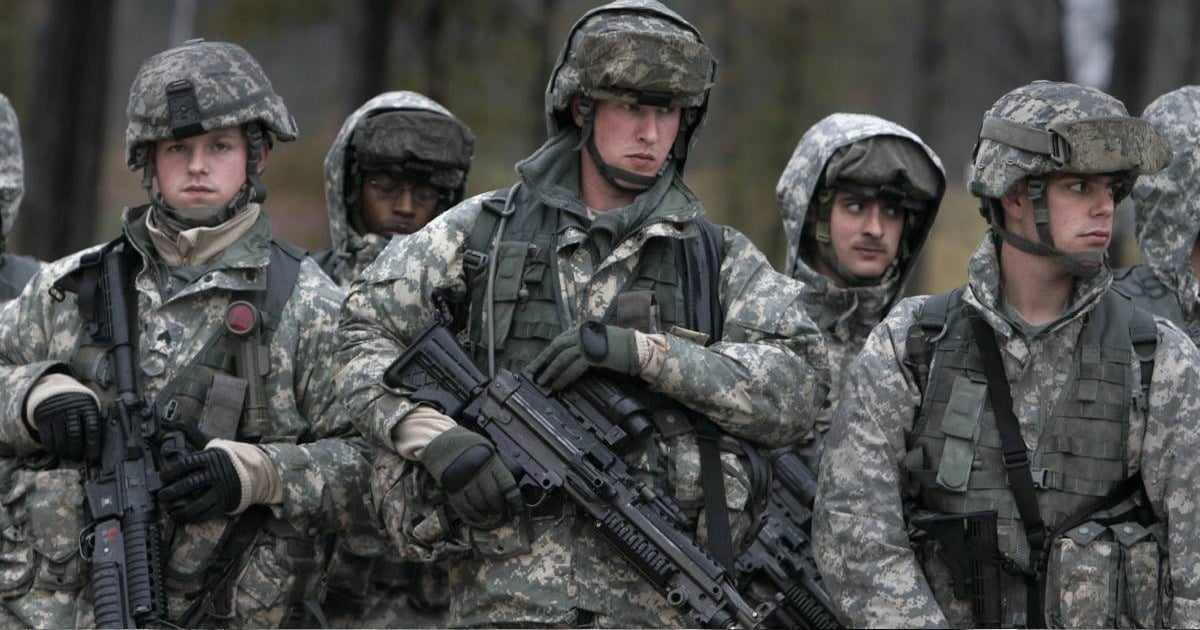
The Supreme Court of the United States rejected on Tuesday the request from President Donald Trump to deploy National Guard troops in Illinois during immigration operations in the Chicago area.
The ruling represents a significant judicial setback for the Republican Administration and a political victory for Democratic Governor JB Pritzker, who has strongly condemned the raids in that state and come to the defense of the immigrants residing there, reported Telemundo.
In an unsigned order, the court dismissed the federal government's emergency request, which argued that troops were necessary to protect federal agents during immigration raids in Illinois, where opposition to immigration raids is widespread.
The ruling, of a preliminary nature, limits the president's power to invoke a federal law that authorizes the use of military forces in situations of "rebellion or the danger of rebellion" or when regular forces "are unable to enforce the laws of the United States."
Governor Pritzker celebrated the decision as "a great victory for Illinois and American democracy," arguing that Trump did not have the authority to federalize and deploy troops in his state.
"This ruling is an important step to curb the constant abuse of power by the Trump Administration and its march toward authoritarianism," stated the state leader, a charismatic multimillionaire who has personally promoted local Latino businesses in recent months.
"Illinois will remain vigilant and will defend the rights of our people against any new attempt of abuse of authority," he stressed.
For her part, White House spokesperson Abigail Jackson defended the presidential measure, stating that Trump "promised to protect the American people and federal agents from violent rioters," and that "nothing in today's ruling diminishes the importance of that critical agenda."
“The president activated the National Guard to ensure compliance with immigration laws and the safety of federal personnel,” Jackson added.
Although the court decision only affects the state of Illinois, it sets a legal precedent that could extend to other similar lawsuits regarding military use in cities with Democratic governments that oppose Trump's immigration policies.
The court concluded that the Posse Comitatus Act —which prohibits the use of armed forces in law enforcement functions— limits presidential authority in these cases, and that the White House "did not identify a legal basis that allows for the enforcement of laws through the use of military forces in Illinois."
The state of Illinois and the city of Chicago have sued the federal government, claiming that Trump acted with political motivations and violated both the Tenth Amendment (which protects state sovereignty) and laws that restrict the militarization of domestic security.
The Seventh Circuit Court of Appeals had already partially blocked the deployment, a decision now upheld by the Supreme Court.
Trump's measure was part of a broader strategy to exert federal control over Democratic cities that have resisted his immigration policies, such as Los Angeles, Portland, and Washington D.C., where troops have also been deployed under the same justification.
In those jurisdictions, the courts have yet to weigh in, but analysts anticipate that the Supreme Court's decision will strengthen legal challenges against the military's involvement in civil control tasks.
The ruling represents one of Trump's few recent defeats in a court dominated by a conservative majority (6-3), following a series of legal victories achieved in 2025.
The migration operations of ICE (U.S. Immigration and Customs Enforcement) have unleashed chaos in Chicago, where indignant residents often confront federal agents.
They have also taken part in large protests and thrown snowballs at ICE agents in defense of the predominantly Mexican immigrant community residing in the suburbs of the city.
Filed under: