
Related videos:
The United States carried out its first recognized direct attack within the territory of Venezuela on Christmas Eve, between December 24 and 25, 2025: a CIA drone operation against a remote dock on the Venezuelan coast, identified by Washington as a key infrastructure of the Tren de Aragua and drug trafficking networks associated with Nicolás Maduro's circle. This action, conducted without the presence of U.S. troops on the ground and presented as an “anti-narcotics blow,” represents a qualitative leap in the military escalation of the United States in the Caribbean.
The date and the objective of the attack
According to leaks cited by various international media, the operation took place during the night of December 24 to 25, taking advantage of the low activity in the area and the general distraction typical of the holiday season. The target was an isolated dock on the Venezuelan coast, described as a loading and departure point for speedboats used to transport cocaine and other drugs to the Caribbean and Central America, under the control of the Tren de Aragua and operators linked to the chavista elite.
U.S. intelligence sources maintain that at that dock, shipments, fuel, and equipment for the "narco-boats" have been stored, which the United States has been targeting for months in the Caribbean and the Pacific. This is part of a campaign that has destroyed over 30 vessels and resulted in more than 100 deaths. The choice of that location is based on a criterion of high strategic value but relatively low population density, aimed at reducing the political cost of a strike within Venezuela
The intelligence and preparation phase
Before the attack, U.S. agencies gathered information on the dock for weeks, combining satellite images, aerial surveillance, and communication intercepts to establish patterns of activity. Intelligence analysts reportedly identified peak cargo flow times, the presence of vehicles and armed personnel, as well as periods of lower traffic, all crucial for a precision night strike
According to these reports, the CIA was supported by Special Operations units from the United States, which provided target analysis, damage modeling, and criteria to minimize collateral damage. The result was a window of opportunity on Christmas Eve, when activity at the dock was almost non-existent and the likelihood of finding workers or locals in the facilities was minimal.
Drones and the operational profile
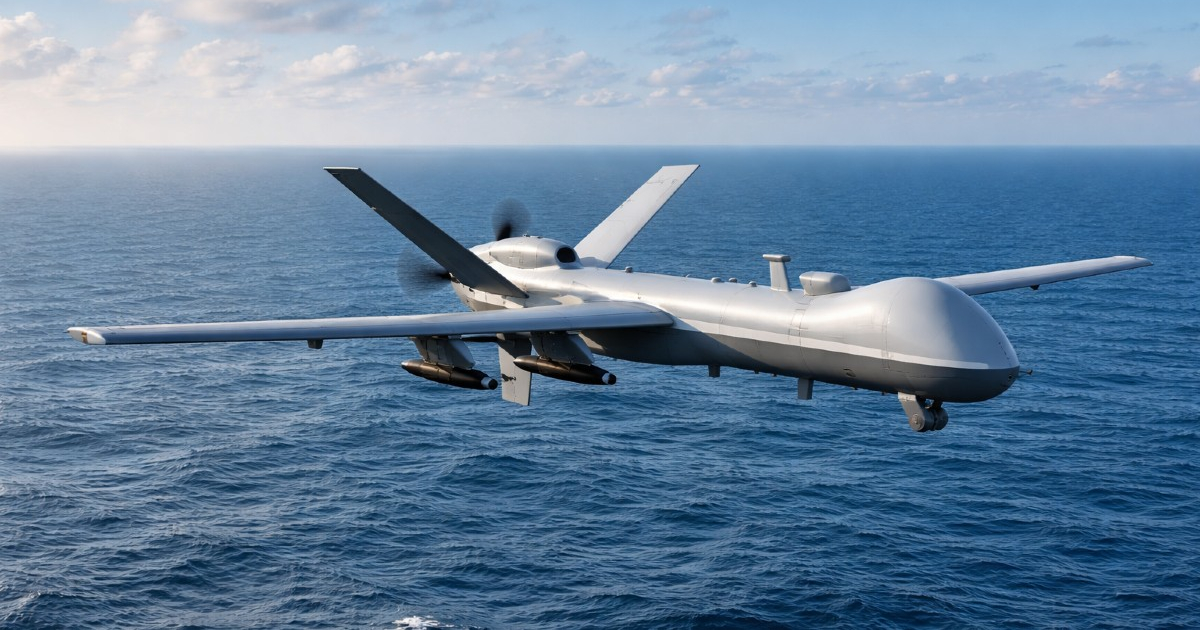
Although Washington has not revealed the type of drone used, the prior deployment of the MQ-9 Reaper in the Caribbean theater and the United States' employment doctrine suggest that this platform is the most likely candidate for an operation of this kind. The MQ-9 is a medium-altitude, long-endurance drone, capable of flying for more than 20 hours, equipped with electro-optical and infrared sensors, and often armed with AGM-114 Hellfire missiles and precision-guided bombs.
The aircraft reportedly took off from an advanced base in the Caribbean—sources mention deployments in Puerto Rico for the regional campaign—and flew toward the Venezuelan coast at medium-high altitude, beyond the reach of most short-range air defense systems of the Bolivarian National Armed Forces. Once in the target area, the drones would have performed observation orbits to confirm the absence of personnel before launching one or several guided missiles at structural points of the dock and adjacent storage facilities
How was the blow on the dock?
The sources cited by CNN and other media describe a "surgical" attack occurring in the dead of night, with a direct impact on the main structure of the dock and storage areas previously identified in intelligence images. The operational profile reportedly followed the classic pattern of "kinetic action": final target identification using infrared sensors, authorization from the command center, and nearly simultaneous firing of precision munitions.
After the impacts, a large explosion was reported, visible from several kilometers away, followed by fires at the facilities that continued into the early morning. No large secondary explosions have been documented that would suggest the presence of significant ammunition depots, reinforcing the theory of a logistical target linked to the storage of drugs, fuel, and equipment for boats, rather than a conventional military base
Were there any casualties and what impact did it have?
U.S. officials, speaking on condition of anonymity, claim that the operation was designed to avoid human casualties and that the drones waited until their sensors confirmed there was no movement of people at the dock. So far, there are no official numbers regarding deaths or injuries, and the government of Nicolás Maduro has not provided a detailed report on the damage that occurred on Christmas Eve
The images following the attack show the partial or total destruction of the dock structure, as well as sections of warehouses, storage areas, and loading zones, which in operational terms means the point is rendered unfit for regular shipping operations. For Washington, this represents a blow to the logistics network of the narco-boats that are already being sunk in the sea; for Caracas, it is a demonstration that the United States is willing to "cross the line" and carry out attacks within Venezuelan territory
The role of Trump and the political signal
Days later, President Donald Trump claimed responsibility for the operation during a public event, asserting that the United States “destroyed a major facility” in Venezuela and mentioning a “large explosion in the dock area where ships load drugs.” His statements align with reports of the attack on Christmas Eve and with the White House's narrative that this is an extension of the “war on drugs” brought to Venezuelan territory.
The message has two parts: internally within the United States, Trump presents the strike as evidence of his firmness against drug trafficking and the Maduro government; externally, he indicates that the naval blockade and attacks on boats can be combined with precision strikes on land whenever Washington deems it necessary. Analysts agree that the use of CIA drones against infrastructure in Venezuela paves the way for new covert actions and raises the risk of escalation if Caracas decides to respond militarily rather than just politically or diplomatically.
Filed under: