
Related videos:
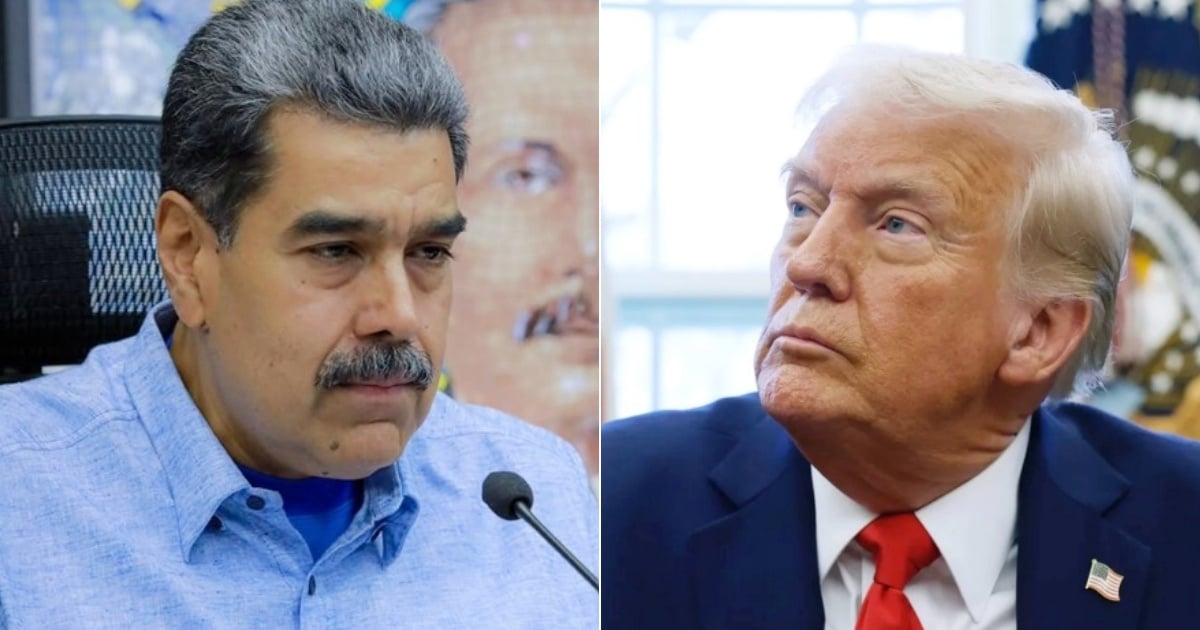
The Venezuelan dictator Nicolás Maduro offered the United States Government to open "serious" talks to reach a bilateral agreement to combat drug trafficking and facilitate U.S. oil investments in Venezuela.
Maduro granted an interview on December 31 to journalist Ignacio Ramonet, while his country faces an escalation of military attacks from Washington against alleged vessels linked to drug trafficking in the Caribbean and Pacific waters.
The chavista leader confirmed that his government is "ready" to negotiate with the White House on both drug trafficking issues and the energy sector, and claimed that his country has "a perfect model for combating drug trafficking."
He also attributed the entirety of cocaine production in the region to Colombia.
"All the cocaine that moves in this region is produced in Colombia. All of it. All the cocaine. We are victims of Colombian drug trafficking," he stated.
Maduro once again denied Washington's accusations that label Venezuela as a key country in drug trafficking, comparing them to the arguments used by the United States before the war in Iraq regarding alleged weapons of mass destruction.
"Since they can't accuse us of having weapons of mass destruction... they invented an accusation that the United States knows is as false as that one," he stated.
From that narrative, Maduro made his direct offer: "If you want to have a serious conversation about a combat agreement against drug trafficking, we are ready. If you want oil from Venezuela, Venezuela is ready for American investments like with Chevron, whenever you want, wherever you want, and however you want."
In the interview, he confirmed that he has only had one direct conversation with Trump, denying reports of a second contact.
He reported that the U.S. president called him on Friday, November 21, from the White House while he was at the Miraflores Palace.
According to Maduro, the conversation lasted 10 minutes and was respectful and cordial. However, he admitted that since then, "the developments post-conversation have not been pleasant."
These statements come in a particularly tense context.
On that same December 31, the armed forces of the United States announced attacks against five suspected smuggling boats, raising the total number of known operations against smuggling vessels to 35 and the death toll to at least 115, according to official figures from the White House.
Trump has justified these operations as part of an armed conflict with drug cartels and as a necessary intensification to curb the flow of narcotics into U.S. territory.
The attacks began off the Caribbean coast of Venezuela and then extended to the eastern Pacific, intensifying military pressure on maritime routes associated with illegal trafficking.
While the dictator tries to present himself as a dialogue-ready partner, the United States maintains its offensive against the drug trafficking networks operating in the region and continues to point to Venezuela as a key link in the drug trade.
Maduro's offer, made amidst military operations, deaths at sea, and ongoing sanctions, showcases his attempt to reposition himself in relation to Washington without taking concrete responsibility for the regime's role in the regional drug trafficking crisis.
Filed under: