
Related videos:
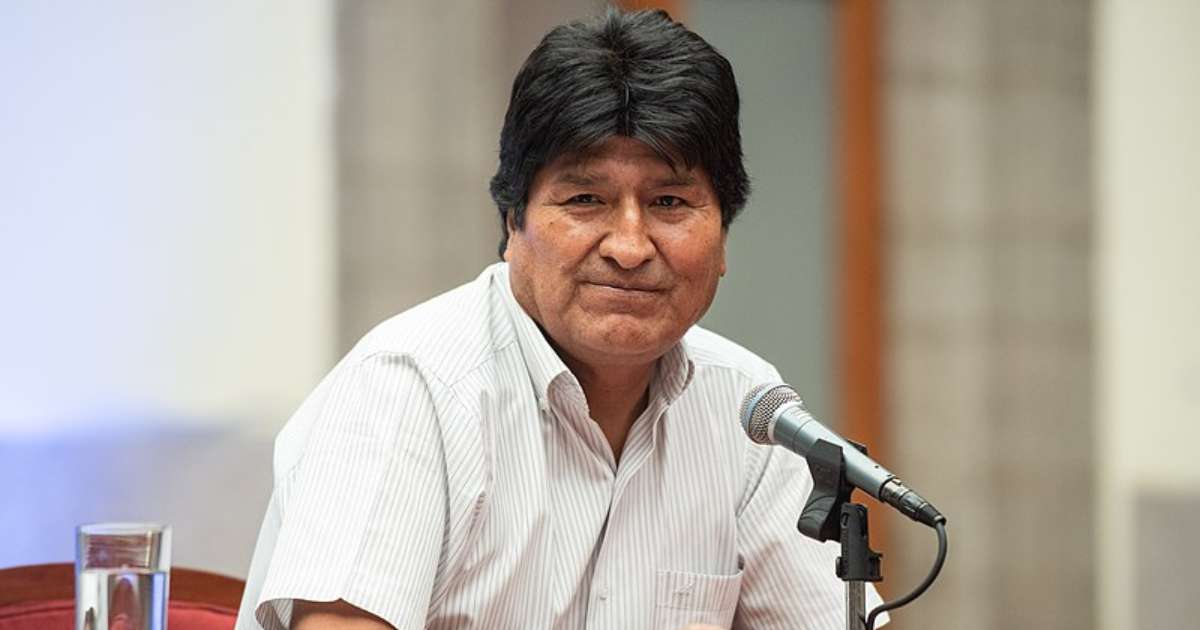
The former president of Bolivia, Evo Morales, commemorated this Thursday the 67th anniversary of the triumph of the Cuban Revolution with a message posted on his X account, in which he praised Fidel Castro and the Cuban people for their "ongoing struggle against imperialism."
"Today marks the 67th anniversary of the triumph of the Cuban Revolution, led by Commander Fidel Castro, in its ongoing struggle against imperialism, alongside its heroic and patriotic people who, with sacrifice and unity, managed to overcome the blockade, the constant economic pressure, and the attempts to undermine their sovereignty and freedom driven by the United States," wrote Morales. In his post, the former president also stated that the Cuban Revolution is "an example for all our peoples, particularly for our beloved Bolivia," and expressed his confidence that the Bolivian people "sooner or later will achieve the recovery of democracy, with sovereignty, resilience, and the pursuit of social justice."
Morales' words sparked a wave of reactions on social media, mostly critical and filled with open indignation. Many users accused him of ignoring the reality of the island and glorifying a dictatorship that, according to them, is responsible for the poverty and loss of freedoms experienced by Cubans.
Among the harshest comments, one wrote: “The beginning of the end for several generations of Cubans. Widespread misery and loss of freedom are the main characteristics of that dictatorship.” Another pointed out: “You forgot to mention that Fidel Castro was the greatest traitor to his own people; he imprisoned his comrades who overshadowed him and could have replaced his leadership, such as commanders Huber Matos, Camilo Cienfuegos, Arnaldo Ochoa, among many others.”
There were also messages that directly linked Morales's comment to the current situation in Cuba. “And since that moment, misery and misfortune until today,” wrote one user, while another stated: “People live in poverty and oppression, and this bird-faced guy says that the Cuban Revolution triumphed against imperialism.”
Some messages highlighted the contrast between the rhetoric and the island's economic dependency: "But they continue to depend on capitalism because they claim to be a poor country due to the blockade from the most capitalist country in the world. Who understands them?" another person mused ironically.
There were also more general responses, but filled with political rejection: "People of Bolivia, now it is clear who you should never vote for," wrote one user, while another commented: "67 years of misery, shame, and 21st-century slavery, a plague called socialism communism that murders and plunders the Cuban people without mercy."
In parallel, the president of Venezuela, Nicolás Maduro, issued an official statement—shared by the state network teleSUR—in which he extended “his deepest and fraternal congratulations to President Miguel Díaz-Canel, Army General Raúl Castro, and the heroic people of Cuba.”
The document emphasized that the Revolution of 1959 "opened an irreversible horizon of dignity, sovereignty, and social justice for Cuba and for all of Our America," and it commemorated the centenary of Fidel Castro's birth, whom it described as the "Commander in Chief inspired by the ideals of José Martí." Maduro stated that this event "represented the birth of the hope that ignited the torch of dignity and hope for all the peoples of Our America and the world who are fighting for their definitive independence."
The message from the Venezuelan president adds to the usual statements from allied governments in Havana every January 1st, a date when the regime commemorates the victory of the Revolution led by Fidel Castro, which in 1959 overthrew the dictator Fulgencio Batista and marked the beginning of more than six decades of communist rule in Cuba.
Filed under: