
Related videos:
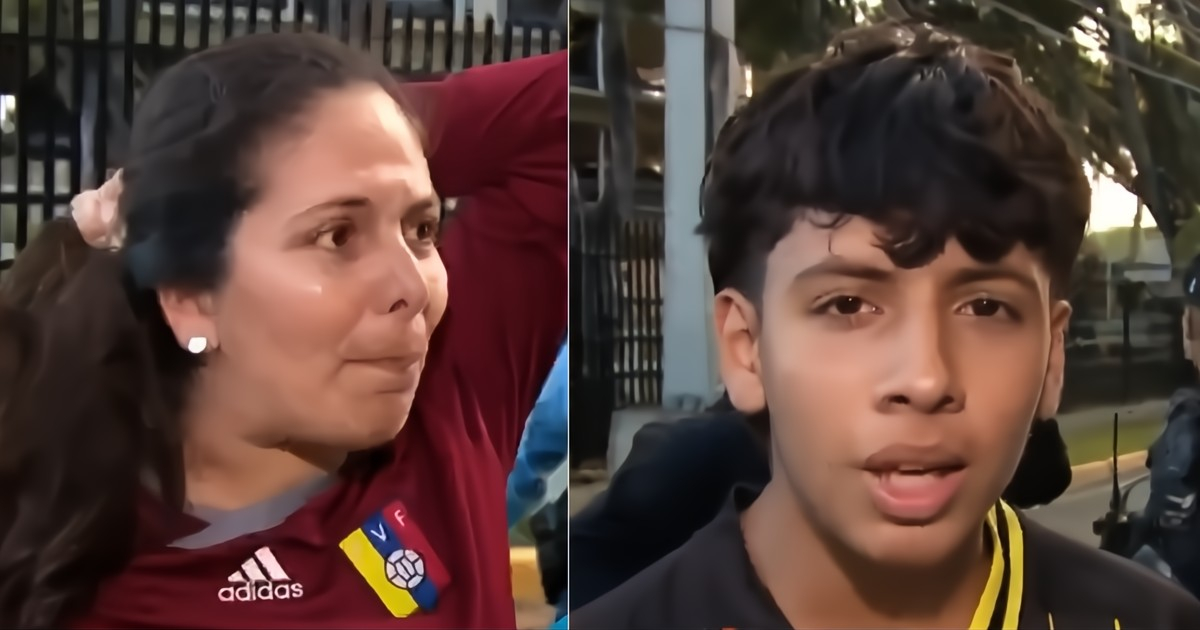
The voice of a Venezuelan mother and the determination of her son were enough to change the course of a demonstration in Puerto Rico and resonate with those who have lived under authoritarian regimes.
In front of the Federal Court in Hato Rey, both publicly defended the arrest of Nicolás Maduro and expressed a sentiment shared by millions of Venezuelans: the exhaustion, anger, and hope accumulated after more than two decades of crisis.
“What happened? Why are you here? We have been waiting for this moment for twenty-six years!” shouted the woman, visibly upset, as she faced the protesters demonstrating against the U.S. intervention in Venezuela. Her words, filled with pain, disrupted the prevailing narrative of the event and elicited mixed reactions among those present.
The protest had been called for 4:00 PM by the Hostosian National Independentist Movement (MINH), Mothers Against War, and the Socialist Workers' Movement (MST), organizations that rejected what they describe as an imperialist action against the Venezuelan government.
However, the intervention of the mother and her son highlighted a reality that is often overlooked in these spaces: that of those who have directly suffered the consequences of chavismo.
"Do not call peace what has been murder!" the woman claimed, accusing Maduro of crimes and holding him responsible for the prolonged suffering of his people.
His son reinforced the message with an even more compelling speech. He stated that those who defend the Venezuelan leader from abroad do not represent the true people.
"The true Venezuelan is the one who went hungry, the one who went to a hospital and found no supplies," he stated. He also recalled that, according to him, more than 70 percent of Venezuelans want political change. "It makes no sense to defend a war criminal," he concluded.
Meanwhile, the MST, through its spokesperson Ricardo Santos Ortiz, denounced that Puerto Rico is being used as a platform for U.S. military interventions and accused Washington of hypocrisy for labeling Maduro a dictator while, he claimed, it represses immigrants and minorities within its own territory.
But beyond the ideological speeches, the moment that was etched in memory was that of a mother and her son speaking from their wounds. Their intervention resonated with the pain of a diaspora marked by exile, scarcity, and family separation, an experience that feels particularly familiar to many Cubans.
As is the case with Cuba, the Venezuelan tragedy is not experienced through slogans, but in broken homes and shattered futures. In Hato Rey, this reality was heard without official microphones or party flags, solely through the strength of those who have been waiting for 26 years for something to change.
Filed under: