
Related videos:
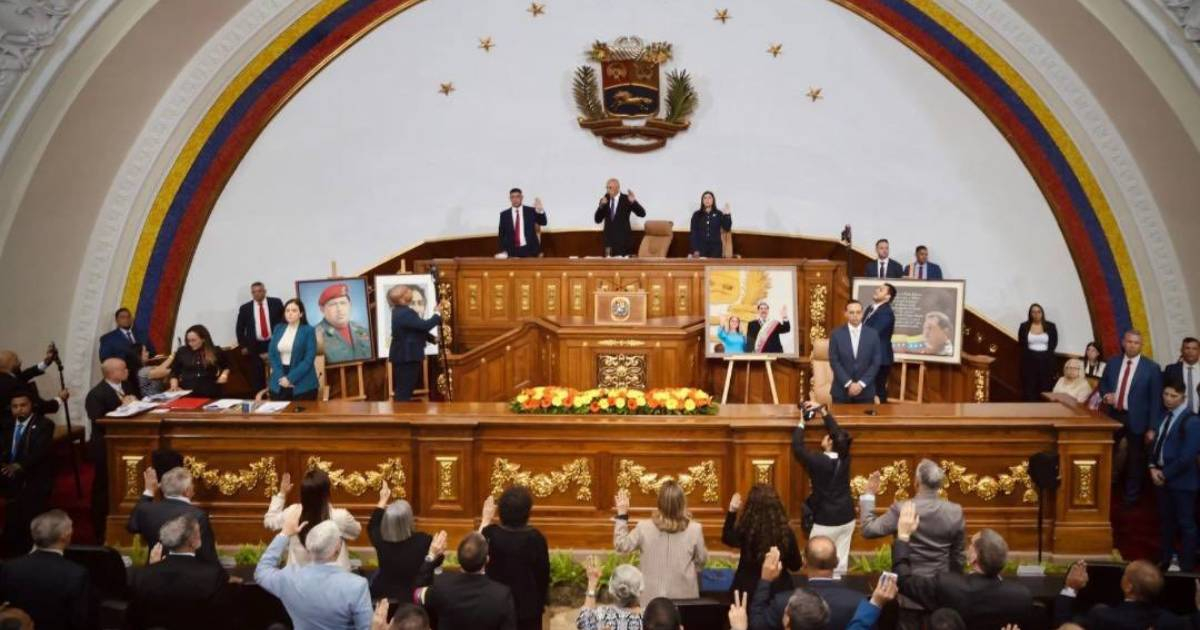
While Delcy Rodríguez was sworn in this Monday as acting president of Venezuela before a National Assembly controlled by chavismo, another scene was unfolding in the streets and hallways of the Legislative Palace, much less solemn and deeply unsettling, with at least fourteen journalists and press workers being detained in Caracas by state security forces.
The report was confirmed by the National Union of Press Workers (SNTP), which warned that eleven of the detained individuals belong to international media and agencies, while one is from national media. Although four were released a few hours later, at least ten remain in custody, several of them in what the union describes as enforced disappearance.
The detentions occurred during the coverage of the installation of the new session of the National Assembly, the same setting where Rodríguez was taking power following the capture of Nicolás Maduro in the United States.
According to the SNTP, journalists were prohibited from broadcasting live, recording videos, or taking photographs, a restriction that marked the beginning of a control and persecution operation.
Officials from the General Director of Military Counterintelligence (DGCIM) detained at least three communicators within the Legislative Palace itself. They were taken to the National Guard command located in the premises and subjected to thorough searches of their cell phones.
The agents demanded access codes and examined photographs, contacts, private conversations, voice notes, Instagram accounts, emails, and even files stored in the cloud.
The case of journalist Daniel Álvarez, a reporter for Televen, clearly demonstrated the seriousness of these practices. According to the SNTP, Álvarez lost custody of his phone during a time when officials left the location where he was being detained, before he was released.
For the guild, these procedures not only violate privacy and professional secrecy but also reinforce a pattern of criminalization of journalistic practice in Venezuela.
The day, which was supposed to mark the beginning of a new political stage following Maduro's arrest, ended up becoming a show of force against the press. While inside the assembly there were talks of peace, dignity, and sovereignty, outside the official discourse, reports of censorship, intimidation, and repression multiplied.
In a statement released that same day, the SNTP warned that it is not possible to talk about democratic transition while political persecution, censorship, and arbitrary detentions persist.
The union recalled that currently at least 23 journalists and press workers remain incarcerated and that more than 60 media outlets continue to be blocked on the internet.
For many Venezuelans, both inside and outside the country, the image is striking: a presidential oath broadcast by official media, while at the same time, reporters are detained for attempting to cover what is happening. This scene reinforces the idea that even amid an unprecedented political earthquake, controlling information remains a priority for the power in Caracas.
Filed under: