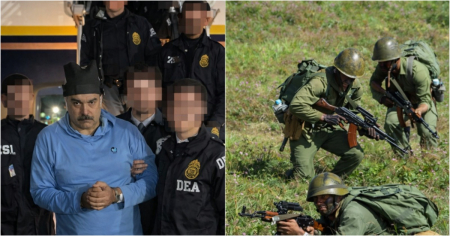
The repeated scenes of Nicolás Maduro dancing on state television, amidst the escalation with the United States, were the final trigger that led President Donald Trump to order the military operation that culminated in his capture in Caracas.
According to reveals from the newspaper The New York Times, Maduro's public behavior in the weeks leading up to his arrest, characterized by dancing, carefree gestures, and defiant messages, convinced Trump's circle that the Venezuelan leader was mocking Washington's warnings and testing their resolve.
The American newspaper cited two people familiar with the internal discussions at the White House, who stated that the constant appearances of the Chavista leader dancing on state television were seen as a direct provocation.
In one of those episodes, Maduro reacted to a U.S. attack on a dock identified by Washington as linked to drug trafficking by dancing to electronic music, while a recording repeated the phrase "No crazy war" in English.
According to those sources, that gesture was interpreted as Maduro's attempt to check if Trump was bluffing with his threats.
The reaction was the opposite: the presidential team believed they had crossed a line and that failing to respond would damage American credibility.
The correspondent for The New York Times, Anatoly Kurmanaev, confirmed on his account on X that “Maduro's constant dancing was the last straw,” and noted that once the decision was made, the White House began to position Vice President Delcy Rodríguez as an “acceptable” figure to lead a controlled transition, while María Corina Machado was never considered the main option.
The revelation adds to other information published by the New York newspaper regarding the political background of the military operation, which included targeted bombings and the relocation of Maduro and his wife, Cilia Flores, to the United States, in a context of strong diplomatic tensions and allegations of violations of Venezuelan sovereignty.
Filed under: