
Related videos:
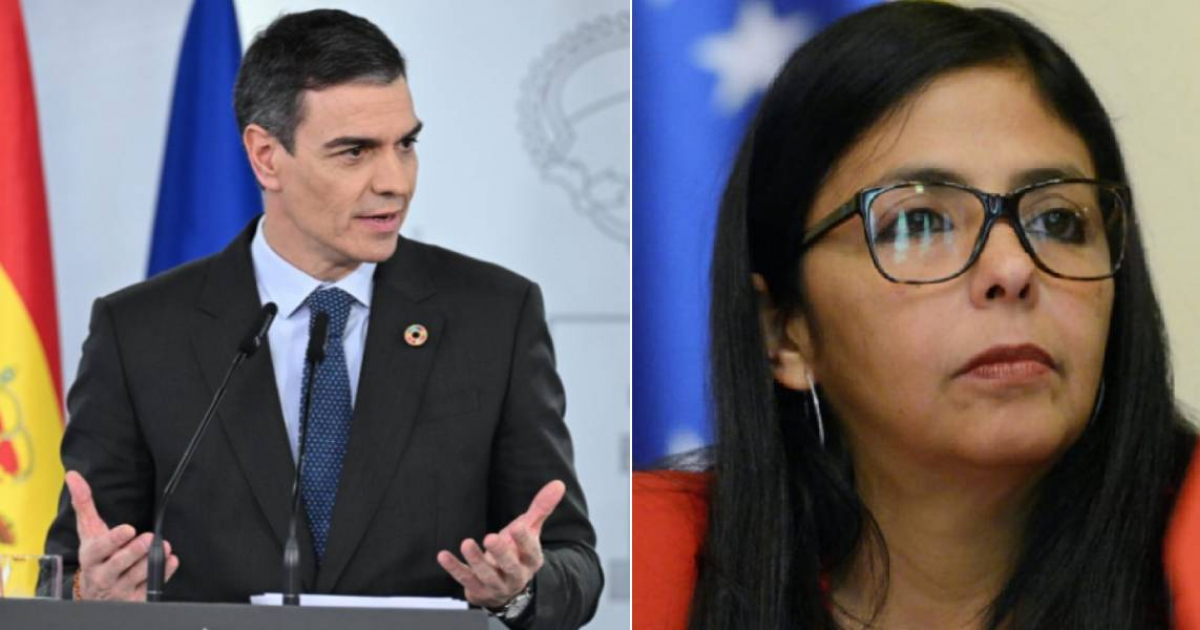
The Government of Spain formally requested the interim president of Venezuela, Delcy Rodríguez, the immediate release of the political prisoners from Spain detained in that country, as confirmed to RTVE by sources from the Ministry of Foreign Affairs.
According to the Spanish government, at least 14 individuals with Spanish nationality are currently being held "arbitrarily" in Venezuelan prisons. Most of them hold dual nationality and were born or reside in Venezuela. Human rights organizations and sectors of the opposition raise the figure to between 14 and 20 Spanish citizens imprisoned for political reasons.
The request was made through a "verbal note" sent to the new Venezuelan government following Rodríguez's assumption of office as interim president, after Nicolás Maduro was captured by U.S. forces and transported to the United States to face charges of drug trafficking and other crimes.
Emblematic cases and previous complaints
Among the most recent cases is the arrest, in September 2024, of Basque citizens José María Basoa and Andrés Martínez Adasme, accused by chavismo of belonging to Spanish intelligence services and planning an assassination attempt against Maduro, according to EFE.
From various sectors, that arrest has been interpreted as a political retaliation, especially following the acceptance of the opposition figure Edmundo González Urrutia in Spain.
Organizations such as Foro Penal, the Committee for the Freedom of Political Prisoners (CLIPP), and the party Vente Venezuela have repeatedly reported the presence of foreign citizens— including Spaniards—among the political prisoners of the Venezuelan regime.
Spanish interests in Venezuela
Spain has significant economic and business interests in Venezuela, in addition to an estimated community of between 150,000 and 200,000 Spanish citizens residing in the country.
The President of the Government, Pedro Sánchez, reiterated that Spain will not recognize any intervention that violates international law and called for a "fair and negotiated" transition, in line with the position expressed by Brazil, Chile, Colombia, Mexico, and Uruguay, which jointly rejected unilateral military actions in Venezuelan territory.
So far, there has been no public response from the interim government of Delcy Rodríguez to the Spanish request, as international diplomatic pressure for the release of political prisoners in Venezuela continues to grow.
Filed under: