The United States will control the sale of Venezuelan oil for an “indefinite” period and will deposit the money from those transactions into accounts controlled by Washington, stated Energy Secretary Chris Wright on Tuesday during an energy conference in Miami.
Wright stated that Washington will put the oil coming from Venezuela “on the market” —including the oil he described as “stuck”— and that from then on, “we will sell the production coming from Venezuela in the market,” with sales directed both to U.S. refineries and to buyers “around the world,” but carried out by the U.S. Government and with proceeds deposited in accounts under the control of the U.S. government, according to EFE.
The secretary stated that he is “working directly in cooperation with the Venezuelans” following Tuesday's announcement by President Donald Trump that Venezuela will deliver between 30 and 50 million barrels to the United States for sale in the North American market.
The plan includes the shipment of those volumes on storage vessels to unloading docks in the United States.
According to Wright, the goal of maintaining control over sales and funds is that these resources “can return to Venezuela to benefit the Venezuelan people”, but he emphasized that the U.S. needs that “power and control” to “drive” the changes that, he said, “must occur” in the country.
Wright argued that the U.S. should control sales and revenues as a lever to influence political changes, indicating that Venezuelan oil would be sold under the supervision of the U.S. government and that the revenues would remain in accounts controlled by the U.S.
The announcement comes at a time when Trump plans to host leaders of major oil companies at the White House on Friday, while his administration discusses reactivating the Venezuelan sector and increasing production.
Wright acknowledged, however, that revitalizing the industry will require "tens of billions of dollars" and "a significant amount of time," although he stated that the "opportunity is enormous" and that hundreds of thousands of additional barrels per day could be achieved in the short to medium term.
The agreement would allow exports to the U.S. amounting to up to 2 billion dollars (30–50 million barrels).
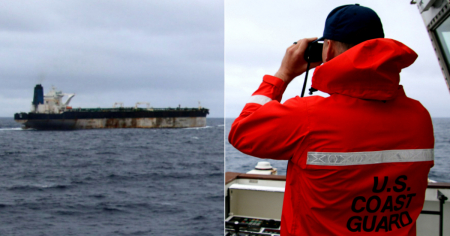
The statement comes amidst a highly tense context between Washington and Caracas, which includes measures such as the total blockade of sanctioned tankers to and from Venezuela announced by the Trump administration last December, as well as the pressure policy aimed at economically weakening Maduro's former regime.
For its part, sectors of the Venezuelan interim regime have maintained a defiant tone against the United States, with statements proclaiming that "there is no foreign agent governing Venezuela," in reference to accusations of political or economic control by Washington.
Filed under: