
Related videos:
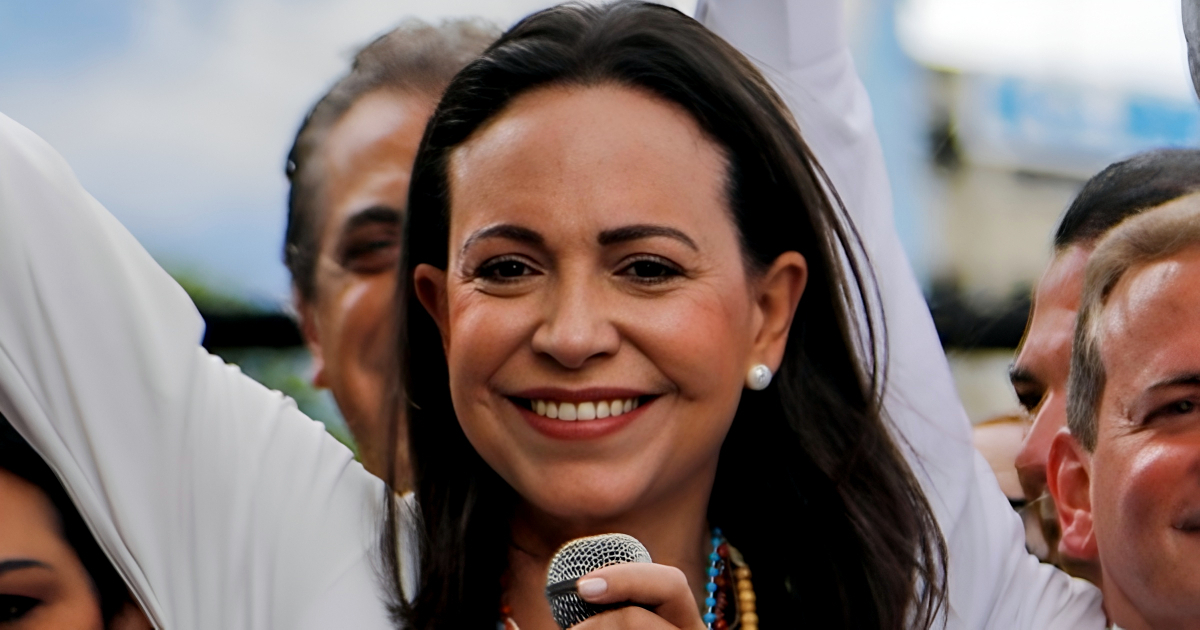
The opposition leader María Corina Machado stated that Venezuela has entered an irreversible transition process towards democracy, following the capture of Nicolás Maduro and his wife Cilia Flores during the military operation carried out by U.S. troops on January 3rd.
He also stated that the main objective should be to ensure that this transition occurs in the "most orderly and peaceful manner possible."
In an interview granted to the news portal Infobae, Machado described the current moment as the beginning of the dismantling of "an entire structure of terror and crime" that has ruled Venezuela for over two decades.
Machado stated that the first essential step of the transition is the immediate release of all political prisoners and the cessation of repression.
In that regard, he noted that the United States instructed Delcy Rodríguez, at the head of the interim government, to have the regime itself begin dismantling certain internal structures.
According to the leader, that phase is necessarily transitional and not sustainable over time, as it lacks the support of the Venezuelan people.
The opposition leader repeatedly praised the American president Donald Trump, thanking him for his "vision, courage, and determination" to promote the process that led to the capture of Maduro.
He said that Washington's actions not only benefit Venezuela but also the United States and the hemisphere by contributing to the dismantling of a drug-terrorism network with regional impact.
Machado stated that international justice must serve the people, not tyrants.
In her statements, the 2025 Nobel Peace Prize winner affirmed that both she and Edmundo González Urrutia are prepared to assume power and that the opposition has teams ready to address the country's multidimensional emergency, which includes collapses in public services, health, education, security, and an inflation rate exceeding 500%.
He assured that the project goes beyond a mere reform and aims to rebuild the State to serve the citizen.
Machado emphasized that Venezuela's recovery will require strong international support, particularly from the United States, but also from countries in the region.
He indicated that the democratic transition will dismantle the "hub of organized crime" and turn the country into a center of prosperity, investment, and democracy. He reiterated that this process, once initiated, has no turning back.
Finally, he stated that his intention is to return to Venezuela "as soon as possible" and expressed confidence that he will soon be able to reunite with the citizens in a free Venezuela.
He described the struggle against chavismo as a spiritual and existential fight, asserting that what was presented as impossible for years has now become an unfolding reality.
Machado's statements come amid a noticeable cooling of her relationship with Trump, following the U.S. president's withdrawal of political support after the opposition leader accepted the 2025 Nobel Peace Prize.
According to The Washington Post, Trump regarded that gesture as an "unforgivable sin," interpreting that the award should have been rejected or explicitly attributed to him, which would have led Washington to distance itself from the center of the transition and to explore a negotiated exit with sectors of chavismo itself.
In the days following Maduro's capture, Trump and his team began to publicly question Machado's viability as a leader in a transitional phase.
The leader stated that the opposition figure “lacks sufficient support and respect within the country,” an assessment that surprised his political team and contrasted with the more measured praises from Secretary of State Marco Rubio, who described her as “fantastic,” but emphasized that she is outside Venezuela and that the “immediate reality” requires making short-term decisions.
This strategic shift is also part of a broader redefinition of U.S. policy toward Venezuela, in which Washington seems to prioritize controlling the process— including engagement with Delcy Rodríguez as a transitional figure—over the prominence of the traditional opposition.
In this new landscape, negotiations with Chavismo and the direct management of energy and security interests have overshadowed the previous discourse of unwavering support for an opposition alternative led by Machado.
Filed under: