
Related videos:
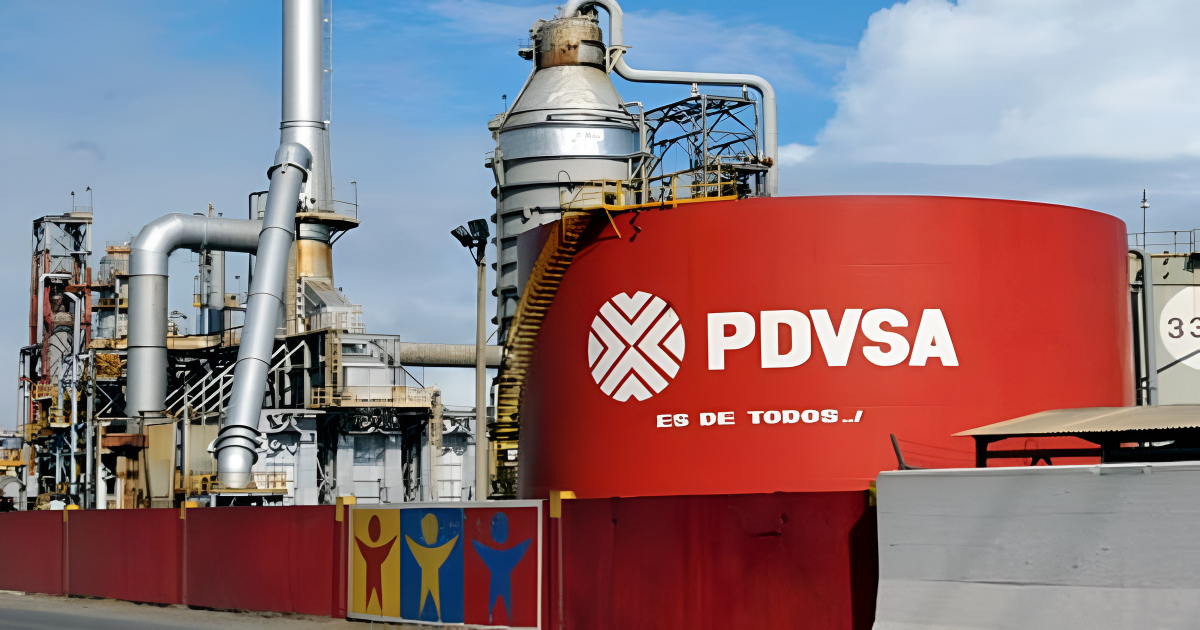
The President of the United States, Donald J. Trump, announced this Friday an investment of 100 billion dollars to rebuild Venezuela's oil infrastructure, as part of a new phase of cooperation between both countries following the capture of Nicolás Maduro.
In a message posted on his social media platform Truth Social, Trump celebrated the release of "large numbers of political prisoners" in Venezuela, describing it as "a very significant and smart gesture." He added that Washington and Caracas "are working well together, especially in the rebuilding, in a much greater, better, and modern way, of their oil and gas infrastructure."
The president confirmed that the world’s major oil companies will invest "at least 100 billion dollars" in the country and that this Friday he would meet at the White House with executives from the sector to coordinate energy reconstruction. At the same time, he announced that he had canceled a second "wave of military attacks" against Venezuela, although he clarified that "all ships will remain in their place for security reasons."
Control and supervision of Venezuelan oil
In an interview with Fox News, Trump stated that his administration would be "in charge of Venezuela's oil," with the aim of stabilizing the economy and ensuring that revenues "are managed for the benefit of the Venezuelan people."
The Secretary of Energy, Chris Wright, explained that the funds generated from oil sales will be deposited in accounts under U.S. supervision, while the Secretary of State, Marco Rubio, detailed that the plan will be executed in three phases —stabilization, recovery, and transition— to reorganize the oil industry and prevent an internal collapse.
On January 7, Petróleos de Venezuela S.A. (PDVSA) officially confirmed that it is in negotiations with the United States government for the sale of crude oil volumes, describing the process as “based on criteria of legality, transparency, and mutual benefit.” The state-owned company stated that operations are being conducted “under schemes similar to those in place with international companies, such as Chevron,” according to a statement issued from Caracas.
According to reports published this Friday, fourteen major energy corporations are participating in the summit convened by Trump at the White House to coordinate the reconstruction of the Venezuelan oil system.
A new phase after Maduro's fall
The energy understanding comes less than a week after the arrest of Nicolás Maduro and his wife in Caracas during a U.S. military operation. Following that, Vice President Delcy Rodríguez assumed the role of interim president, while the Chavista institutions operate under the supervision of Washington.
The bilateral plan aims to stabilize the Venezuelan economy, reactivate its productive apparatus, and prevent an internal collapse. Analysts believe that control of oil is redefining the balance of power in the country and marking a new direction in relations with the United States.
Political gesture and transition
Trump highlighted the release of political prisoners and the closure of the detention center known as El Helicoide, which he described as “a torture chamber in the middle of Caracas that is now being shut down,” according to statements published this Friday.
The president of the National Assembly, Jorge Rodríguez, confirmed the release of a significant number of individuals, describing it as “an act in favor of national peace.” The Democratic Unitary Platform regarded the measure as a step forward but demanded the “release of all political prisoners and an end to the repression.”
On his part, Alfredo Romero, director of Foro Penal, stated that “a general amnesty for the release of political prisoners would be an important gesture to unify the Venezuelan population, obviously without guaranteeing impunity for crimes against humanity.”
Trump also announced that next week he will meet with the opposition leader María Corina Machado, winner of the Nobel Peace Prize, to whom he expressed gratitude for dedicating the recognition to him.
The new energy and political framework between Washington and Caracas represents a profound shift from the sanctions and isolation policies applied in the past. With the cancellation of military offensives, the release of prisoners, and the opening up of large-scale investments, the bilateral relationship enters a phase focused on economic reconstruction, political stability, and regional security.
Filed under: