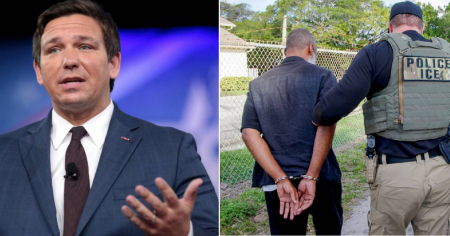
The governor of Florida, Ron DeSantis, announced this Monday what he described as a "historic reduction" in home insurance premiums in the state, marking a turning point after years of constant increases and a crisis in the insurance market.
The announcement, made during a press conference at Broward College in Davie, brought encouraging numbers for homeowners, especially in South Florida, where the cost of insuring a property had become a heavy financial burden.
The new rates will begin to be progressively reflected starting in the spring of 2026, during the policy renewal cycle, benefiting hundreds of thousands of families.
In general, policyholders of Citizens Property Insurance, the state’s insurer of last resort, will see an average decrease of 8.7% at the state level.
However, the southern counties—traditionally the hardest hit by rising rates—will experience even deeper cuts:
Miami-Dade: About 42,000 homes will receive an average reduction of 13.9%.
Broward: About 27,000 property owners will benefit from a 14.1% reduction.
Palm Beach: Around 26,000 insured individuals will see their premiums decrease by 11.9%.
Monroe: those with full coverage will receive an 11.3% relief, and those with policies that only cover wind will not face increases.
“These are historic reductions that have not been seen in modern memory”, DeSantis stated, emphasizing that the drop in premiums is due to a combination of factors: legal reforms, a decrease in abusive litigation, and the return of competition to the market.
Legal reforms and reduction of litigation: The keys to change
One of the most significant aspects of the announcement was the impact of the reforms driven by the state administration between 2022 and 2023, which substantially modified the legal framework of the insurance sector.
DeSantis noted that Florida accounted for only 8% of the nation's homeowners' insurance claims but generated nearly 80% of the litigation costs.
"That dynamic is already changing," he stated, explaining that legislative adjustments have reduced the incentives for lawyers to file abusive lawsuits, creating a more stable environment for insurance companies.
This new stability has allowed for a reduction in operating costs, passing those savings directly on to consumers.
Michael Yaworsky, the state insurance commissioner, also intervened to highlight that his office modified the original proposal from Citizens to ensure that the savings would meaningfully reach the pockets of the insured.
More than 150,000 people will see reductions exceeding 10% in their rates, he added.
From Monopoly to Competition: The Return of Private Insurers
Another cornerstone of the change has been the significant drop in the number of policies issued by Citizens, which decreased from managing 1.3 million policies to fewer than 400,000, the lowest level in 14 years.
This reduction is due to the return of 17 private insurance companies that have started operating again in Florida, taking on clients and expanding their offerings.
The entry of these new players -according to DeSantis- has put downward pressure on prices by breaking the de facto monopoly that Citizens had come to represent after the exodus of private companies in recent years.
Impact beyond housing: auto insurance and excess lines
During his speech, the governor also pointed out that the reforms have produced positive effects in other areas of the insurance market, including automobiles and the so-called "excess lines."
"Florida is going in the opposite direction of the rest of the country, where premiums continue to rise," asserted DeSantis.
As an example, he cited the case of ride-sharing companies like Uber, which have seen significant reductions in their insurance costs due to regulatory adjustments.
"His rates are now six percentage points lower than in the other 49 states since March 2025," he noted.
Reinsurance stability: Another key factor
Officials also noted that reinsurance costs, which is the coverage that insurers purchase to protect themselves from catastrophic losses, have stabilized and, in some cases, have begun to decline.
This has allowed companies to take on more risk without the need to raise premiums for consumers.
DeSantis himself and his team acknowledged that external factors such as inflation, rising replacement costs, and major hurricanes have been decisive in the market dynamics.
However, they claim that Florida has managed to contain the crisis thanks to a proactive and structural approach.
A promise fulfilled and a sigh of relief for thousands of families
With this announcement, DeSantis aims to position his administration as a model for recovering the insurance market, in contrast to other states where costs continue to rise.
For many families in Florida, especially in vulnerable areas of the south, this reduction represents a financial relief that comes after years of uncertainty and constant increases in their insurance premiums.
"The reforms are working," the governor concluded, reiterating that his administration will continue to work towards ensuring an affordable, competitive, and transparent insurance market throughout the state.
Filed under: