
Related videos:
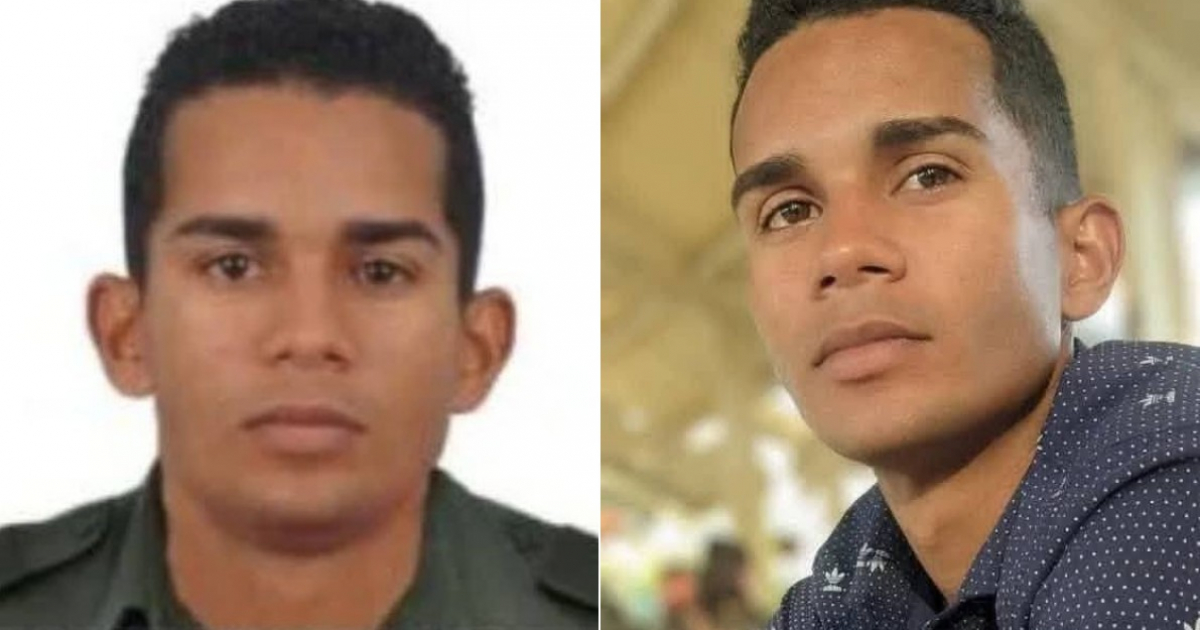
The mother of Fernando Antonio Báez Hidalgo, the youngest Cuban soldier among the 32 who died on January 3 in Caracas during the capture of Nicolás Maduro by U.S. forces, shared aspects of his life with the newspaper Juventud Rebelde.
Fernando, 26 years old, worked as a bodyguard and held the rank of lieutenant in the Ministry of the Interior.
"This has been terrible. I feel like a piece of me has been torn away. He was a deeply desired child, the only one I had," said Maidelín Hidalgo Hidalgo, 53 years old.
According to him, his son grew up in a home marked by the early absence of his father, who passed away when he was 15 years old. "I fought for him, and he fought for me," he expressed.
Maidelín reported that she was always among the top students in school. She studied a vocational course in Veterinary Medicine and during her military service, she decided to focus on personal security.
His brother Yoanis Báez Estrada described him as "a great son, partner, and brother"; a calm person, not one for going out much, who loved baseball and movies.
Mother and son planned to move together to the capital in the future. "He dreamed of buying a house in Havana. Our house needs repairs, it's modest, and he would tell me that instead of fixing it up, it would be better to buy a house in Havana and for me to go with him."
The officer arrived in Venezuela just over five months ago. He spoke with his mom every day. The last time was on January 2, around 9:00 PM.
In the early morning, when Maidelín learned about the bombings in Caracas, she sent a message and did not receive a response.
"Later, when I saw the hours passing... when I saw people in green arrive at the house... there was no need for me to be spoken to," he detailed.
The regime's silence regarding the type of mission and its involvement in Venezuela
The bodies of the 32 Cuban soldiers who died in Venezuela arrived in Havana at dawn on January 15, amid a significant official display and public tributes.
The remains arrived on a Cubana de Aviación aircraft and were transported along Rancho Boyeros Avenue to the MINFAR headquarters, where a chapel of rest was set up for the public tribute.
The deaths occurred in the early hours of January 3 during an international operation to capture Nicolás Maduro, an action that led to the collapse of the Venezuelan regime. Interim President Delcy Rodríguez took charge of the country in a fragile transition under international supervision.
While official tributes in Cuba multiply, there remain silences and gaps in information regarding the exact nature of the Cuban mission in Venezuela: the terms of the agreement, the total number of deployed personnel, and the details of the operation have not been specified.
The government released the biographies of the deceased under the slogan "Honor and Glory", confirming that they belonged to the FAR and MININT, a late admission that contradicts years of official denials about the presence of Cuban troops in security tasks for chavismo.
The profiles reveal a recurring pattern, with men from different generations and ranks—ranging from young soldiers to colonels with decades of service—mostly hailing from the eastern part of the country, sent to fulfill an "internationalist mission" that officially did not exist.
The official narrative repeats common elements such as their involvement in the UJC and the Party, participation in "operational assurances," and posthumous promotions as a symbolic closure to each story. There are no references to wives, children, or families, nor any details about the type of mission they carried out in Venezuela.
Filed under: