
Related videos:
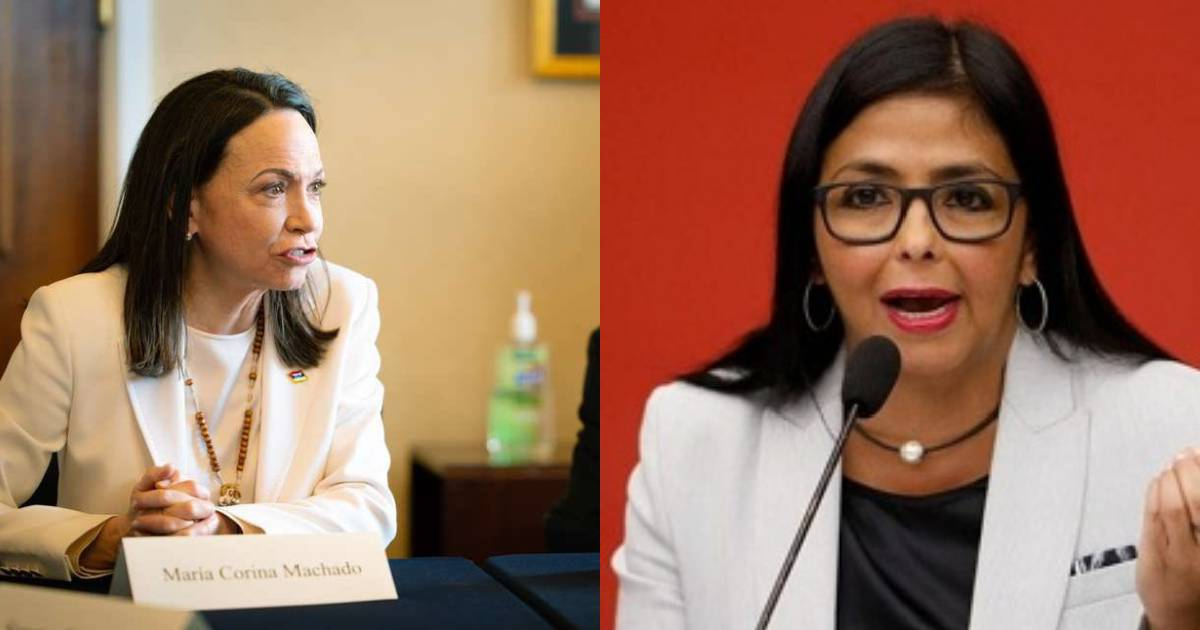
María Corina Machado warned this Thursday in Washington that the interim president of Venezuela, Delcy Rodríguez, is part of the same repressive chavista system and that any transition without justice or dismantling of the control apparatus is doomed to fail.
Machado's statements were shared on social media by political analyst Emmanuel Rincón and by Venezuelan journalist Nitu Pérez Osuna, following an intervention by the opposition figure before a bipartisan group of U.S. senators.
In her message, the leader emphasized that the Venezuelan regime has historically demonstrated its ability to "buy time" and take advantage of the good faith efforts made by the international community.
Machado insisted that Rodríguez does not represent a break with chavismo, but rather a continuation of the model that keeps the country in crisis.
He pointed out that it is unfeasible to attract real investment in a context where 86% of the population lives in poverty, there is no independent judiciary, and private property is not respected.
In their view, the recent law enforcement operation led by the United States has generated expectations and hope both within and beyond the hemisphere, but it has also sent a clear message to criminal actors about the consequences of their actions.
During her intervention, the opposition member stated that the Chávez model "is not sustainable" and that for there to be true reconciliation, justice is essential.
He emphasized that it is not enough to free political prisoners if the system of repression remains intact and people cannot express themselves freely.
Machado's warnings come at a time of open disagreement with the strategy of President Donald Trump.
The president defended his decision on Friday to maintain a temporary alliance with Venezuela's interim leader, arguing that he aims to prevent a chaotic scenario similar to that of Iraq after the fall of Saddam Hussein.
According to Trump, abruptly dismantling the entire power structure could create a dangerous void.
The White House has reiterated that Rodríguez has fulfilled all the demands put forth by Washington since he took power following the capture of Nicolás Maduro on January 3, including energy agreements and security commitments.
The presidential spokesperson, Karoline Leavitt, stated that the president is pleased with the level of cooperation and hopes it will continue, although she clarified that the support is strategic and conditional.
Trump described Rodríguez as "a fantastic person" and stated that there will be no military deployment if the agreed commitments are upheld.
These statements came just one day after the president hosted Machado, the winner of the 2025 Nobel Peace Prize, at the White House, referring to her as "a good woman," although his administration claims that she lacks the necessary internal support to lead the first stage of the transition.
Machado, for her part, has reiterated that there is a popular mandate for a deep political change and that she and Edmundo González Urrutia are ready to assume governance when the right moment arrives.
In his appearance at The Heritage Foundation, he stated that the Venezuelan people are the missing centerpiece in the current process and questioned the legitimacy of a transition led without their participation.
While Washington strengthens its dialogue with Rodríguez, including a recent meeting with the CIA director, John Ratcliffe, in Caracas, the Venezuelan opposition faces the challenge of not being sidelined in the political, economic, and security redesign that the United States is promoting following Maduro's capture.
The contrast between Machado's warnings and Trump's strategic support for Rodríguez highlights the central axis of the debate regarding Venezuela's immediate future.
Filed under: