
Related videos:
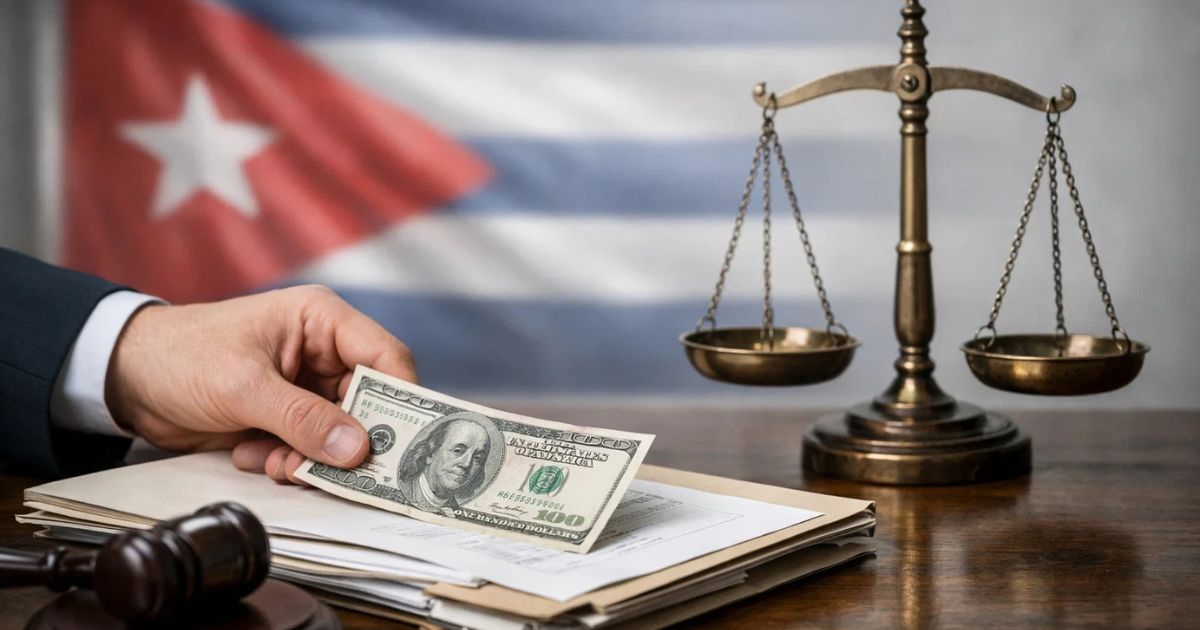
In another step towards the dollarization of public services, the collective law firms in Cuba claim to be "prepared" to charge in dollars and freely convertible currency (MLC) for their legal services, according to reported by the official television in Santiago de Cuba.
The measure is part of Resolution 486/2025 from the Ministry of Justice, published in the Official Gazette on December 27, 2025, which updates the fees and payment methods for legal procedures, document legalization, and legal consultations, allowing payments in foreign currencies.
According to the regulations, law firms will be able to charge for their services "in Cuban pesos or in foreign currencies accepted by the Central Bank of Cuba (BCC)," applying the exchange rate in effect on the day of payment.
In practice, Cubans living abroad and foreigners will have to pay in dollars or MLC.
The technical deputy director of the Provincial Directorate of Collective Law Firms in Santiago de Cuba, Dianelis Lira Romero, stated to TV Santiago that the legal units of the province are "creating the mechanisms" to accept payments in cash, by card, or through international gateways.
“With this new resolution, payments can be made in cash, through international gateways, or with freely convertible currency cards, whether national or international,” said the official, who stated that the offices are adapting to process payments from abroad.
Lira specified that the new prices will apply to “foreign natural persons and Cubans residing abroad,” while Cubans who still hold permanent residency on the island will be able to continue paying in national currency, albeit at rates equivalent to the foreign currency at the official exchange rate.
Before processing the payment, the law firms will require users to provide a certification of their immigration status issued by the Ministry of the Interior, which is an essential requirement to determine whether the charge is to be made in Cuban pesos or in foreign currency.
The official also clarified that relatives or third parties will still be able to carry out legal procedures on behalf of Cubans residing outside the country, although the law firms will need to first verify the immigration status of the service beneficiary.
Among the rates established in Resolution 486/2025 are:
Certification of grades and degrees: 260 USD or 6,250 CUP.
Academic level certification: 260 USD or 6,250 CUP.
Certification of work experience: 104 USD or 2,500 CUP.
Legalization of educational or registration documents: starting from 156 USD or 3,750 CUP, depending on the type of procedure.
The resolution also establishes hourly rates for specialized services. The general minimum is 3,750 Cuban pesos or 156 dollars per hour, and it may increase based on the complexity of the case or the level of the appointed attorney.
In Santiago de Cuba, the legal authorities assure that they are ready to implement the provision.
"We are creating the specific conditions for these payments without neglecting our usual services," added Lira Romero.
The Ministry of Justice justified the resolution as a result of "studies aimed at generating foreign currency revenues and easing the collection options for legal services," set against a backdrop of increasing demand for foreign exchange for the Cuban state.
Although the announcement was made from Santiago, the National Organization of Collective Law Firms (ONBC) confirmed that the measure will be implemented in all provinces of the country, where systems for dollar collection are already being prepared through POS terminals and foreign currency bank accounts.
The provision is part of the regime's policy to increase control over the flow of foreign exchange, extending payments in foreign currency to an ever-growing number of sectors.
A recent example is the Cuban passport for residents abroad, which currently costs 234 dollars.
With the entry into force of Resolution 486, the Cuban justice system officially enters the era of dollarization. While the population receives their salaries in increasingly devalued pesos, the State sells its legal services in dollars.
The Ministry of Justice insists that it is a “technical update,” but for many citizens, it is yet another step in the long list of decisions that distance public services from the reach of those living on the island.
Filed under: