
Related videos:
What for thousands of immigrants represents the final step towards stability and a sense of belonging in the United States has, under the current administration of Donald Trump, become a path filled with obstacles, fear, and uncertainty. The naturalization process, instead of being expedited, has become more arduous with new rules, more demanding exams, and sudden cancellations that leave many applicants in a migratory limbo.
A recent report by El País describes this scenario as a genuine odyssey. The newspaper documents how the government has raised the requirements for the citizenship exam, expanding the pool of questions and doubling the number of correct answers needed to pass, in addition to strengthening background checks with neighborhood visits and interviews with employers and neighbors. To this, we can add the suspension of processes already approved for individuals from countries deemed "high-risk," a list that includes Cuba.
The human impact of these decisions is starkly illustrated in stories like that of Mailan Pacios, a 28-year-old Cuban resident in Tennessee, whose citizenship exam appointment was canceled without explanation just days before the scheduled date. After investing money, time, and effort in preparation, the notification came as "a cold bucket of water," she told El País. Her case is not an isolated one.
In the Cuban community, the atmosphere of anxiety is increasingly palpable. In Hialeah, one of the epicenters for immigration procedures in South Florida, a Cuban individual attended an appointment at a Citizenship and Immigration Services (USCIS) office intending to advance his naturalization process and ended up arrested due to an outstanding warrant in another state.
Other cases reveal an even more painful aspect of the tightening immigration policy. Moisés Ricardo, a 59-year-old Cuban who had been waiting for 17 years to become a U.S. citizen, saw his process canceled after open-heart surgery forced him to reschedule his exam. The letter from USCIS arrived without explanations, leaving him, once again, in limbo. "It was devastating," he admitted while describing the emotional impact of the news.
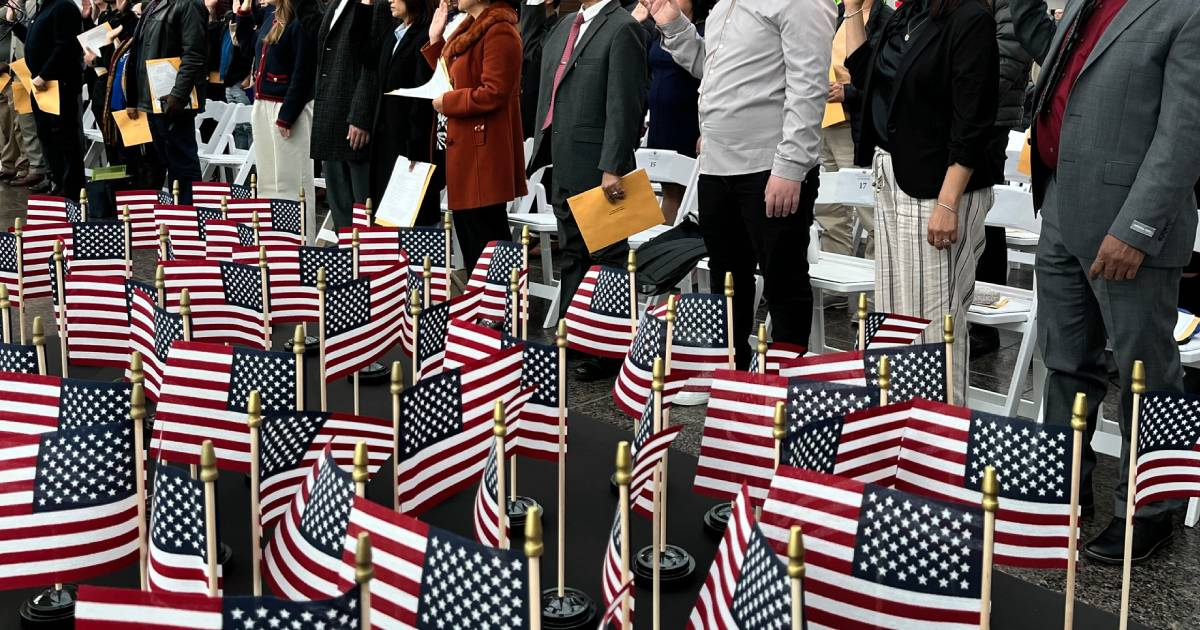
The scene was repeated in cities like Boston, when in December, immigrants from countries included in the presidential proclamation that designates some countries as "high risk," were removed from the line of their oath ceremonies just minutes before raising their hands.
Cubans who had already approved everything and were ready to swear loyalty to the country were sidelined simply because of their place of birth. Some received the notification just hours beforehand; others found out right there, in front of everyone.
Experts cited by El País warn that these measures appear to be designed not only to tighten the process but also to discourage naturalization and create a climate of intimidation. Additionally, the elimination of federal programs that helped immigrants prepare for citizenship has left many community organizations without resources to offer English classes or civic education.
For Cubans, many of whom came to the United States fleeing political control and a lack of freedoms on the island, citizenship represents more than just a document. It is the promise of security, civic participation, and a definitive closure to a period marked by uncertainty. Today, that dream feels more fragile than ever.
As cancellations continue, exams become increasingly difficult, and the official silence drags on, thousands of Cubans live with the feeling that the final step towards stability could vanish overnight. The oath remains, but it seems to drift further away with each passing day.
Filed under: