
Related videos:
In a recent post on Instagram, the pro-government journalist Oliver Zamora Oria once again used a everyday scene of Cuban poverty to deliver an ideological message in support of the regime, showcasing yet again the propagandistic use of sentimental discourse in the state media.
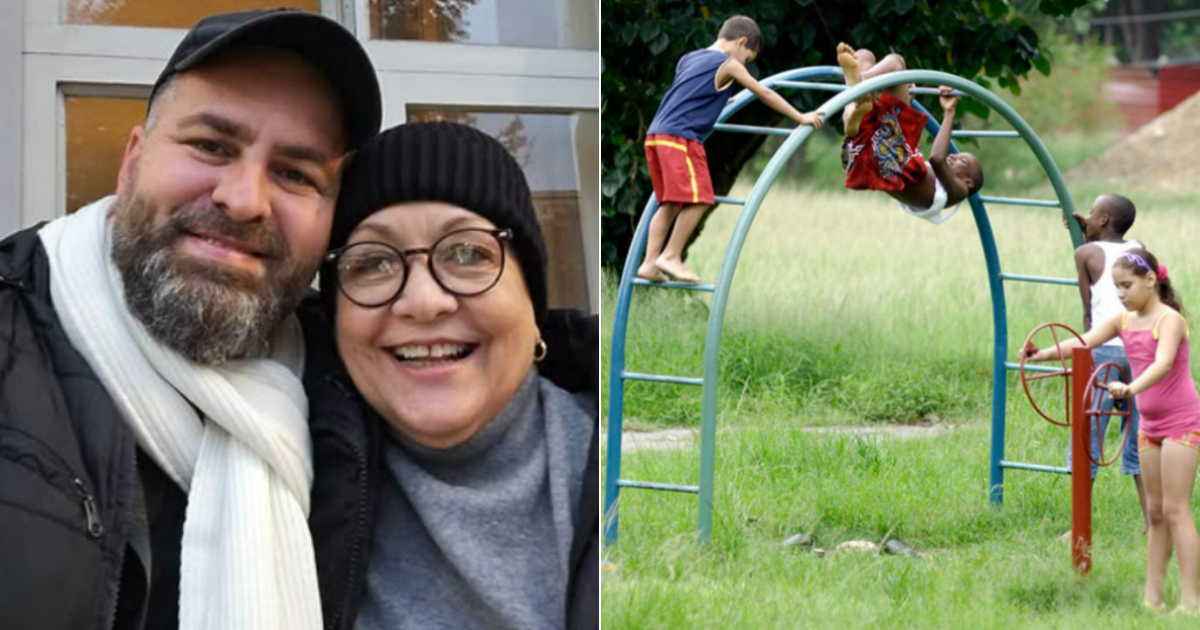
The image shared by Zamora Oria - and captured by the photographer Roberto Suárez - showed a group of barefoot children playing in a park with tall grass, dressed in ragged clothing and doing somersaults among rusty metal structures.
While for most Cubans this scene encapsulates the institutional neglect and precariousness in which thousands of minors grow up, Zamora presented it as a "tender image" that, according to him, demonstrates that "there are sacred things above any political difference."
The journalist, a familiar face on Canal Caribe and Russia Today (RT) in Havana, took the opportunity of the publication to attack those who criticize the regime, labeling them as "monsters," "fascists," and "murderers." In his message, he also referred to Cuban exiles who denounce the repression or shortages within the country as "cowards."
The post, filled with emotional and moralizing language, reproduced a classic formula of official propaganda: romanticizing everyday suffering and transforming poverty into a symbol of moral purity or "revolutionary resistance."
The precariousness of childhood in Cuba, instead of being addressed as a consequence of the economic failure of the system, is thus turned into a source of pride and ideological cohesion.
Zamora Oria contrasted the image of barefoot and supposedly "happy" children with an aggressive discourse against exile, U.S. sanctions, and internal opposition, without mentioning at any point the real causes of the misery: structural corruption, state control over the economy, and the repression of any independent civic initiative.
The journalist, who has publicly defended figures such as the state journalist Arleen Rodríguez Derivet, has become an emblematic face of media indoctrination in Cuba: he combines a paternalistic tone, warlike language, and moral appeals to divert attention from the country's essential problems.
While the parks remain neglected, the hospitals lack medicines, and families struggle to survive the blackouts and inflation, Zamora Oria's rhetoric insists on turning abandonment into patriotism and pain into virtue.
A story that, far from inspiring tenderness, reveals the harshness of a regime that uses the innocence of children as both an argument and an ideological shield to protect a system increasingly challenged for its social and moral failures.
Filed under: