
Related videos:
The Supreme Court of Panama declared unconstitutional on Thursday the concession that allowed Panama Ports Company, a subsidiary of CK Hutchison, to operate two terminals in the Panama Canal, a ruling that reconfigures the geopolitical dynamics between the United States and China.
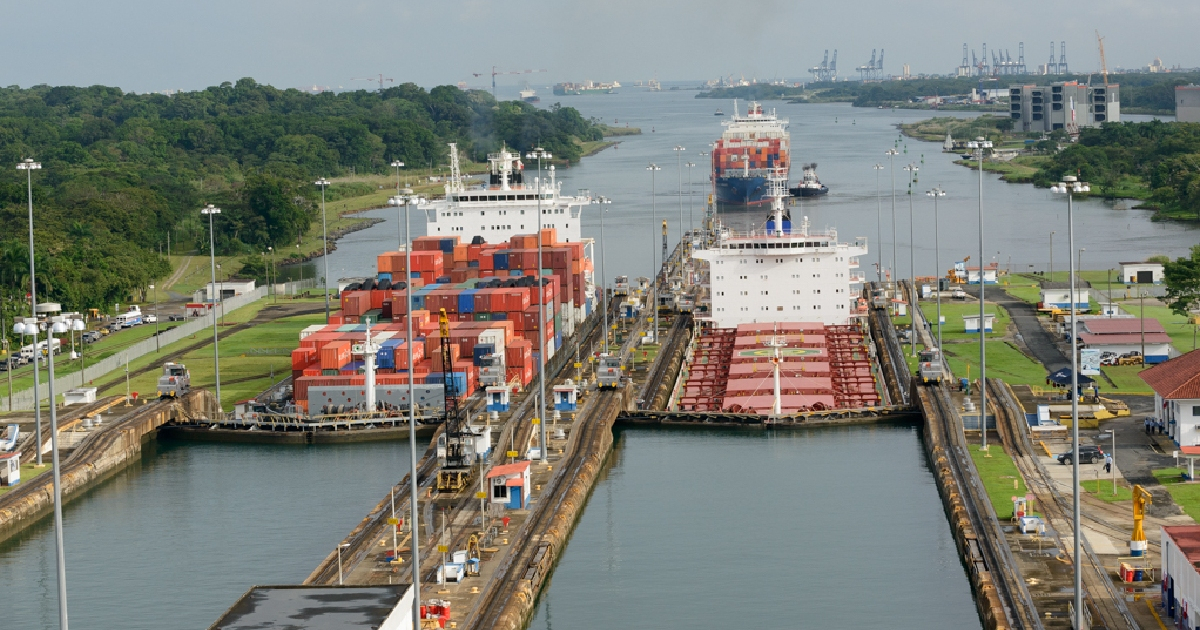
The Panamanian court annulled the laws that supported the concession contracts signed in the 1990s, through which Panama Ports Company (PPC) managed the ports of Balboa on the Pacific side and Cristóbal on the Atlantic side, both located at the entrances of the Panama Canal.
The decision responds to demands presented by the General Comptroller's Office, which alleged contractual irregularities and accumulated tax debts by the company, reported BBC.
According to an official audit, PPC would have failed to pay the Panamanian state approximately 1.2 billion dollars.
The company rejected the ruling, deeming it to lack legal basis, and warned that it would resort to national and international legal avenues, even though the verdict is not subject to appeal, only requests for clarification or international arbitration.
CK Hutchison, one of the largest conglomerates in Hong Kong, announced that it has invested over 1.8 billion dollars in nearly three decades of port operations in Panama. Following the ruling, its shares fell by more than 4% on the Hong Kong stock exchange.
The court decision also suspends the sale of more than 40 ports that CK Hutchison had agreed to transfer to a consortium led by the American firm BlackRock and the shipping company Mediterranean Shipping Company (MSC) for approximately $23 billion, a deal that had been well received by Washington but stalled by the Chinese government, the source specified.
At the same time, the House Foreign Affairs Committee in the United States, which is majority Republican, publicly hailed the ruling of the Panamanian court and presented it as a direct defeat for Beijing.
In a message shared on X, the committee stated that Panama “officially expelled communist China from the Canal,” while accusing CK Hutchison of operating under China's control and engaging in “exploitative” practices.
The Ministry of Foreign Affairs of China reacted strongly. Its spokesperson, Guo Jiakun, stated that Beijing "will take all necessary measures" to protect the rights of Chinese companies, while the Hong Kong government accused external actors of using coercive methods to harm legitimate business interests.
The Panama Canal, through which approximately 5% of global maritime trade and nearly 40% of container traffic from the United States passes, has become a critical point of strategic friction.
Since the beginning of his second term, Donald Trump has accused China of exerting indirect control over the interoceanic route and has even threatened to “recover” the canal, a claim that Panama has repeatedly rejected.
In this context, the Panamanian government withdrew from China's Belt and Road Initiative in 2025 and has strengthened military cooperation with the United States for the defense of the canal, while insisting that the neutrality of the route remains intact.
Analysts warn that the ruling reflects a broader trend. “Security and geopolitics will be increasingly determining factors in the management of strategic infrastructures,” noted the economist Gary Ng, highlighting that other countries may face similar pressures to limit foreign ownership in key sectors.
Filed under: