
Related videos:
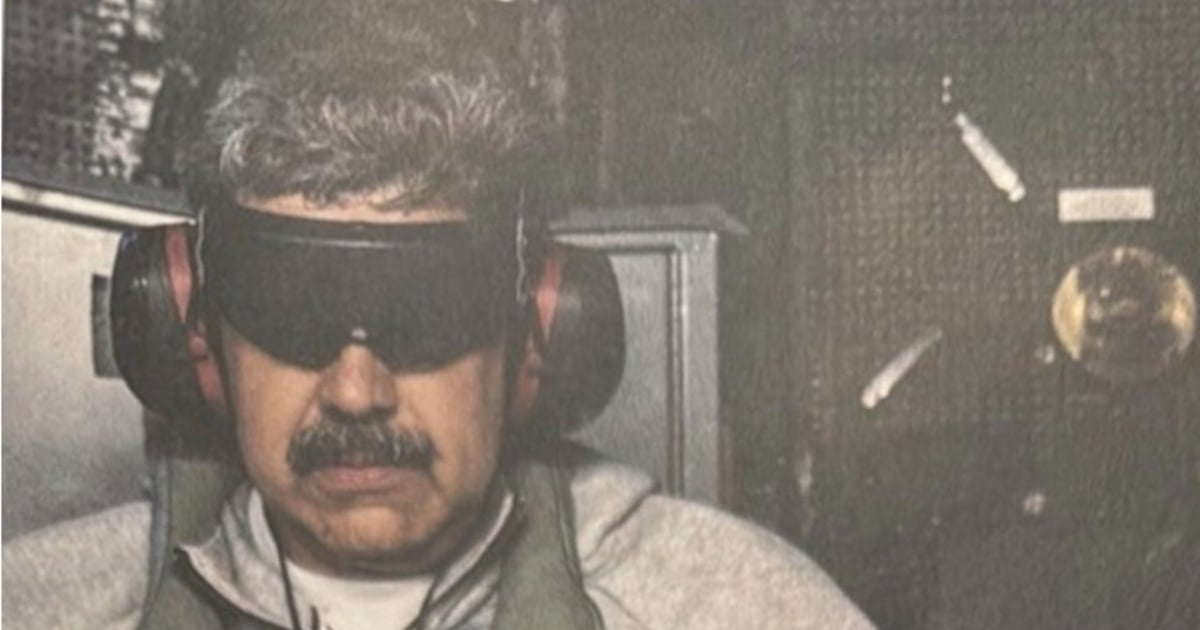
A month has passed since a military operation conducted by United States special forces, ordered by President Donald Trump, culminated in the capture of Nicolás Maduro and his wife, Cilia Flores, in Caracas.
The event marked a turning point in the recent history of Latin America and altered the political balance in the region, significantly impacting countries like Venezuela, Colombia, Mexico, and Cuba.
The end of the invulnerable chavismo myth
The arrest of Maduro ended more than two decades of Chavista dominance in Venezuela and dismantled one of the pillars of the authoritarian axis in Latin America.
The interim president of Venezuela, Delcy Rodríguez, has assumed power, attempting to contain the chaos and maintain a precarious balance between U.S. pressure and the internal fractures of the regime.
Washington, under the leadership of Secretary of State Marco Rubio, has led the Venezuelan political transition with the promise of holding free elections before the end of the year, a process that has the support of the majority of democratic countries on the continent.
Among the main measures adopted by Delcy Rodríguez since her appointment are:
- Recognition of the transition process: he accepted the oversight of the United States in the political transition and signed a preliminary agreement with Washington.
- Military Restructuring: Rodríguez has been recognized as the commander-in-chief of the Bolivarian National Armed Forces (FANB) . She is backed by the armed forces and high-ranking government officials, who pledged their loyalty to her in a symbolic ceremony aimed at ensuring the country's stability.
- Release of political prisoners: it ordered the release of hundreds of detainees for ideological reasons and announced the “general amnesty law” for political prisoners, assuring that the goal is to “promote coexistence in Venezuela.”
- Restoration of foreign relations: reopened the embassy and normalized diplomatic ties with the United States.
- Opened the oil sector to private capital for the first time since the era of Hugo Chávez: presented a legal reform that would allow foreign and local companies to operate oil fields without state control. Recently, it channeled the first tranche of oil sales, 300 million dollars, to the Venezuelan banking system. It halted the collapse of the national currency and prevented hyperinflation.
- Break with Cuba: canceled the shipment of oil and expelled Cuban advisors from the country. In this regard, the dismissal of the Cuban Leticia Gómez, who served as the Minister of Tourism in Venezuela, is noteworthy. She was replaced by Daniella Cabello, daughter of Diosdado Cabello.
Repercussions in Cuba
In Cuba, the impact of these changes has been felt strongly. The regime of Miguel Díaz-Canel, economically weakened and increasingly isolated, has lost its main financial and political ally.
Shipments of Venezuelan oil have been drastically cut, impacting electricity generation and worsening the energy and food crisis on the island.
Miguel Díaz-Canel reinforced internal control in Cuba through meetings with Communist Party members across the country and a significant increase in military exercises. He also issued a national alert, stating that the country is going through a "war economy" phase.
Try to avoid diplomatic isolation by strengthening its agreements with Russia, China, and Vietnam. One of the goals of these alliances is to circumvent the energy blockade imposed by the United States.
The regime has lowered the level of military tension in political discourse and has proposed to engage in dialogue with Washington "on equal terms." Trump confirmed that negotiations with high-ranking officials have already begun.
Following the executive order signed by Donald Trump imposing tariffs on crude oil shipments to the island, the national context in Cuba is characterized by severe blackouts that add pressure to the social crisis in the country. Díaz-Canel denounced that the measures aim to "completely suffocate" Cuba and described the sanctions as "imperialist malice and wickedness."
What happened to Mexico, Colombia, and Nicaragua, Cuba's allies in the Caribbean?
The President of the United States, Donald Trump, revealed that he himself requested the President of Mexico, Claudia Sheinbaum, to stop sending oil to Cuba.
The request was granted, but the Mexican leader announced that she plans to send humanitarian aid to Cuba, including food, basic supplies, and other essential products, while diplomatic efforts are made to resolve the issues related to oil supply.
The president of Colombia, Gustavo Petro, after learning about the U.S. military incursion in Caracas at the beginning of January, initially took a critical stance against Trump, but has since softened that position.
This week, the Colombian president held a meeting lasting more than two hours with the President of the United States. The meeting took place at the White House, where Petro proposed an ambitious joint strategy with Venezuela to tackle drug trafficking in the region.
In Nicaragua, Daniel Ortega has chosen to maintain a low profile, aware that the new regional landscape puts him in the sights of Washington.
Trump and Rubio consolidate their hemispheric leadership
The capture of Maduro was seen as a strategic victory for the Trump administration, which achieved what three previous U.S. administrations could not: dismantling an authoritarian regime in the Western Hemisphere without an open war.
The United States appointed a new head of its diplomatic mission in Venezuela, and the Caribbean country has a new ambassador in Washington. The stabilization plan in Caracas aims to prevent a power vacuum and ensure the transition to a democratic civilian government.
A month after the operation, the political map of Latin America looks different. Chavismo has ceased to be an exportable model, and the authoritarian regimes in the region are facing their greatest weakness in decades.
The influence of Washington is growing, but so is the expectation of Cubans who yearn for freedom, prosperity, and a democratic government.
Cuba is exposed: without external support, with an exhausted population, and with growing signs of social discontent. Everything indicates that the end of chavismo could be the prelude to a greater change in the Caribbean, marking the end of the Cuban dictatorship and the beginning of a process toward democratic transition on the island.
Filed under: