
Related videos:
A Russian military transport aircraft Ilyushin Il-76 landed this Tuesday at the military base in San Antonio de los Baños, in the province of Artemisa, near Havana, and the incident has reignited speculations about its mission and cargo, of which there is no confirmed official information.
The arrival was announced by the Fidel Castro Foundation through its Telegram channel in a message that refers to the upcoming book fair where Russia is mentioned as the guest of honor country.
"Although it was not transporting books (a book fair will soon open, where Russia is the guest of honor), the plane landed at the military base of San Antonio de los Baños, in the province of Artemisa," the message reads.
In the same publication, it is acknowledged that “there is no information about the cargo”, although it is suggested that “one can infer” its content and purpose.
"There is no information about the load, but we can infer what it might carry, why, and for what purpose," the text adds.
According to the message, the Il-76 is a plane "known for its repeated visits" to Moscow's allied countries such as Venezuela and Nicaragua, and it is also said to have visited Cuba "more than once"; furthermore, it is claimed that the aircraft is subject to U.S. sanctions.
The Fidel Castro Foundation, founded in 2021 by Leonid Savin, dedicated to fostering scientific, cultural, and informational ties between Cuba and Russia, far from shedding light on the facts, creates confusion about the ship's objective in the Caribbean country.
The plane is operated by Aviacon Zitotrans, described as a "Russian state airline." The company is listed in sanctions imposed by the United States, Canada, and Ukraine.
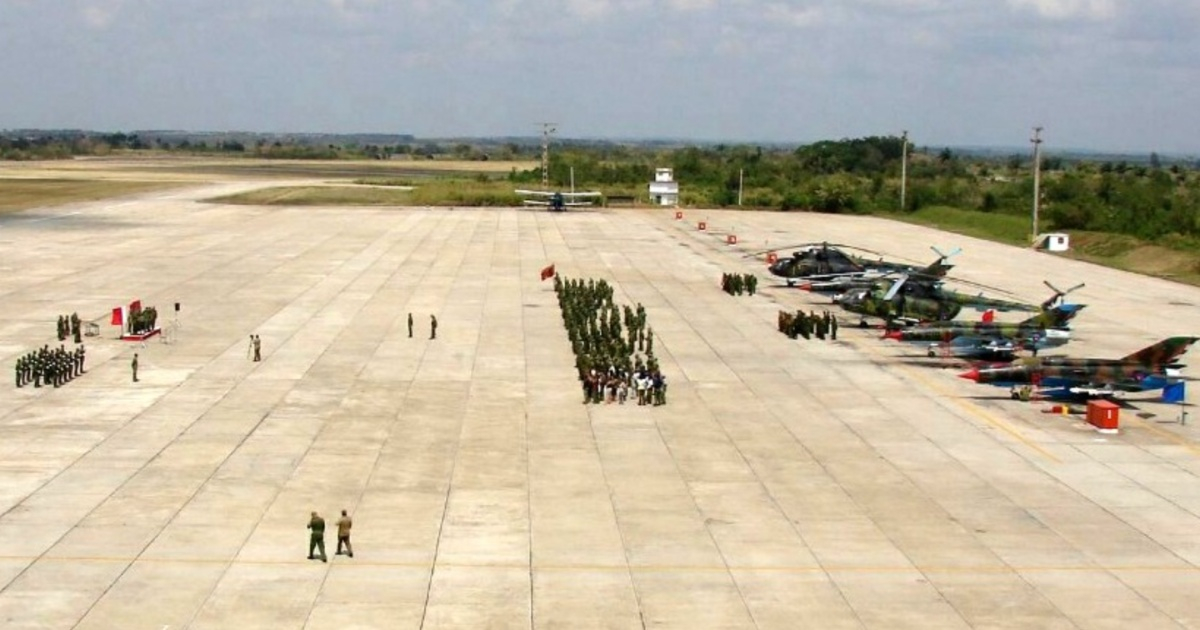
The aircraft was detected landing at the military airfield of San Antonio de los Baños, about 30 kilometers south of Havana, and is routinely used for the transport of heavy military equipment and personnel.
According to public records, the plane made stops in St. Petersburg and Sochi (Russia), as well as Mauritania and the Dominican Republic.
The same material states that this itinerary has raised questions about the willingness of various governments to authorize the transit of a sanctioned aircraft, noting that each permit involves a political decision amid Western restrictions against Moscow.
The same plane would have been seen flying over Venezuela, Nicaragua, and Cuba at the end of October 2025, as tensions grew between Washington and Caracas. Shortly thereafter, the United States carried out an operation that resulted in the capture of Nicolás Maduro, altering the regional landscape.
In that context, the current flight "followed a pattern" that American analysts associate with movements preceding that capture, according to information from Fox News.
Pressure from Washington and geopolitical reading
The landing of the cargo plane comes at a "delicate" moment for Havana and occurs as President Donald Trump increases pressure on the government of Miguel Díaz-Canel.
At that point, the White House recently declared a national emergency related to Cuba, labeling the regime as an "unusual and extraordinary threat" to U.S. national security, and Trump announced sanctions against any country that supplies oil to the island without authorization from Washington.
The military ties between Russia and Cuba have once again raised concerns in the United States.
In the last decade, Moscow is believed to have reactivated defense and intelligence cooperation with the island, which is viewed in Washington as a strategic risk due to its geographical proximity.
Despite the details regarding the aircraft, the operator, the route, and the political context, the central point of the controversy remains unchanged: what the Il-76 was transporting.
In previous operations in Venezuela, the same aircraft was identified by Russian media as responsible for transporting advanced air defense systems; in the case of Cuba, the lack of information “fuels suspicion and concern.”
Filed under: