
Related videos:
Robert Duvall, one of the great performers in American cinema, passed away this Monday at the age of 95, concluding a career that spanned over 60 years in the industry and included more than 140 credited titles.
Actor of actors, respected by several generations and possessing a style of interpretation that is both austere and intense, Duvall achieved something reserved for very few: maintaining relevance from old Hollywood to the era of digital platforms.
His film debut occurred in 1962 with To Kill a Mockingbird, by Robert Mulligan, although he had already been working in television since the 1950s in series such as The Twilight Zone and The Fugitive.
Its consolidation came in the following decade when it began to share the spotlight with figures such as Marlon Brando, Robert Redford, Frank Sinatra, and John Wayne.
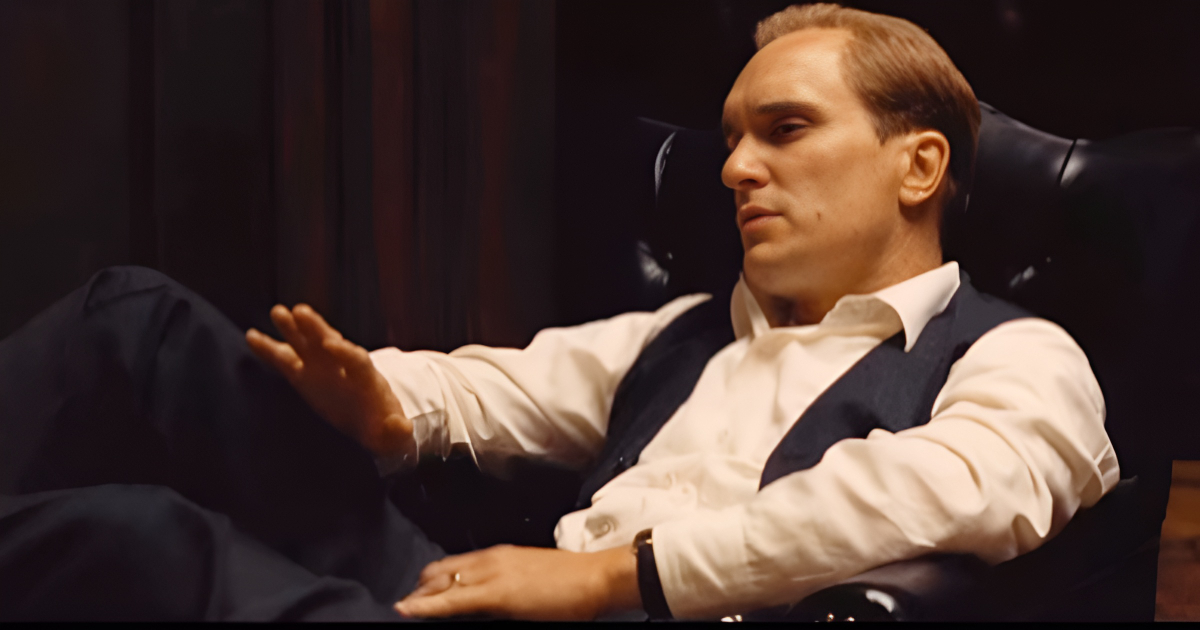
The partnership with Francis Ford Coppola would define his career. He was Tom Hagen, the loyal ‘consigliere’ of the Corleones in The Godfather (1972), a role that earned him his first Oscar nomination.
Years later, he portrayed Colonel Kilgore in Apocalypse Now (1979), a character that left one of the most quoted lines in war cinema: “I love the smell of napalm in the morning.” His performance earned him another Academy nomination.
In total, he received seven Oscar nominations. He ultimately won the statue for Gracias y favores (1983), where he portrayed a declining country singer.
He was also recognized for his work in The Great Santini, Road to Heaven, Civil Action, and The Judge (2014). Even in his later years, he maintained a commanding presence on screen, as demonstrated in Widows (2018) and Claw (2022).
In addition to being an actor, he was also a director and producer. In 1997, he wrote, directed, and starred in Camino al cielo, a personal work that he presented at international festivals. Later, he would sign Assassination Tango (2002) and Caballos salvajes (2015). He also worked in Spain on Una noche en el Viejo México, directed by Emilio Aragón.
Cuba, controversy and nuances
Duvall's connection with Cuba was marked by both political controversy and cultural interest.
In 2004, he generated controversy in Hollywood by publicly criticizing Steven Spielberg for his trip to Havana and his meeting with the dictator Fidel Castro. According to reports from the Dominican newspaper Hoy, Duvall questioned the flattering tone that had been used to describe the Cuban leader following that visit.
His statements sparked a debate within the industry regarding the image of the Cuban regime and the public responsibility of entertainment figures. Spielberg's camp later softened those assertions, but the episode made Duvall's critical stance on Castroism clear.
During a television interview with Charlie Rose, Duvall described as "pretentious" Spielberg's public praise for his meeting with Castro and went on to sarcastically wonder if homage would also be paid to the Cubans that the revolutionary leader "had killed".
"Spielberg traveled there recently and said, ‘The best seven hours I’ve ever had were, in fact, with Fidel Castro,’" Duvall explained on CBS's '60 Minutes II' program.
“Now, what I want to ask you is: Would you consider erecting a small building adjacent to the Holocaust Museum or at least along the street, to pay tribute to the Cubans that Castro has killed? It is very pretentious on your part to go there,” said Duvall to Rose during the interview.
However, Spielberg's spokesperson, Marvin Levy, responded in a statement that the remarks Duvall attributed to the director regarding his meeting with Castro were “completely false.”
Spielberg's camp denied that version of events, but the episode highlighted Duvall's critical stance towards the Cuban regime and placed him, in a rather unusual manner for Hollywood, in an openly uncomfortable position regarding Castro's rule.
Spielberg spent four days in Cuba, showcasing eight of his films. The famous film director also dined with Castro in a meeting that lasted eight hours, during which they discussed art, politics, and history.
Finally, he captured headlines by calling for an end to the 40-year commercial embargo of the United States against Cuba, stating that the time had come to bury old grievances from the Cold War and to expand reciprocal actions between Americans and Cubans.
However, Duvall's connection to the island was not limited to that controversy. In 2009, he traveled to Havana alongside actors such as Bill Murray and James Caan as part of a cultural and film project.
The visit, widely covered by the international press, revealed another side of the actor: that of a creator interested in music, cinema, and Latin American identity. Duvall, a great enthusiast of Argentine tango —the central theme of Assassination Tango—, has always maintained a special connection with Hispanic culture, which also influenced his personal life.
That contrast between political criticism and cultural curiosity defined his approach to Cuba: he publicly questioned the figure of Castro but did not shy away from engaging with the cultural reality of the island or from conversing with its artists.
Robert Duvall leaves behind an immense legacy: that of an actor who never needed loud protagonism to become a reference point. For more than six decades, he was an essential face in American cinema.
His death marks the end of an era, but his characters—from the silent lawyer to the reckless soldier—will continue to inhabit the collective memory of the seventh art.
Filed under: