
Related videos:
The death of Robert Redford at 89, confirmed this Tuesday by his publicist to media outlets such as Reuters and AP News, has sparked a wave of tributes around the world.
Actor, director, and producer, Redford was much more than a Hollywood star: he also became a cultural, political, and artistic reference, establishing direct contact with Cuba and some of its leading cultural and political figures.
An uncomfortable journey in 1988
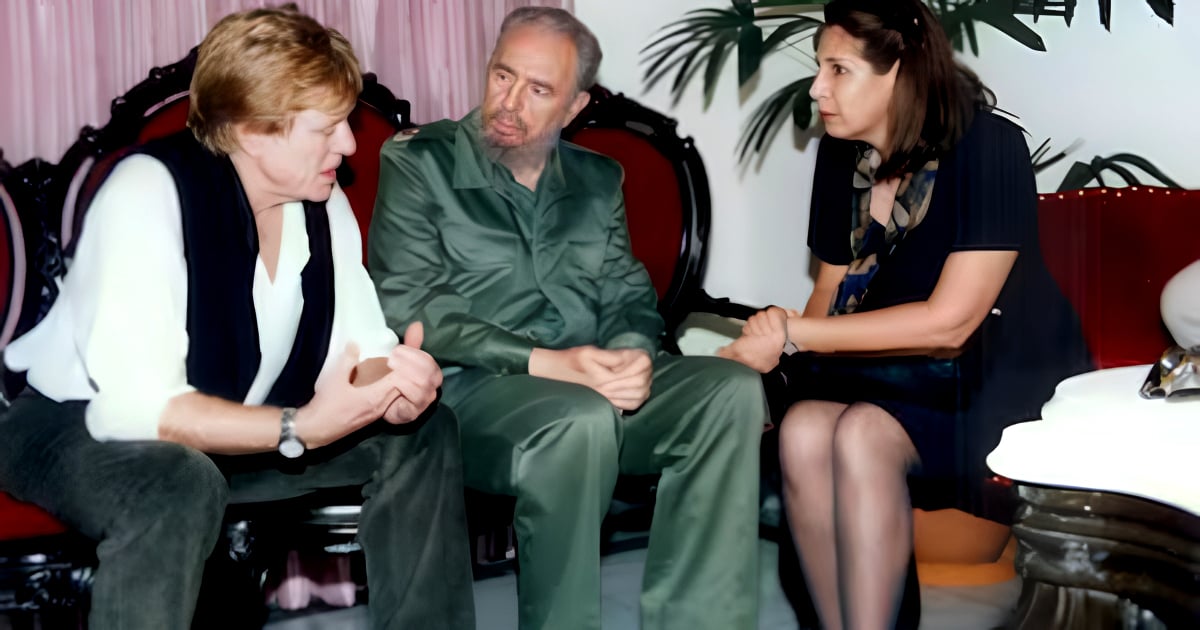
The first known record of Redford in Cuba dates back to May 1988, when he traveled to Havana to participate in a literary workshop. The visit, which according to the American newspaper Deseret News included a meeting with the dictator Fidel Castro, piqued the interest of U.S. authorities.
The United States Department of the Treasury then opened an investigation into whether the trip had violated regulations that restricted visits to the island. Redford never denied his stay in Cuba, although he refrained from making public statements about the content of that meeting with the Cuban leader.
Return in 2004: Che at the Cinematheque
His presence in Havana in January 2004 was much better documented when he attended the Cinemateca de Cuba to present the film Diarios de Motocicleta, directed by Walter Salles, of which he was the executive producer.
The film depicted the youthful journeys of Ernesto Guevara before he became Che. Present at the screening were Aleida March, the widow of Che, and Aleida Guevara, his daughter, as well as Commander Ramiro Valdés Menéndez and Alfredo Guevara, who was then the president of the International Festival of New Latin American Cinema.
According to a report by El País, Redford expressed his excitement at being able to present the film to the family of the guerrilla. The international press also reported that during that visit, he met with Castro again at the Hotel Nacional de Cuba, in a gathering that blended politics, culture, and the actor's own fascination with Latin American stories.
The legacy of Sundance and Cuban cinema
Beyond those specific visits, the name Redford has been associated with Cuban cinema through the Sundance Institute and the eponymous festival he founded in Utah in the 1980s.
The independent cinema support platform featured works by Cuban filmmakers in its programming, such as Memories of Development by Miguel Coyula (2010), Ticket to Paradise by Gerardo Chijona (2011), Tundra by José Luis Aparicio (2022), as well as awarding development projects like August by Armando Capó.
Even Strawberry and Chocolate, directed by Tomás Gutiérrez Alea and Juan Carlos Tabío, received a Special Jury Mention at Sundance in 1995, solidifying the presence of Cuban cinema in the international independent circuit.
The relationship strengthened in 2018, when the International Festival of New Latin American Cinema in Havana
Redford did not attend in person, but he sent a video message expressing his gratitude for the gesture and highlighting the importance of building bridges between creators from different backgrounds.
Between politics and culture
Redford has always been a committed man. An advocate for the environment, a critic of wars and political power in Washington, he found in Cuba a space to explore both his artistic side and his curiosity about Latin American social processes.
His relationship with Castro —sporadic and anecdotal— reflected the tension between the Hollywood idol and the Cuban leader, two figures from different worlds united by their mutual interests in cinema.
A farewell that also touches Cuba
The death of Robert Redford marks the end of an era for international cinema. For Cuba, his visits and his interest in projects linked to the island serve as a testament to how culture can build bridges beyond politics.
Between the memory of his meeting with Castro at the Hotel Nacional, the presentation of Diarios de Motocicleta, and the support he gave to independent cinema from Sundance, Redford leaves a mark that also transcends Cuban cultural history.
Filed under: