
Related videos:
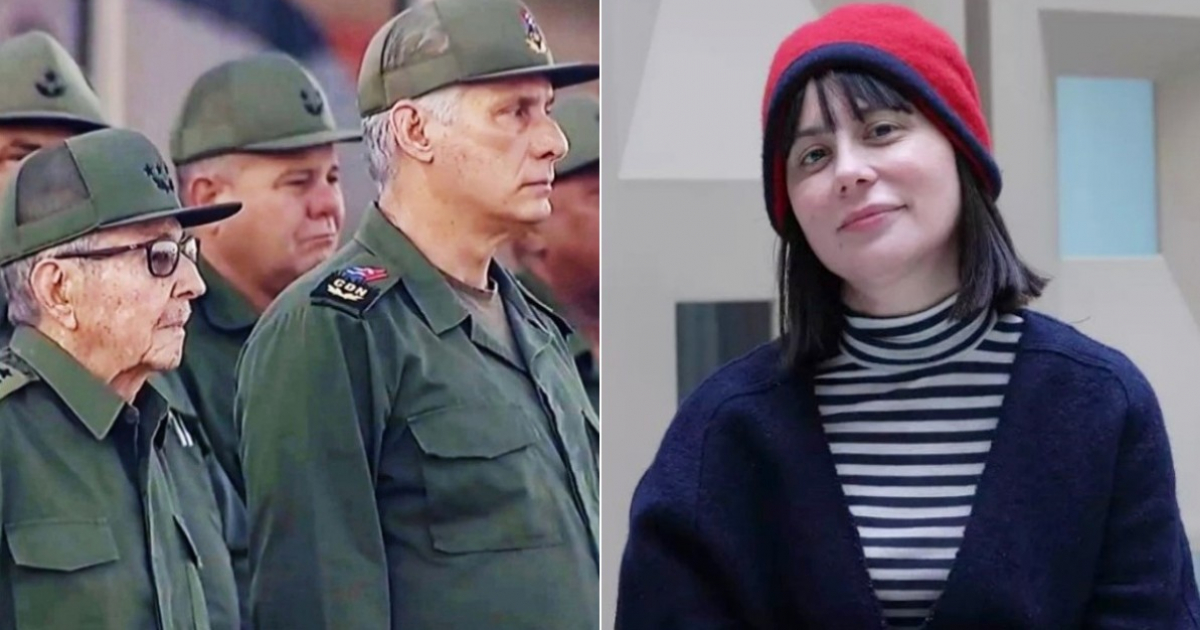
The Cuban writer Wendy Guerra Torres published an open letter on her Facebook profile, in which she makes a strong accusation against the current political system on the Island and demands the removal from power of those who have governed for decades.
His message, shared during one of the most critical phases Cuba has faced in recent years, captures the sentiments of an increasingly broad sector of the population, weary from the economic and social decline.
"A government unable to guarantee the essentials, that blames others for its failures, where a slogan is worth more than the life of a nation, that has lost all moral legitimacy by stifling the collective will, is not a government; it is a dictatorship," he wrote.
The author argues that the crisis the country is experiencing can no longer be justified by external factors.
In his letter, he claims that "although they want to disguise it, today the Cuban people are crying out for change, whatever it may be and wherever it comes from. For the Cuban citizen, anything will be better than what they are currently suffering without any hope."
His words come amid an economic suffocation, with shortages of food, medicine, and fuel. The oil crisis has left the country virtually paralyzed, facing blackouts, a lack of transportation, and halted productive activities.
While the official discourse insists on attributing the responsibility to the United States sanctions, voices like that of Wendy Guerra emphasize that the structural decline is the result of decades of failed internal decisions.
"For the sake of everyone, to prevent greater tragedies with irreversible historical and personal consequences, accept that the damage is deeply anthropological. Enough is enough: you have had nearly seven decades to experiment with our lives," the writer added, referring to the prolonged political control exerted on the Island.
In her letter, Wendy goes beyond criticism and openly raises the need for a transition.
"It has come the time to relinquish power and pave the way for a transitional Cuban government," he said.
"It is not about you, it is not about the left or the right; it is about doctrines upheld and imposed at all costs. It is about a people mortally wounded, who, even while silenced, are crying out for salvation," he noted.
The social unrest is evident. The population is exhausted, overwhelmed by a reality that seems to offer no way out.
In that context, the writer ends with a direct plea to the regime: "If you truly care a little about your citizens, your children, mothers, fathers, grandparents, and siblings, accept the harsh reality. We have endured enough; it is time for us to forge our own path. Let us live in peace."
His message encapsulates an increasingly widespread demand: that those who have led the country for decades relinquish power and allow for a political change that paves the way for new solutions.
For many Cubans, the problem does not lie in external factors, but rather in the structure of a regime they consider exhausted and incapable of reversing the crisis.
Filed under: