
Related videos:
The publication in the newspaper Granma on Facebook, which claimed that “Havana is moving towards a model of a smart and sustainable city”, has sparked a flood of critical comments and mockery on social media, where hundreds of Cubans reacted with indignation and sarcasm to what they view as yet another example of the regime's triumphalism in the face of the daily crisis in the country.
The post has generated hundreds of responses that capture the general sentiment: disbelief, frustration, and sarcasm. “Smart city? We don't even have electricity,” wrote one user, while another quipped, “It must be smart because it knows how to hide the garbage.” There were also comments like “the only intelligent thing here must be the dengue mosquito that dodges the potholes,” or “the only sustainable thing here is the disaster.” Many mocked the regime's triumphalism, saying “they live in a parallel country where everything works on PowerPoint,” or that “they put a screen on the street and call it a smart city; meanwhile, the hospitals are falling apart.”
Other users, more outraged than sarcastic, directly questioned the disconnect between the official discourse and reality. "They talk about technology when they can't even guarantee water or transportation," wrote one. "The day they collect the garbage, fix the streets, and have medication, then we can talk about a smart city," commented another. One internet user added, "The only digital thing here is the scheduled blackouts," while another summed up the sentiment of many with a powerful, "Stop insulting the people with these lies; no one believes them anymore."
There were also comments linking the headline to the country's general crisis: “They say Havana is smart, but Cubans are still waiting in line to buy bread and hauling buckets of water.” “A smart government would be one that doesn't let its people die in hospitals without supplies,” pointed out someone else. “The smart city should be the one that knows how to survive without electricity, without transportation, and without hope,” wrote another, in a reflection shared dozens of times.
Many reacted with irony to the idea of sustainability. "The only thing that is sustainable here is misery," pointed out one user. "It will be sustainable because it never changes; we've been the same for years," joked another. And a comment that received widespread support summed up the collective sentiment: "They should hold a congress of delusional cities; there we would win by a landslide."
The comedian Ulises Toirac reacted with irony to Granma's message. "Havana on its way to becoming a smart city is the best news I've heard in a long time! We're saved!" he wrote on his social media, provoking a flood of reactions among his followers. With his usual sarcasm, he ridiculed the idea of technological modernization promoted by the government and pointed to the structural problems afflicting the capital. "The city will send out an alert: 'The location of the ETECSA tower is a joke because half of its coverage goes to the fish not swimming along our coasts.' (...) Don't even get me started on transportation! It will detect all the shady dealings of the drivers and analyze delays and the flow of residents," he quipped.
Toirac also referred to the contrast between the triumphalist narrative of the regime and the daily reality of Cubans: “I hope that someday intelligence will not reside in the city, but in those who govern it.” His comment was widely shared and celebrated as a testament to the humor with which many Cubans confront the absurdity of the official discourse.
The writer Wendy Guerra also reacted strongly to the message from the Communist Party's newspaper, labeling the article as a "lie" and "smokescreen." "In the midst of the great crisis that Cuba is facing, this headline appears today in Granma, the official organ and face of the PCC. The journalist who decides to sign this article knows perfectly well, as we all do, the lies, the theater, the smokescreen they are helping to create while the people try to survive," she stated on Facebook. The author also issued a call to the journalists in the country: "I urge Cuban journalists to pay attention. I ask those who do not have the courage to denounce to at least have the decency not to lie about the terrible crisis that Havana and the rest of the towns and cities on the island are experiencing. (…) Is it really true that 'Havana is moving towards a model of a smart and sustainable city'? Please, do not insult ours."
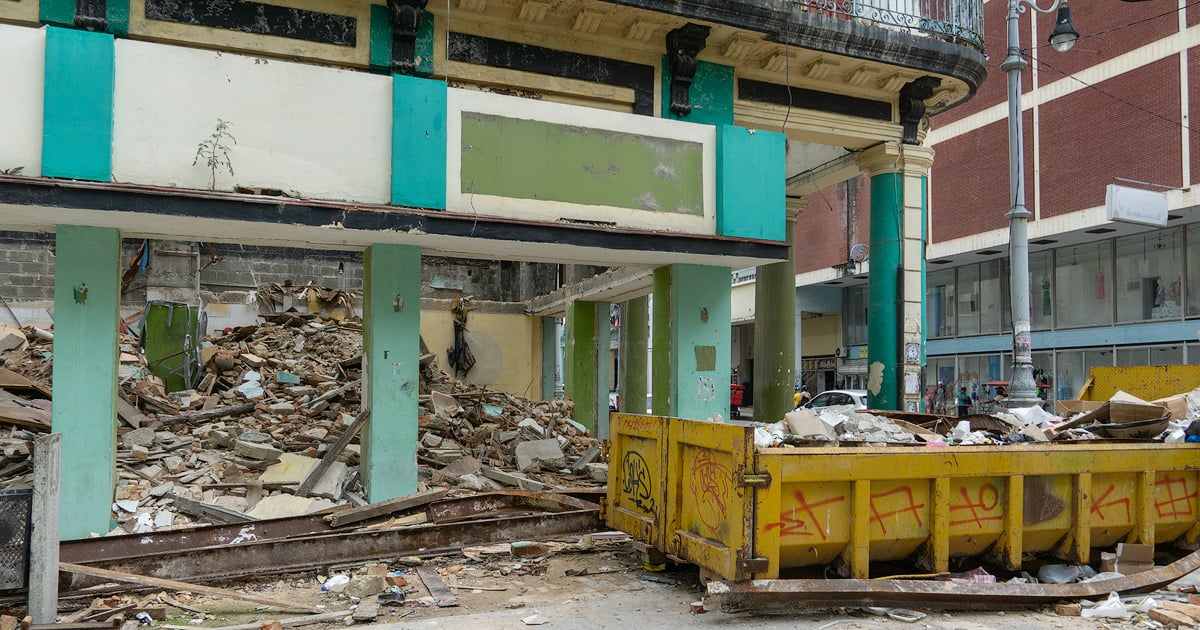
The reactions of Toirac and Guerra reflect the same tone of frustration and sarcasm that dominates comments on social media, where many users point out that the capital is plagued by blackouts, overflowing garbage bins, a collapsed transport system, and landslides, while the regime speaks of “technological innovation” and “citizen participation.” This tension between the official discourse and everyday experience had already been evident when dozens of Cubans reacted to the report on the so-called “smart city” of Havana, published days earlier by state-run media and widely questioned on social networks.
Filed under: