
Related videos:
The Cimex S.A. Corporation issued a public warning about the circulation of a fraudulent application that appears to be using the image of the state platform Ticket to offer alleged fuel sales from abroad.
Cimex and the Information Technology Company for Defense (XETID), developers of Ticket, warned about the existence of an app identified as "Apk Tiket," which illegally uses the official system's visuals to attract users.
The entities clarified that this tool has no connection to the institutional mechanism and emphasized that Ticket does not handle payments in foreign currencies nor does it collect fees outside of the established channels.
According to the information released, the legitimate system operates exclusively through subscription plans in national currency, using the EnZona and Transfermóvil gateways.
They also stated that the requested data for managing fuel purchase appointments is limited to name and surname, identity card, email address, phone number, and the vehicle's circulation number or identification of the electric plant or VAP. They emphasize that external financial information is not required.
The institutions urged the public not to provide personal or banking information on unofficial platforms and recommended always verifying the digital address enabled for the service.
They also requested to share the warning among family and acquaintances to prevent potential fraud.
The warning comes in a context marked by the ongoing energy crisis affecting the Island and the Government's attempt to regulate access to fuel through digital mechanisms that, instead of alleviating discontent, have generated new tensions.
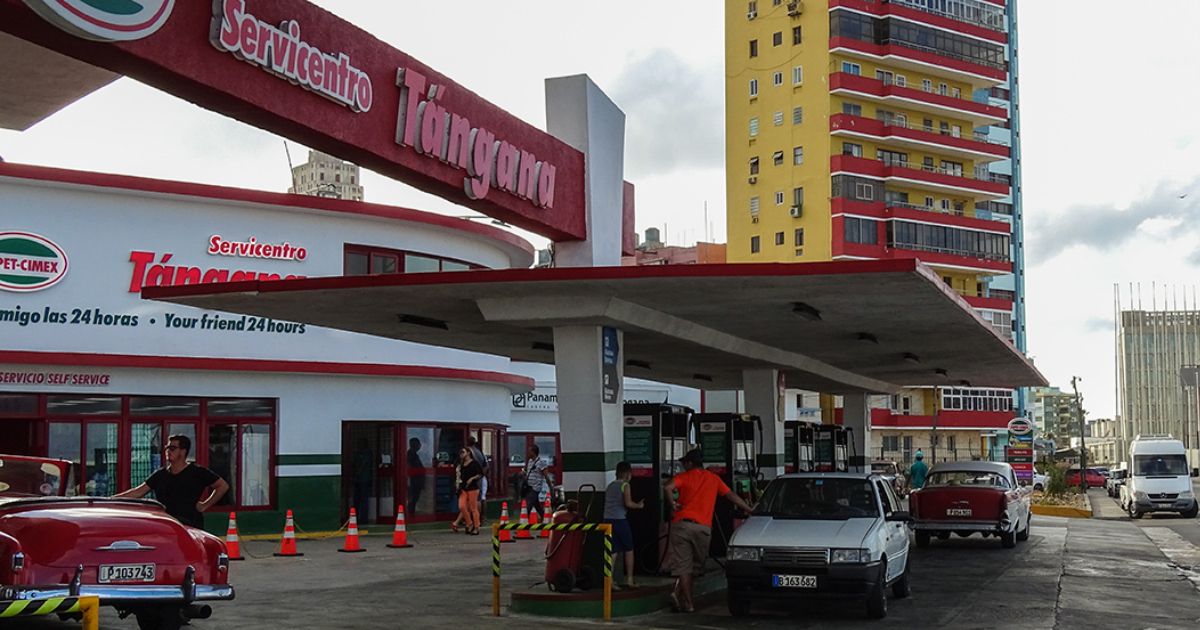
More than three years ago, in response to the gasoline shortage, the regime introduced limited fuel sales through the Ticket app, originally designed to manage bookings for barbershops, workshops, recreational centers, and other services.
The measure was presented as an organizational solution to streamline distribution and reduce the long lines at service stations, prioritizing sectors deemed essential such as ambulances, medical emergencies, hemodialysis, ETECSA, and the Electric Company.
Each province implemented its own provisions that, in practice, ended up shifting the asphalt problem to the phone screen. Rather than disappearing, the lines transformed into virtual lists with limited slots and strict deadlines.
The system, which has been met with criticism and public discontent, requires users to register with their personal information and vehicle registration number, and it prevents them from signing up for more than one Servicupet at the same time.
After entering a digital "waiting room," the client awaits the assignment of an appointment that must be completed within 24 hours; otherwise, it will be forfeited.
To receive notifications, you must also subscribe, with prices ranging from 12 pesos for 15 days, 20 pesos for one month, and 50 pesos for three months.
The maximum purchase limit highlights the extent of the shortage and leaves many drivers with insufficient supplies to sustain their activities.
Despite authorities maintaining that the model prevents crowds, criticism has mounted. In a survey conducted in 2023 by Cubadebate, the majority of customers reported that they were unable to use the application and rated it negatively.
Irregularities have also been reported in the registration and assignment of shifts.
Even the newspaper Tribuna de La Habana acknowledged practices such as registering the same vehicle at different service centers in an attempt to obtain more than one appointment, a behavior that the regime has used as an argument to tighten controls, but which is merely a desperate response to the lack of fuel.
The complaints point to technical failures, delays, system overload, and a lack of transparency in distribution.
Meanwhile, at the Cupet stations, situations continue to be observed that contradict the official narrative about digital order: users report the existence of turnstiles being sold unofficially at high prices and vehicles passing without tickets.
Some testimonies reflect prolonged frustration. A user from Santa Clara reported that she has been registered for months without being able to purchase gasoline, while she observed availability in other segments of the market.
In this context of increasing controls, limitations, and discontent, the emergence of a fraudulent application adds a new element of uncertainty for citizens who, amid the scarcity, are seeking any way to secure fuel.
Filed under: