
Related videos:
Any ordinary Sunday turned into a nightmare for a Hispanic immigrant who was on a video call with his daughters when he heard violent banging at the door. “Police,” shouted the man who burst into his home. Within seconds, he was pointing a gun at him. Then came the demand for money. He was no longer an officer. He was a criminal posing as an immigration agent.
The testimony is part of an extensive report by Telemundo 51, which documents several recent cases in various states where individuals have been arrested for impersonating federal agents, specifically from the U.S. Immigration and Customs Enforcement (ICE), in order to intimidate, stop vehicles, or commit theft against immigrants.
The attacker hit him in the head, leaving him dazed, and searched the house until he found his wallet. His daughters heard everything on the other end of the phone.
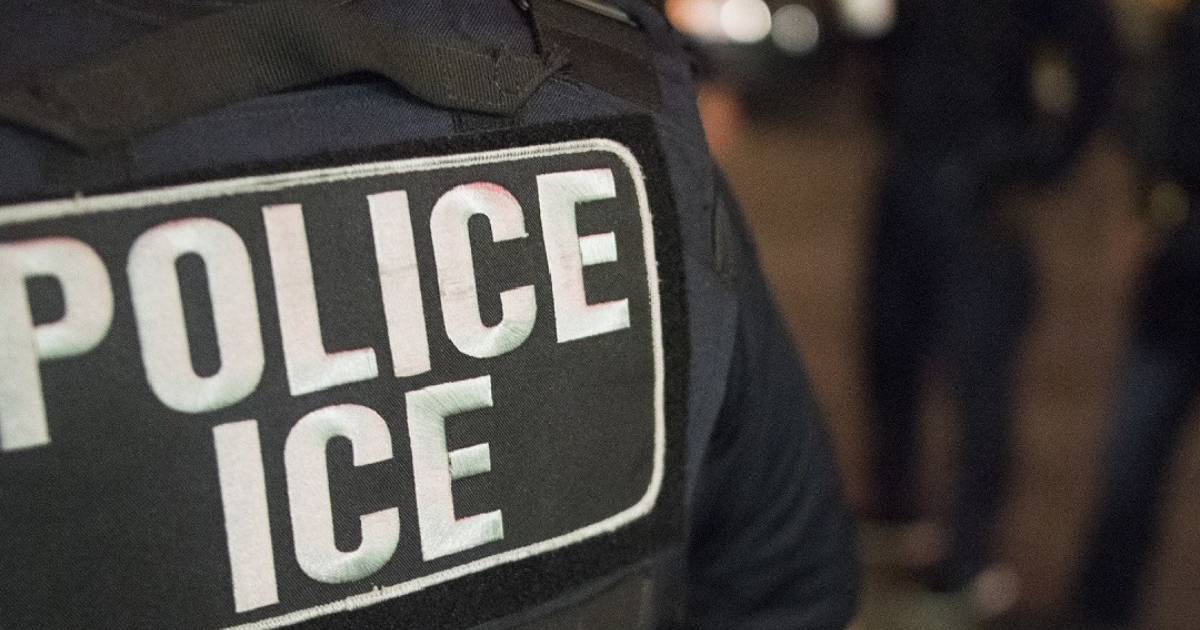
Cases like this are not isolated. In various cities across the country, there have been reports of arrests of individuals accused of pretending to be federal agents, particularly from ICE, to intimidate, stop vehicles, break into homes, or commit thefts. Some wear tactical clothing or jackets that resemble those associated with immigration. Others use vehicles that appear official.
For many immigrants, including Cubans with pending processes, parole, I-220A, or undefined status, the mere mention of "migration" is paralyzing. "I thought they were going to deport me," said one of the men intercepted on the street by a fake agent. He did not resist. He felt he had no choice.
The problem is that distinguishing between a real agent and a fake one is not always simple. Federal agencies often operate in plain clothes and may use vests or clothing with initials during tactical operations. Moreover, the use of masks by some agents in recent operations has created more confusion and fear. "You can't tell the difference," confessed a victim. "There isn't much of a difference."
That ambiguity is being exploited by criminals.
Lawyers consulted in the report warn that no agent can enter a home without a court order signed by a judge. Additionally, a person is not obliged to open the door if a valid order is not presented. Generally, these operations are not conducted by a single isolated agent.
Fear, however, prevents many victims from reporting. They worry that reaching out to the police could affect their immigration status. Experts emphasize that impersonating a federal agent is a serious crime and that reporting can even lead to certain immigration protections in some cases, although each situation must be assessed individually.
The impact is not just legal; it’s psychological. The assaulted man says he now sleeps little, checks cameras before going out, and reinforced his door even though he knows that “it might not help much.” He feels suffocated in crowded places. He lives with the constant suspicion that someone might come back.
“One no longer has the same freedom,” he laments.
In a context of more visible raids and immigration operations, fear within the Latin community has deepened. And in that climate, impostors find fertile ground.
However, knowing your rights can make the difference between being a victim of a crime or being able to react in time. Because fear, when it becomes a tool of crime, strikes twice: it robs you of your possessions and your peace of mind.
Filed under: