
Related videos:
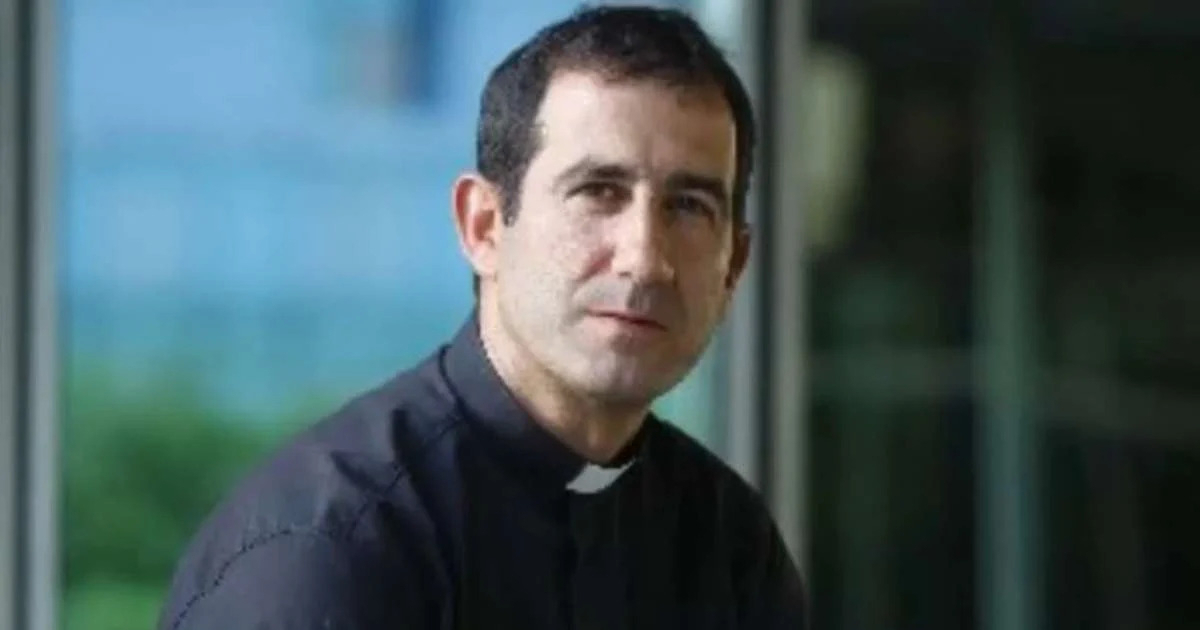
The Cuban priest Alberto Reyes Pías made a strong public appeal for Cuba to consider a dialogue with the United States, focusing not on the ideological sovereignty of the regime, but rather on the interest of alleviating the suffering of the population.
In a Facebook message, Reyes emphasized that much of the analysis regarding the situation between Washington and Havana focuses solely on the governments, but overlooks the reality of the Cuban people, who do not identify with the government and live trapped under an authoritarian system.
The parish priest notes that, although some describe the tensions with the United States as an abuse by the "giant of the North" against the "small and defenseless island," in reality, the Cuban people have been trying for years, from a position of vulnerability, to put an end to decades of repression and misery.
And he criticized those who, when voices in the United States call for the freedom of the Cuban people, see it as an interference in sovereignty.
"The Cuban people are not to blame for the anti-American complexes, and those who have them should express them in another way, without putting their ideology before the hunger and misery of an entire nation," he stated.
"Moreover, this would be precisely the time to support the proposal from the United States and to demonstrate that nations that claim to be democratic have the decency and courage to defend the freedom and true sovereignty of ordinary people," he said.
Reyes used a metaphor to explain the situation: he compared the asymmetry between the people of Cuba and their government to an eight-year-old child who suffers bullying from someone stronger, pointing out that no one would expect that child to defend himself alone. Thus, the Cuban people have attempted to confront repression, without external help, by doing "what they can."
He insisted that Cuban society is "unprotected, without the rule of law, with a civil framework meticulously dismantled over nearly 70 years" and "vulnerable at the mercy of repressors who hold significant power."
He also questioned the hypocrisy of those who protest against any rapprochement with the United States, recalling historical examples such as the American intervention in World War II, which was crucial in defeating Nazi Germany.
For him, if there are countries that claim to be democratic, they should "have the decency and courage" to defend the real freedom of Cubans, instead of prioritizing ideologies over the hunger and misery that the majority of the Cuban population faces.
"Without the help of someone stronger, we are left with no choice but to sink deeper and deeper until we die and witness the death of our children, while (...) we listen to those who today demonize those fighting for our freedom, saying from a bar in London or Paris: 'Oh, how admirable the Cuban people, how they resisted until the end!'" he concluded.
The priest's call comes amid a climate of tension and political anticipation in Cuba following the pressure from the Donald Trump administration, which has expressed its intention for this year to expedite the fall of the dictatorship in Cuba.
Her stance, supported by multiple prior statements against the regime, adds to the internal voices calling for a change of system and highlights the economic, social, and political crisis the country is experiencing.
Filed under: