
Related videos:
The Canadian government confirmed on Monday that it is working on an "assistance plan" for Cuba, amidst the most severe energy crisis the island has faced in decades, while Washington intensifies pressure to cut oil supplies to the Caribbean nation.
According to a report by the agency Reuters, Ottawa plans to provide support to Cuba amidst a context characterized by fuel shortages, prolonged blackouts, and a lack of basic goods.
“We are preparing an assistance plan. At this moment, we are not ready to provide more details about an announcement,” stated Canada's Minister of Foreign Affairs, Anita Anand, without specifying the extent or type of aid that might be sent.
The confirmation comes after the Canadian government itself indicated last week that it was monitoring the situation on the island and was concerned about the increasing risk of a humanitarian crisis.
Washington Pressure
The Canadian announcement comes amid a backdrop of escalation by the United States. The administration of President Donald Trump has taken steps to block Cuba's access to oil, including that from Venezuela, its traditional ally.
According to Reuters, Washington has intensified a pressure campaign against the island in recent weeks. Trump has claimed that “Cuba will fail very soon” and stated that Venezuela, once the main energy supplier to Havana, has not sent oil or financial resources recently.
The tightening of U.S. restrictions has left Cuba virtually without fuel. An analysis cited by CBC News indicates that what is happening is effectively equivalent to a nearly total oil blockade, with ships being pursued and monitored to prevent them from unloading crude oil at Cuban ports.
The direct consequence has been a rise in prices for food and transportation, along with a severe fuel shortage that has led to hours of daily blackouts in much of the country.
The UN has warned that if Cuba's energy needs are not met, a humanitarian crisis could ensue. The organization's human rights office has also criticized recent actions by Washington in the region, describing the military operation that led to the capture of the ousted Venezuelan president Nicolás Maduro as a violation of international law.
An island on the edge
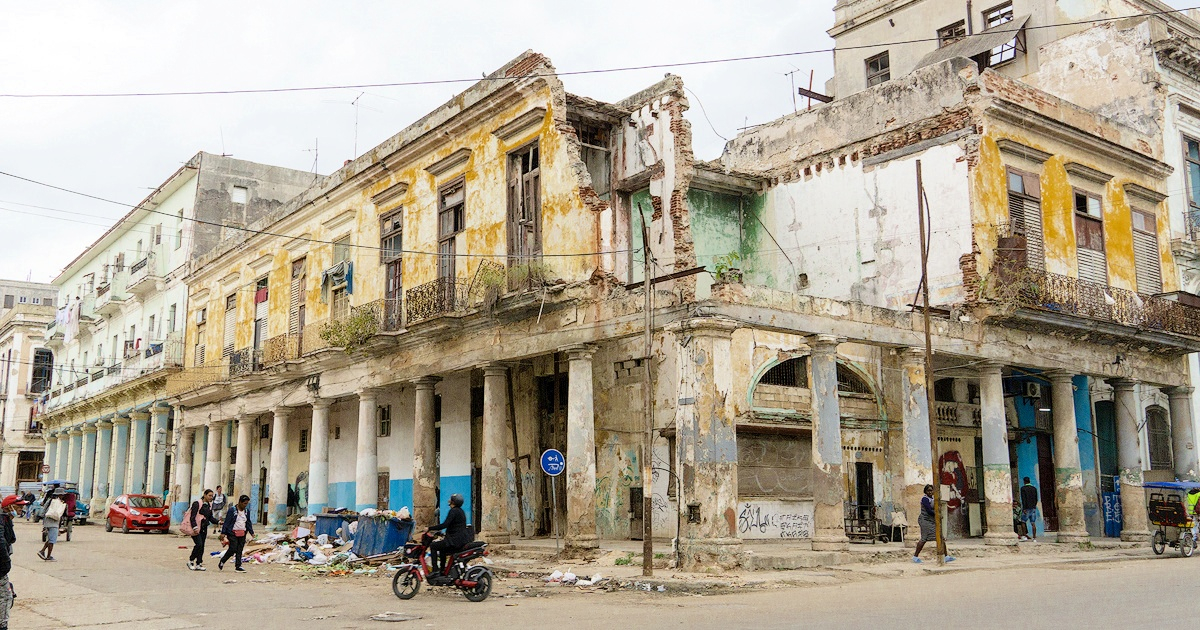
In practice, the energy crisis is already impacting every aspect of daily life in Cuba. The government has suspended the sale of diesel to the public in an attempt to preserve fuel for hospitals and essential services.
Power outages affect water pumping, disrupt workplaces, and worsen food shortages in a country that is heavily reliant on imports.
Cuban economist Ricardo Torres warned, as quoted by CBC, that the island could be just weeks away from running completely out of oil. Cuba needs between 90,000 and 100,000 equivalent barrels per day to sustain its basic operations, a figure that cannot be covered solely by sporadic humanitarian aid.
Meanwhile, the impact is also extending to foreign companies. The Canadian mining company Sherritt, the main foreign partner in the extraction of nickel and cobalt in Moa, announced the temporary suspension of operations due to a lack of fuel.
Tourism, one of the main pillars of the Cuban economy, and where Canada has historically represented the largest source market, is also beginning to feel the impact. Over 27,900 travelers returned from Cuba on Canadian airlines before several suspended flights due to a fuel shortage on the island.
Ottawa under pressure
Within Canada, political pressure is mounting for the government to act more quickly. Leaders of the New Democratic Party and the Bloc Québécois have urged Prime Minister Mark Carney to send immediate assistance and to take a stronger stance toward Washington.
Minister Anita Anand acknowledged being "deeply concerned" about the worsening situation, although she avoided confirming whether the eventual plan would include fuel or other forms of direct assistance.
Ottawa's position is delicate. Although food and medicine are not subject to U.S. sanctions — and in fact, the United States recently announced a shipment of six million dollars in humanitarian products — oil is a different matter. An executive order signed by Trump threatens to impose tariffs on any country that sells or supplies crude oil to Cuba.
Additionally, relations between Washington and Ottawa are strained over trade issues, tariffs, and geopolitical differences, including Canada's stance on cooperation with Beijing and Prime Minister Carney's statements that "middle powers" should act together to avoid being subordinated to U.S. hegemony.
Uncertainty about the extent of the aid
For now, the Canadian government has not specified what the "assistance plan" will include. It is also unclear whether Ottawa will be willing to take the risk of secondary sanctions if it decides to engage in energy supply.
What is evident is that the crisis in Cuba has escalated to a point where international organizations are warning of a potential severe humanitarian situation if access to basic energy is not guaranteed.
Amid prolonged blackouts, fuel shortages, and a decline in tourism, Canada's announcement opens a new diplomatic front in the region and presents Ottawa with a complex decision: to balance its relationship with the United States while responding to an emergency that, according to the UN itself, could worsen rapidly.
Filed under: