
Related videos:
A recent statement from the United States Department of Justice has once again brought to light one of the most violent cases of Cuban migrant trafficking dismantled in Florida in recent years.
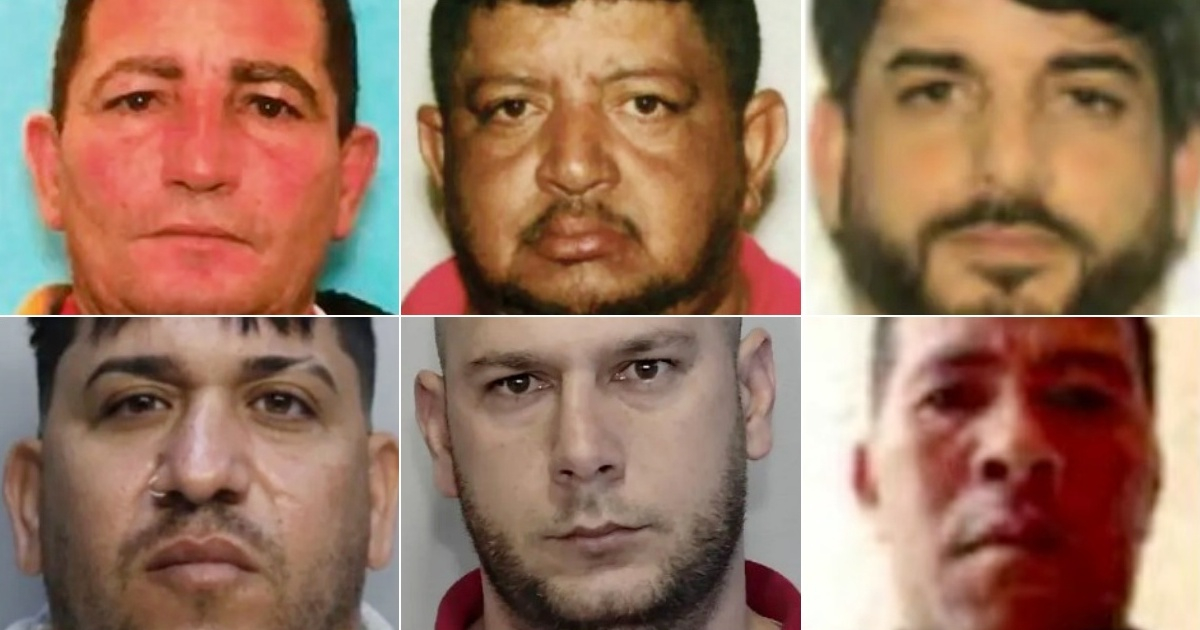
In recent hours, federal authorities released new images related to the investigation of a group of six men accused of being part of a criminal network that, according to prosecutors, kidnapped, extorted, and tortured newly arrived Cuban migrants.
The case, which has already resulted in several convictions and guilty pleas, describes a scheme that authorities characterize as an organized operation of human trafficking sustained through kidnapping, threats with firearms, machete assaults, and extortion of the victims' families.
According to federal prosecutors, the group allegedly exploited the vulnerability of migrants arriving from Cuba with the hope of starting a new life in the United States.
The six individuals involved in the criminal scheme
According to records from the Federal Court and the statement released by the Southern District of Florida Prosecutor's Office, the accused are:
-Osmel Benítez, known as "El Manco," 40 years old, residing in Miami, Florida.
-Víctor Rafael Arcia Albeja, alias “Vitico,” 32 years old, residing in Miami, Florida.
-Victor Manuel Pérez Cárdenas, 40 years old, resident of Tampa, Florida.
Yoelis Prada Ramos, alias "Bob Marley," 45 years old, resident of Baton Rouge, Louisiana.
-Jhonny Walther Izaguirre López, alias “El Mejicano,” 46 years old, resident of Baton Rouge, Louisiana.
-José Ángel Marrero Rodríguez, 52 years old, residing in Houston, Texas.
Together, they face a lengthy list of federal charges, including conspiracy to kidnap, kidnapping, conspiracy to provide and obtain forced labor, illegal transport of aliens, conspiracy to use firearms in violent crimes, and use of weapons during violent crimes.
In addition, the accusation includes the seizure of assets, which would allow authorities to confiscate properties, vessels, and other assets related to the alleged criminal scheme.
The last to be declared guilty
The most recent judicial process took place on February 20, when a federal jury in Miami found Víctor Rafael Arcia Albeja guilty, considered one of the key participants in the scheme.
Arcia Albeja was found guilty of conspiracy to commit kidnapping, four counts of kidnapping, conspiracy to bring an alien into the United States, human trafficking, and four counts of violent crimes related to organized crime activities.
The accused now faces a potential sentence of up to life in prison, with the final ruling to be determined by a federal judge after reviewing the sentencing guidelines and other legal factors.
Before his trial, the other five defendants had already pleaded guilty in the case.
Three of them have already been sentenced:
Osmel Benítez: 34 years in prison.
Víctor Manuel Pérez Cárdenas: 17 and a half years in prison.
Jhonny Walther Izaguirre López: 28 years in prison.
From Cuba to Florida: The Beginning of the Ordeal
According to the evidence presented by the prosecution, the criminal scheme began with the clandestine transportation of Cuban migrants from the island to Florida.
The prosecutors claim that in March and May 2024, Arcia Albeja and Pérez Cárdenas transported Cuban citizens in boats from Cayo Coco, in the province of Ciego de Ávila, to Key Largo, in South Florida.
Once on U.S. territory, the migrants were taken to a safe house in Miami Gardens, where the most violent phase of the plan began.
There, according to the Department of Justice, the members of the network demanded $15,000 per person from relatives or acquaintances of the migrants as payment for the alleged smuggling journey.
The researchers noted that the group had a clear policy: no migrant would be released until the full amount of money demanded was paid.
Threats, machetes, and simulated executions
When families couldn't gather the required money, violence became a tool of coercion.
According to the accusation, the kidnappers showed the victims a video in which a man was beaten with a machete before being shot to death, as a warning of what could happen if the ransom was not paid.
In another episode described by the prosecutors, Benítez and Arcia Albeja forced a migrant to participate in a mock hanging while they beat him with a machete.
The researchers also documented that the members of the organization recorded acts of violence to send to the families of the migrants as a method of pressure to obtain money.
One of the most striking testimonies included in the accusation states that Izaguirre López forced a migrant to make a FaceTime video call to his mother while he held a gun to his head.
During the call, the accused warned the mother that if she did not pay the demanded money, she would "receive her daughter's head," according to the account presented by the prosecution.
Persecutions and transfer to a farm in Miami-Dade
In one of the episodes described by the researchers, Arcia Albeja and Pérez Cárdenas transported approximately 15 migrants to Key Largo.
When some tried to escape, members of the group pursued them and brought them back under the organization's control.
Later, several of the victims were taken to an abandoned agricultural property in the northwest of Miami-Dade, used for cockfighting.
According to the prosecutors, there the accused staged and recorded new acts of violence, which they then sent to the families of the migrants to pressure them for payment.
Forced labor attempt in Louisiana
When the extortion attempts proved unsuccessful, the group tried to implement another method to recover the money.
Authorities assert that the accused planned to transport certain migrants to Louisiana to subject them to forced labor, with the intention of making them pay off the alleged debt incurred for the journey.
That transfer was part of the criminal scheme that is now the subject of the federal indictment.
The arrest that dismantled the operation
The operation began to unravel on May 20, 2024, when Izaguirre López was arrested on Florida's Turnpike in Sumter County.
During the operation, law enforcement agents arrested the suspect and rescued several migrants who were being transported, which allowed investigators to uncover the criminal network.
"Kidnapping, torture, and terror"
Federal prosecutor Jason A. Reding Quiñones from the Southern District of Florida described the case as a criminal operation of extreme violence.
"It was an organized network of human trafficking sustained through kidnappings, torture, and terror," he stated in a statement.
According to the prosecutor, the defendants clandestinely brought vulnerable Cuban migrants into the United States and then treated them as merchandise, subjecting them to extreme violence to force their families to pay.
"They were imprisoned, beaten with machetes, subjected to mock executions, and had guns pointed at their heads to extort their families," he emphasized.
Reding Quiñones insisted that these acts should not be viewed as mere immigration violations, but rather as violent federal offenses.
“If someone takes advantage of desperation to make profits in South Florida, they will be located, prosecuted at the federal level, and face the full weight of the law,” he warned.
Federal authorities believe that this case reflects the level of violence that some networks involved in human trafficking can reach.
For researchers, the organization would have turned the desperation of those seeking to escape from Cuba into a business based on fear, extortion, and control through violence.
With the guilty plea of Arcia Albeja and the sentences already handed down against several of her co-defendants, the judicial process against the criminal network is moving towards its final stage, while federal authorities continue to investigate possible ramifications of the scheme.
Filed under: