
Related videos:
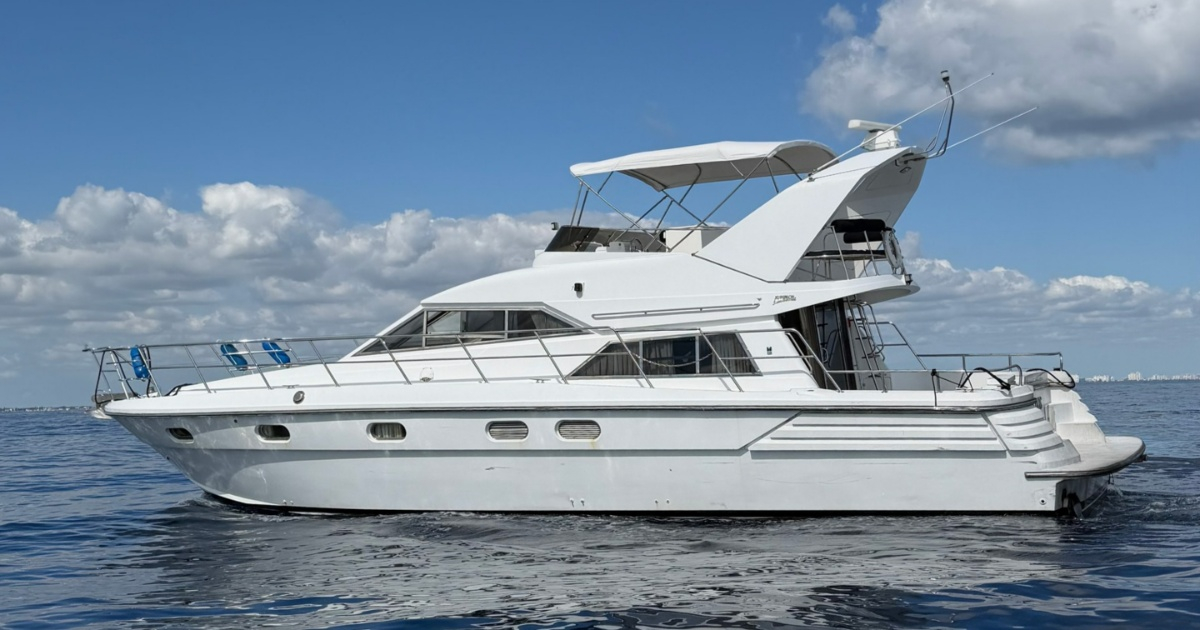
The U.S. Coast Guard seized two vessels containing $5.6 million in cocaine off the coast of Port Everglades, Fort Lauderdale, Florida.
It involved 745 pounds of cocaine with an estimated value of $5.6 million, reported on Facebook by the Coast Guard Southeast.
“The Coast Guard is dedicated to saving lives, and every kilogram of these drugs that is kept off our streets represents lives saved,” stated Lieutenant Justin Dadlani, commander of the Fort Lauderdale Station.
"I am extremely proud of the professionalism of the crew and our ongoing collaboration with our partners in Customs and Border Protection and the Department of Homeland Security Investigations," he added
The arrests are part of "a whole-of-government approach to protecting our borders by dismantling foreign terrorist organizations and transnational criminal organizations, including drug trafficking and human trafficking operations," the information concludes.
Other seizures
On Friday, also in Port Everglades, the Coast Guard reported the seizure of about 17,750 pounds of cocaine worth over $133.5 million, as a result of a series of interdictions conducted in international waters of the eastern Pacific Ocean, according to the information released about the operation.
According to the report from the government agency, the seized cargo came from four interdictions.
The first incident occurred on January 25, when the crew of the Coast Guard cutter Seneca detected a fast vessel, and the onboard air unit of the Helicopter Interdiction Tactical Squadron (HITRON) employed "air force use tactics."
After the boarding, the Seneca team seized 4,410 pounds of cocaine.
The second operation took place on January 31, when the Seneca detected three fast vessels, and once again, with the support of HITRON, the interception and boarding of the three ships was carried out, resulting in the seizure of an additional 13,340 pounds of cocaine.
Captain Lee Jones, the officer in command of the Seneca, stated that the deployment demonstrates the "strengthened posture" and the "ongoing success" in the fight against "narcoterrorism" and transnational criminal organizations.
He emphasized that the Coast Guard, along with inter-agency and international partners, maintains patrols in areas linked to drug trafficking to prevent smugglers from accessing maritime routes used to transport narcotics to the U.S. borders.
The operations involved, according to the document, the Coast Guard cutter Seneca, a helicopter from the Coast Guard, the Joint Interagency Task Force South (JIATF-South), and units from the Southeast and Southwest districts of the Coast Guard.
The text also explains that the JIATF-South, based in Key West, is responsible for the detection and monitoring of air and maritime traffic of illegal drugs, and that when interdiction is imminent, operational control shifts to the Coast Guard during the law enforcement phase.
The Coast Guard noted that 80% of drug seizures destined for the United States occur at sea, and for this reason, it is accelerating its anti-drug operations in the Eastern Pacific in support of Operation Pacific Viper, with the aim of curbing the flow of narcotics from South America and limiting the financing of criminal organizations that—according to the report—also facilitate the production and trafficking of illegal fentanyl.
Filed under: