
Related videos:
Amid a national electrical crisis characterized by prolonged blackouts and generation deficits nearing 2,000 megawatts, the Electric Company of Isla de la Juventud announced a new "alternative for the community": allowing residents to charge their devices at solar parks in the area.
The initiative was presented on social media by the company itself, which announced that residents can now visit the solar parks at the University and Los Colonos to charge their electronic devices. According to the statement, the measure aims to “ensure access to clean and reliable energy” and to support customers “in times of need.”
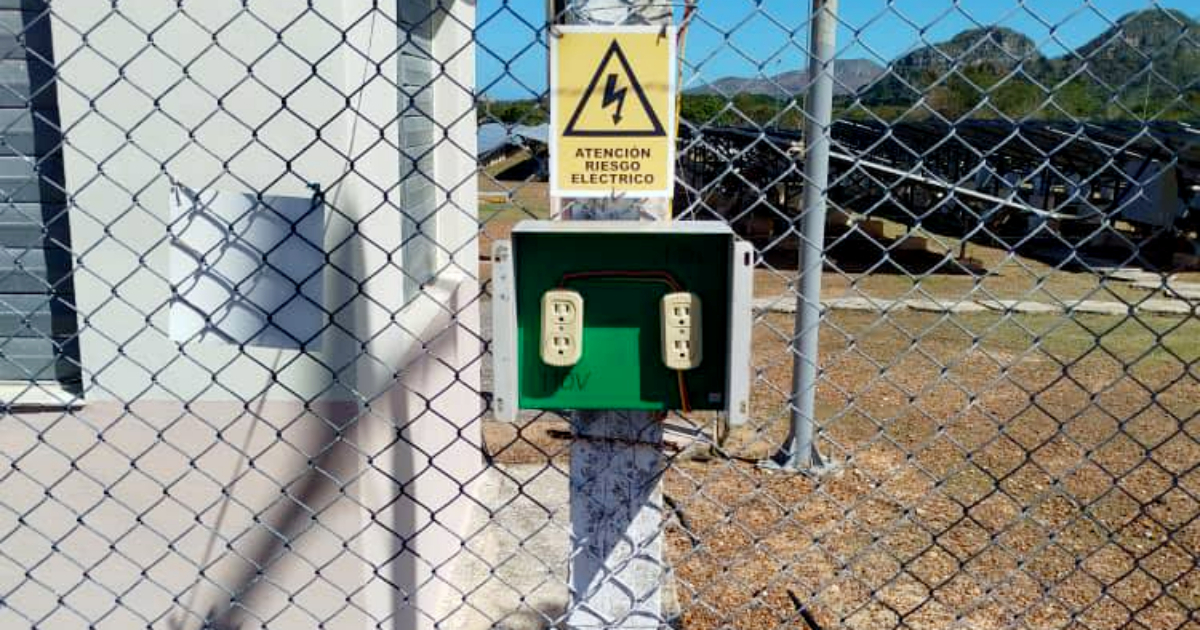
The images shared show what appears to be the infrastructure intended for that solution: a small metal box attached to a fence, with four 110-volt outlets and a warning sign reminding of the electrical risk in the area.
In practical terms, the new service is akin to a "public charging station" in the midst of an energy facility.
The announcement comes in a context where the crisis of the National Electric System has worsened since the beginning of 2026. Recent reports indicate generation deficits ranging between 1,600 and over 2,000 MW during peak hours, a gap that causes widespread blackouts and power outages that in some areas exceed 20 hours daily.
The causes are well-known and repeatedly mentioned: aging thermoelectric plants, fuel shortages, and prolonged maintenance that further reduce generation capacity.
Given this situation, the country has promoted new solar parks as part of its energy strategy. However, their contribution is limited at night—when demand increases—and does not compensate for the structural deficit of the system.
In that context, the solution presented in Isla de la Juventud seems to aim for a more modest goal: that at least some neighbors can charge their mobile phones, a flashlight, or a power bank.
It is not clear how many people could benefit from the service simultaneously. What is known is that, for now, the visible infrastructure consists of four outlets installed in a metal box next to the fence of the facility.
In a country where more than half of the territory can be plunged into darkness during peak hours, the investment in solar outlets seems to herald a new chapter in managing the energy crisis: when electricity is insufficient for the nation, the regime offers you the option to share the outlet.
Filed under: