
Related videos:
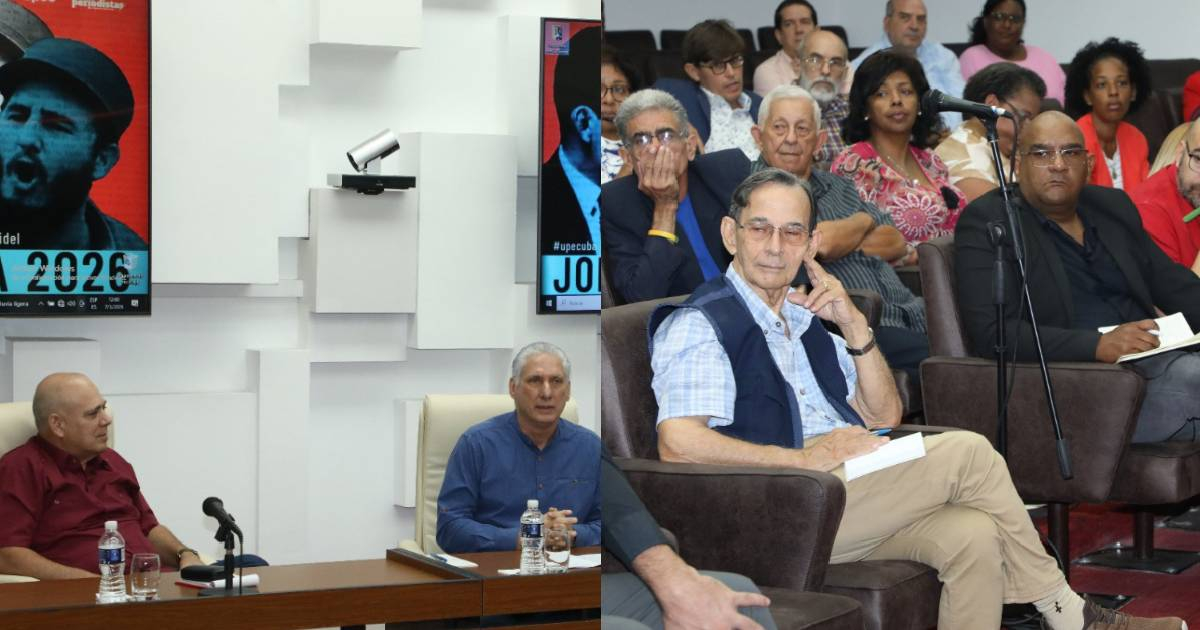
The Secretary of Organization of the Central Committee of the Communist Party of Cuba (PCC), Roberto Morales Ojeda, defended the political role of the official press on Saturday during a meeting with journalists held as part of the Cuban Press Day.
In a message posted on the social network X, the leader stated that the current "difficult and challenging moment" the country is experiencing should be seen as an opportunity to consolidate what is called "hypermediality," refine productive routines, and strengthen alliances within the state media system.
According to the number two of the political organization, during the exchange, proposals and experiences from professionals in Cuban media were shared to address the challenges facing the sector.
The leader emphasized that the state media must "continue telling the stories of our people, remain on the front lines in defense of the truth, identity, and culture of the Homeland," and maintain "the standards of the Revolution and the people."
The meeting was also attended by the ruler Miguel Díaz-Canel.
Morales Ojeda's statements come at a critical moment for the state media system. At the beginning of March, the Political Bureau of the PCC decided to drastically reduce the circulation of printed media due to a shortage of paper, fuel, and financial resources.
Since March 2, 2026, the national newspapers Granma and Juventud Rebelde are published only once a week, while the provincial newspapers have ceased to circulate in physical format.
The authorities have tried to offset that reduction by promoting the digital platforms of official media and promising to facilitate free access to their websites through mobile data within the country.
However, the disappearance of much of the print media represents a new setback in access to information for many Cubans, especially older adults or those without smartphones or stable internet connections.
At the same time, the Cuban media model remains directly controlled by the PCC, which defines the editorial guidelines and the legal framework for journalistic practice on the island.
The Law of Social Communication recognizes only the media linked to the State and the PCC, while independent journalism continues to be persecuted and subjected to pressure, interrogations, equipment confiscation, and digital blockades.
In this context, critics of the Cuban information system point out that the state press does not function as a counterbalancing force or as a space for public oversight, but rather as an apparatus subordinate to the political project of the regime.
This structure, according to various analyses of the media system on the island, prioritizes the defense of the official narrative and reduces the editorial autonomy of journalists, resulting in informational silences, delays in crisis coverage, and a growing loss of credibility among the citizenry.
While the government insists that the media must reinforce its ideological role, an increasing number of Cubans turn to social media, rumors, or independent platforms to stay informed about events affecting the country.
Filed under: