
Related videos:
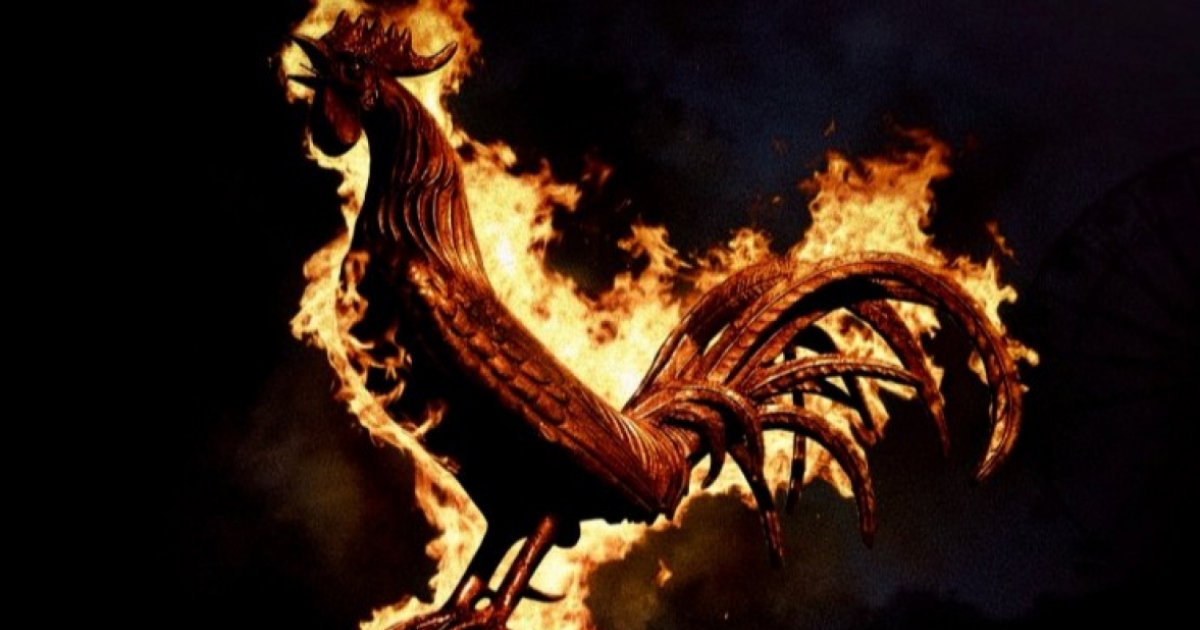
An image began circulating on social media and within hours became a symbol. It's not a real photo, but an artistic creation: a rooster engulfed in flames, accompanied by the phrase "Morón libre."
It was shared on his Instagram account by the Cuban filmmaker Asiel Babastro, who is originally from the city of Ciego de Ávila. It took only a few hours for the illustration to go viral.
The rooster is no ordinary figure. It is the most well-known symbol of Morón, a city that even has a bronze monument dedicated to this animal, located at the entrance of the municipality. For decades, it has been a part of the local identity: proud, defiant, watchful.
In Babastro's work, that rooster appears engulfed in flames, as if the very spirit of the people had been ignited.
And many Cubans understood the message immediately.
An image that became a cry
The comments on the post reveal how deeply the image resonated with people.
The model and beauty contestant Ariday Villar, who represented Ciego de Ávila in the national pageant, delivered a brief yet powerful message: "Cuba libre."
The model Milena Rivalta also wrote: "God protect Cuba. Freedom!"
Other internet users turned to metaphors to describe what was happening.
"The brave rooster is out in the street," one person remarked, suggesting that the symbol of Morón had transformed into the representation of a town that chose not to remain silent.
Another user recalled a historical episode from the fight against the dictatorship of Fulgencio Batista, when young revolutionaries attacked the Presidential Palace and the radio station Radio Reloj on that very day in 1957.
"The history books written by communists have always told us that those young people were heroes. Yesterday something similar happened in Morón and the communists say it is vandalism," he questioned.
The comparison reflects a sentiment that many Cubans expressed in the post: history changes depending on who tells it.
Other comments were simple outbursts of emotion: "Long live Cuba free from communism, damn it"; "Let's start creating our own history. No more lies, no more communism," and "Go Cuba, it’s your time for freedom," wrote three users.
And someone summed up the scene with a phrase full of symbolism: "The emblematic Rooster of Morón asking for freedom."
The artist behind the image
The symbolic weight of the work is not surprising if one is familiar with Babastro's background.
Born in 1989, the filmmaker has gained recognition as a director, screenwriter, editor, and art director, especially in the realms of advertising, music videos, and independent film.
His work is often characterized by a meticulous aesthetic and the use of visual symbols that connect with Cuban reality.
Babastro is also known for directing the music video for "Patria y Vida," a song that became an anthem during the protests on July 11 in Cuba.
That's why, when he published the chicken engulfed in flames, many understood that it's not just an illustration: it's a statement.
A city that lost its fear
The image was circulated a few hours after a night that has already become part of Morón's history.
Amid prolonged blackouts, food shortages, and a visibly worsening quality of life, dozens of neighbors took to the streets banging pots and shouting a single word that was heard over and over: "Freedom!".
In the midst of the protest, a deeply symbolic scene unfolded. Several demonstrators managed to enter the headquarters of the Communist Party of Cuba.
They took out propaganda, paintings, furniture, and political portraits. All of that ended up piled in the street. And then it turned into a large bonfire.
In Cuba, there has always been a shortage of many things: food, medicine, electricity, transportation. However, there has been no shortage of slogans, posters, and political propaganda.
On Friday night, the neighbors of Morón decided to put them to another use: they turned them into fuel.
The response of power
The authorities' reaction followed a pattern familiar to many Cubans.
There were reports of gunfire, a police presence, and accusations that a young man was injured amidst the tension.
The interruption of Internet service was also reported, making it difficult for real-time images of what was happening to circulate.
It is a formula that the regime has repeatedly applied during times of crisis: repression, information blackouts, and official silence.
And yet, people went out.
The meaning of a night
What happened in Morón didn't change the political system overnight. But it did leave a powerful image: ordinary citizens losing their fear.
That’s why the illustration of the flaming rooster resonated so much. Many Cubans saw in it more than just a local symbol. They saw a metaphor for the current moment in the country.
The rooster -proud, defiant- turned into fire.
A fire that reminds us of something dangerous for any authoritarian power: that when people lose their fear, ideas spread. Like flames.
And perhaps that’s why the image continues to circulate. Because many Cubans feel that this fiery rooster represents more than just Morón.
It is Cuba awakening.
Filed under: