
Related videos:
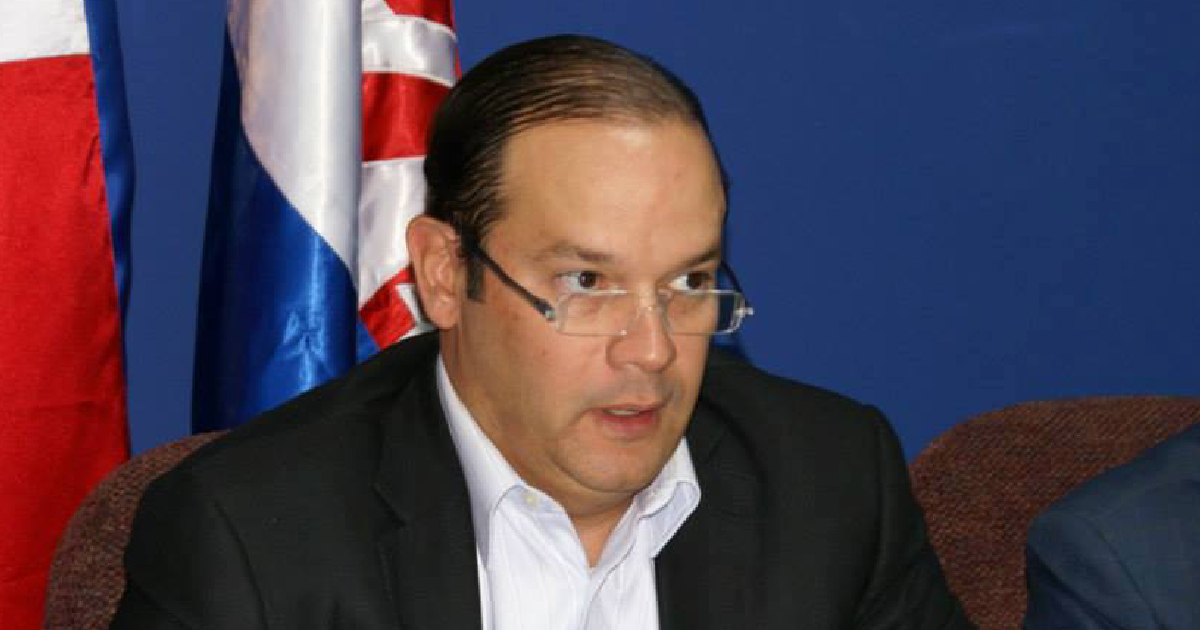
The Chancellor of Panama, Javier Martínez-Acha, announced that he will travel to Cuba to discuss with authorities the case of ten Panamanian citizens detained in Havana and accused by the regime of conducting propaganda against the constitutional order.
The head of Panamanian diplomacy stated that the detainees "are in appropriate conditions" and are receiving consular assistance, according to the EFE agency.
Arrested at the end of February after being accused by the Ministry of the Interior of making critical graffiti against the political system of the Island, the detainees have already received consular assistance from the Ambassador of Panama in Cuba, Edwin Pitty, who recently visited them at Villa Marista, the State Security detention center in Havana.
"I have expressed my intention to visit them. We need to coordinate details and I hope to travel to Havana soon to see our citizens, offer them personal support, and discuss with Cuban authorities how we can, while respecting the country's laws, resolve these circumstances," Martínez-Acha stated to the press.
The Ministry of the Interior of Cuba (Minint) reported on March 2 about the arrest of these citizens, who are accused of producing and placing posters with critical messages against the Government in various locations around the capital city.
Among the slogans cited by the official version would be phrases like "Down with tyranny," "Communism: enemy of the community," and "We trust Donald Trump, Marco Rubio, and Mike Hammer," referring to the President and Secretary of State of the United States, and the U.S. ambassador to the Island, respectively.
According to the Minint, those involved would have been guided to enter Cuba with the purpose of disseminating messages deemed "subversive and contrary to the constitutional order." Authorities stated that each would receive between 1,000 and 1,500 dollars upon returning to Panama.
The crime of propaganda against the constitutional order is covered in Article 124 of the Cuban Penal Code. If the charges succeed, the detainees could face sentences of up to eight years in prison.
The case prompted an immediate reaction from the Panamanian government, which confirmed the arrest and demanded procedural guarantees, permanent consular access, and respect for due process for its citizens.
After Ambassador Pitty's meeting with his fellow citizens, the Panamanian Foreign Ministry reiterated its interest in fully respecting the rights of the accused, including the presumption of innocence and access to local legal assistance.
The detention has also sparked reactions within Cuba. In Havana, posters and graffiti demanding the release of the detained Panamanians recently appeared, some of them in the Cerro municipality, according to information sent to CiberCuba.
Residents reported that, following the appearance of the messages, the area was occupied by State Security agents and police. Hours later, there were also reports of pot-banging protests in several neighborhoods of the capital, amidst a growing climate of social unrest and tensions related to the economic and energy crisis the country is facing, which has intensified dramatically in recent weeks.
The Panamanian activist Jair Ortiz, who managed to leave Cuba before the arrests, stated that the group had traveled to the island to provide humanitarian assistance and distribute food to vulnerable families. This account aligns with those of other Cuban activists who refer to the solidarity support mission of those who have been imprisoned.
The case remains in the initial stage of investigation and may soon be forwarded to the Cuban prosecutorial authorities, while the Government of Panama continues diplomatic efforts to closely monitor the situation.
Painted murals, pot-banging protests, calls on social media, and other more intense demonstrations, such as the recently held one in Morón, Ciego de Ávila, highlight the frustration of the Cuban population with the country's living conditions.
Filed under: