
Related videos:
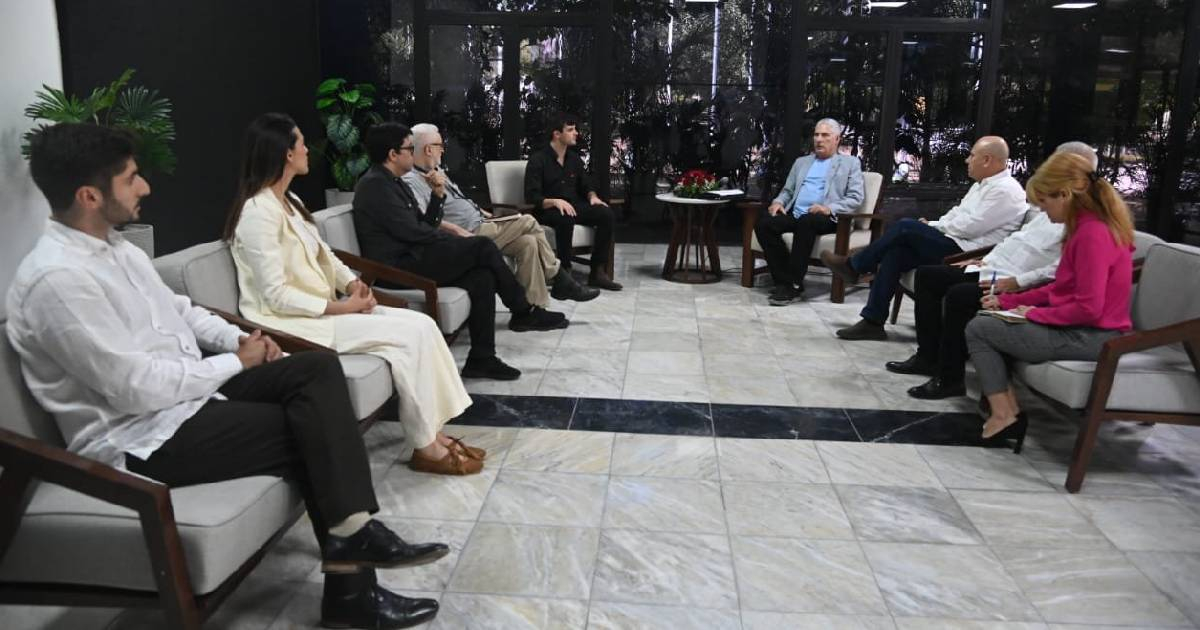
The ruler Miguel Díaz-Canel held several meetings this Friday in Havana with foreign leftist delegations that are part of the so-called Our America Convoy to Cuba, who expressed their solidarity with the government and thanked “the example of the Cuban revolution.”
According to a report from the official Presidency portal, the event took place at the Palace of Conventions and was attended by leaders of the Communist Party (PCC) and the government; among them were Roberto Morales Ojeda and Emilio Lozada García, Secretary of Organization and Head of the International Relations Department of the organization, respectively.
During the exchanges, politicians, activists, and intellectuals from various countries participated.
Among the visitors was British politician Jeremy Corbyn, a member of the Council of the Progressive International, who was part of a delegation that engaged in dialogue with Díaz-Canel.
The leader expressed gratitude for the presence of the participants during “such complicated times” and stated that their visit demonstrates “bravery” in the face of what he described as campaigns of isolation against Cuba.
David Adler, co-coordinator of the Progressive International and organizer of the solidarity convoy, stated that the initiative aims to channel the support of “millions of people” and emphasized that the project has sought to explain to new generations the historical value of the Cuban revolution.
In another meeting, the president of the Broad Front of Uruguay, Fernando Pereira, stated that the lives of many leftist activists have been "shaped by the example of the Cuban Revolution," while recalling programs such as Operation Miracle, which he sees as a demonstration of the spirit of solidarity promoted by Havana.
The Cuban ruler also met with Italian intellectual Luciano Vasapollo, a member of the Network of Communists, and with several European MEPs, including the Belgian Marc Botenga, the Italians Ilaria Salis and Mimmo Lucano, and the French Emma Fourneau.
Later, in the Plenary Hall of the Convention Palace, leaders from the government and the Cuban Institute of Friendship with the Peoples (ICAP) held a meeting with the participants of the convoy.
According to the authorities, the delegation consists of about 650 visitors from 33 countries and representatives from around 140 organizations.
The president of ICAP, Fernando González Llort, stated that the initiative represents a gesture of international solidarity and affirmed that the presence of the visitors shows that Cuba has support in the face of United States sanctions.
During the event, the American activist Medea Benjamin from the Code Pink organization also spoke, reiterating her opposition to the embargo and stating that the American people wish to maintain friendly relations with Cuba.
In his closing remarks, Díaz-Canel stated that the presence of the visitors demonstrates that the island is not isolated and asserted that the revolution will continue moving forward thanks to the support of international allies.
However, this type of initiative has raised questions within Cuban society itself.
The musicologist Rosa Marquetti recently criticized the media-driven nature of certain international solidarity actions, arguing that they turn the country's crisis into a political spectacle and downplay the discreet support that churches and citizens have provided for years.
The intellectual argued that this dynamic contributes to confusing the government with the Cuban people and to presenting the country's precariousness as an ideological symbol for sectors of the international left, while many Cubans continue to face daily hardships.
Filed under: